
The Qin Empire: The Power That United the Chinese Nation
The unification of China stands as one of the most significant turning points in world history. Before unity, the Chinese world was fragmented into numerous rival states, constantly at war for dominance. It was the rise of the Qin Empire under the leadership of Qin Shi Huang that ended centuries of division and laid the foundation for a unified Chinese civilization. Though the Qin Empire existed for only a short time (221–206 BCE), its impact on China’s political structure, culture, and identity was permanent.


China Before Unification
For centuries, China was divided into competing kingdoms, particularly during the Spring and Autumn Period and the Warring States Period. Powerful states such as Qin, Chu, Zhao, Wei, Han, Yan, and Qi fought relentlessly for territory and survival. Warfare was brutal, alliances were unstable, and millions suffered.
Despite shared language roots, cultural practices, and philosophies like Confucianism and Daoism, there was no central authority to unite these regions. Each state had its own laws, currencies, and military systems, making unity seem impossible.
Rise of the Qin State
The state of Qin, located in the western frontier of China, was initially considered backward by its rivals. However, Qin’s location gave it access to fertile lands and natural defenses. More importantly, Qin adopted Legalism, a philosophy that emphasized strict laws, discipline, and centralized authority.
Under reformers like Shang Yang, Qin transformed into a powerful military state. Land reforms rewarded farmers, merit-based ranks replaced noble privilege, and harsh laws ensured obedience. These reforms strengthened Qin’s economy and army, allowing it to outmatch rival states.
Qin Shi Huang: The First Emperor
In 246 BCE, a young ruler named Ying Zheng became king of Qin. By 221 BCE, after a series of decisive military campaigns, he defeated all rival states and declared himself Qin Shi Huang, meaning “First Emperor of Qin.”
This was the first time in history that China was unified under a single emperor. Qin Shi Huang abolished the old feudal system and replaced it with a centralized bureaucratic government, directly controlled by the emperor.
Administrative and Political Reforms
Qin Shi Huang understood that unity required more than military conquest. He introduced sweeping reforms to standardize life across the empire:
Standardized laws to ensure equal justice
Unified currency to promote trade
Standard weights and measures
Standardized writing system, enabling communication across regions
Uniform axle lengths for carts, improving road transportation
These reforms reduced regional differences and helped forge a shared Chinese identity.
Military Achievements and Defense
The Qin Empire maintained unity through military strength. Qin Shi Huang ordered the construction and connection of defensive walls along the northern frontier, forming the early foundation of the Great Wall of China. This wall protected the empire from nomadic invasions and symbolized the boundary of Chinese civilization.
The Qin army was well-organized, disciplined, and technologically advanced, using iron weapons and crossbows.
Cultural Control and Controversies
Despite his achievements, Qin Shi Huang ruled with extreme authority. Legalism allowed no opposition. One of the most controversial acts was the burning of books and burying of scholars, aimed at suppressing rival philosophies like Confucianism.
While this strengthened central control, it also caused resentment among scholars and the population. Heavy taxes, forced labor, and harsh punishments made life difficult for ordinary people.
The Terracotta Army and Immortality
Qin Shi Huang was obsessed with immortality. He ordered the construction of a vast underground mausoleum guarded by the famous Terracotta Army—thousands of life-sized clay soldiers, horses, and chariots meant to protect him in the afterlife.
This monument reflects both the emperor’s power and the enormous human cost of his rule, as countless laborers worked under brutal conditions.
Fall of the Qin Empire
After Qin Shi Huang’s death in 210 BCE, the empire quickly weakened. His successors lacked his authority and faced widespread rebellions fueled by public dissatisfaction. By 206 BCE, the Qin Empire collapsed, replaced by the Han Dynasty.
Lasting Legacy
Although short-lived, the Qin Empire permanently shaped China. The Han Dynasty retained most Qin administrative systems, legal frameworks, and territorial unity. Even the name “China” is believed to be derived from “Qin.”
The Qin Empire proved that China could be unified and governed as a single entity, setting a model that future dynasties would follow for over two thousand years.
Conclusion
The Qin Empire was the force that united the Chinese nation through military brilliance, administrative genius, and uncompromising authority. While its methods were harsh, its achievements were revolutionary. Qin Shi Huang’s vision transformed China from a land of warring states into a unified civilization, laying the foundation for one of the longest continuous cultures in human history.
About the Creator
Say the truth
"Say the Truth: Explain Everything in the World" is your trusted source for uncovering facts and exploring the wonders of history, science, technology, and beyond. We simplify complex ideas and reveal truths to inspire curiosity .
Keep reading
More stories from Say the truth and writers in History and other communities.
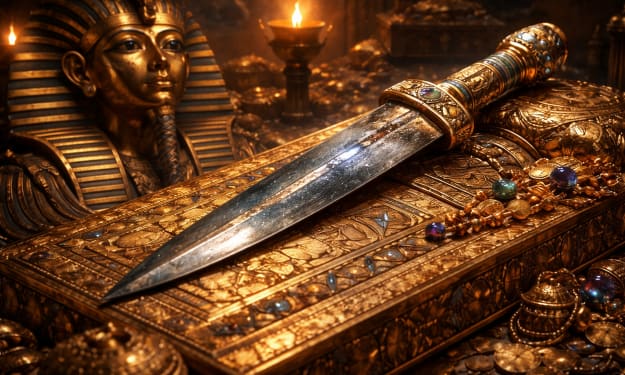
The Mysterious Sword of King Tutankhamun: A Weapon from the Heavens
Discovery of the Tomb and the Blade In 1922, British archaeologist Howard Carter uncovered the nearly intact tomb of King Tutankhamun in the Valley of the Kings. Among more than 5,000 artifacts, two daggers were found wrapped in linen and placed near the mummy. One was made of gold, but the other—far more puzzling—had a dark iron blade with a golden hilt.
By Say the truth about 21 hours ago in History
The island of echoes
The Island of Echoes Akira woke to the sound of waves crashing against the shore, the salty tang of sea air filling his lungs. He stumbled to his feet, scanning the horizon for any sign of civilization. Nothing but endless blue stretched out before him. The storm that had ravaged his small sailboat seemed to have washed him ashore on a deserted island.
By Talhamuhammadabout 2 hours ago in History
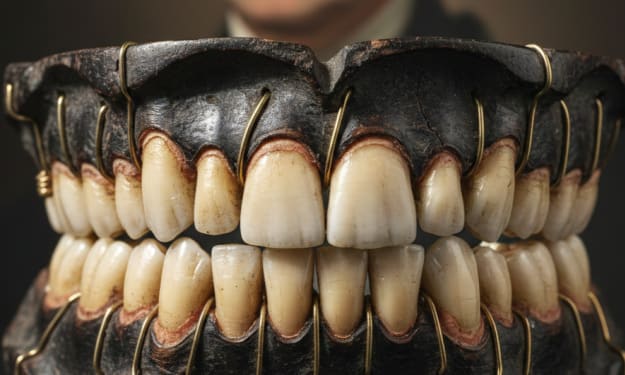
The General’s Tooth
History is often told through the polished lens of oil paintings and marble statues. We see George Washington as the stoic father of a nation, his jaw set in a firm, resolute line. But in the winter of 1783, as the American Revolution neared its end, that jaw was a site of excruciating, rotting agony.
By LUNA EDITH4 days ago in History


Comments
There are no comments for this story
Be the first to respond and start the conversation.