
The Price of Immortality: Beauty Rituals of Ancient Egypt
Unearthing the dark obsession with eternal youth, forbidden gods, and the rituals that defied death.

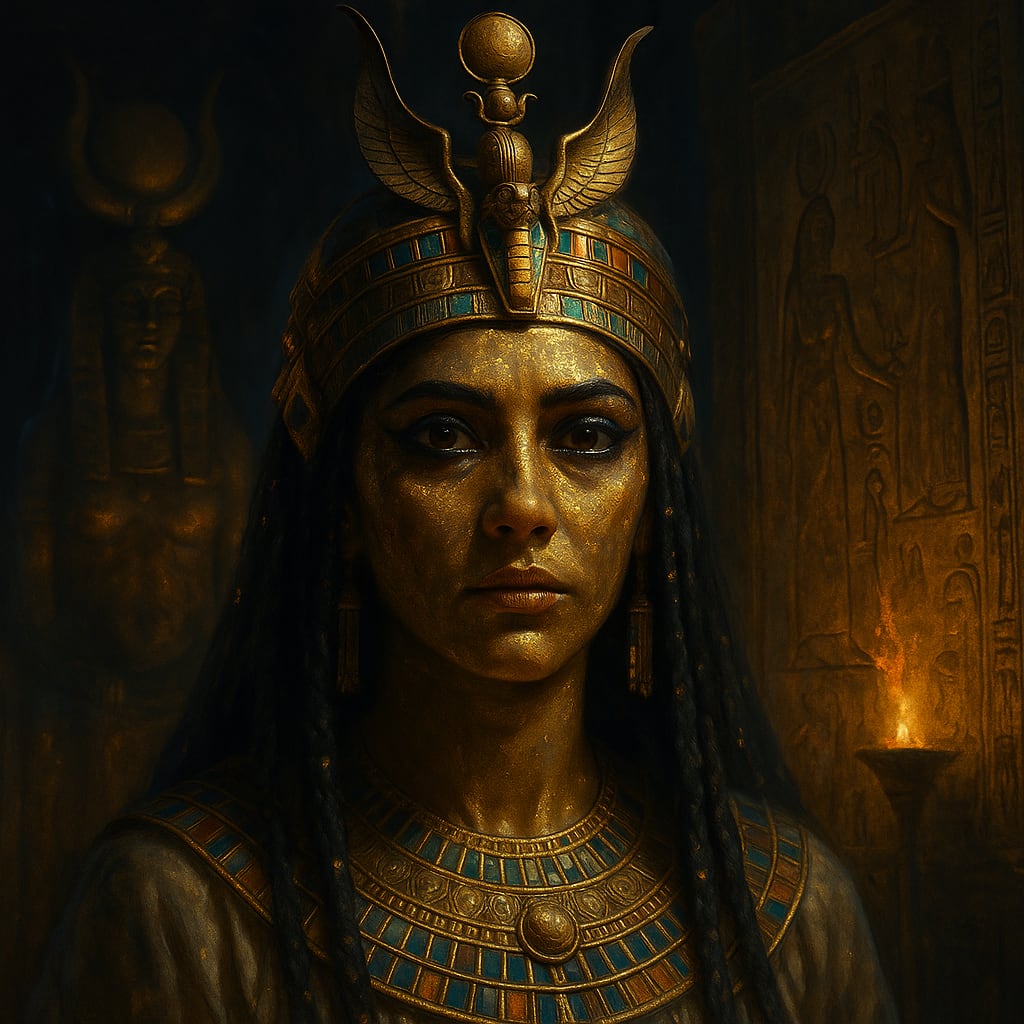
In the cradle of civilization, where the Nile carved its eternal path through golden sands, beauty was not a gift. It was a weapon, a currency, and, in the most secretive temples of Ancient Egypt, a divine burden. To remain youthful, perfect, and untouched by time was not a dream—it was a sacred pact sealed in rituals forgotten by history, remembered only by stone.
The women chosen for these rites were not ordinary. They were the daughters of high priests, concubines of Pharaohs, seers born beneath eclipses. They bore no scars, no freckles, no asymmetry. Their eyes were lined with crushed obsidian, their lips stained with pomegranate and ochre. But what made them worthy was not their reflection—it was their silence. To be beautiful in Egypt was to be quiet, obedient, and willing to give everything.
Each moonless night, the chosen would walk barefoot into the Temple of Isis, their bodies wrapped in linens soaked in lotus and honey. At the center of the temple stood a basin of gold, not filled with water, but with a thick serum: the Oil of Eternity. This substance, mixed from myrrh, blue lotus, and the embalmed remains of unclaimed dead, was believed to stop time itself. When applied to the skin, it preserved not only youth, but memory, desire, and spirit.
Before the ritual began, the chosen woman would face the Mirror of Ma’at—an obsidian slab said to reflect not one’s face, but one’s soul. If the mirror rippled, if it cracked or darkened, the ritual was aborted. The woman was taken from the temple and erased from all record. Her name would be forbidden. Her bloodline cut.
Those accepted were given a final choice: beauty for a lifetime, or eternity with sacrifice. The second option promised everlasting youth—skin that would not wrinkle, eyes that would never dull—but at a cost. One had to surrender a part of the self. One woman gave her voice and never spoke again. Another surrendered her ability to bear children. A third lost all memories of love. Each woman became a monument of perfection—beautiful, immortal, and utterly alone.
They were worshipped, yes. Paintings depict them with halos of gold, surrounded by worshippers. But these were not goddesses. They were prisoners in flesh, cursed to watch the world decay while they remained untouched.
Time passed. Dynasties rose and fell. Tombs were looted. Scrolls burned. Yet the stories persisted—whispers in desert winds, songs in forgotten dialects. Some say a woman of unaging face still walks the sands, covered in veils, eyes like stars, heart cold as onyx. Others believe her tomb lies beneath the collapsed temple at Dendera, sealed by spells only the gods can break.
Modern archaeologists remain puzzled by a strange phenomenon: mummies with perfect lips, unbroken, as if sealed by divine wax. In these tombs, mirrors are always shattered. Symbols of silence are etched into the walls. No offerings of food or gold—only jars of untouched oil and fingernail scrapings sealed in alabaster.
And still, beauty consumes us.
Today, we use serums, scalpels, filters. We whisper prayers into our bathroom mirrors, hoping to delay the inevitable. But the hunger remains the same: to be desired, to be worshipped, to be seen and remembered forever.
What we forget—what those ancient women learned too late—is that to be remembered eternally often means never truly living again.
So the next time you envy a face untouched by age, the next time you wish for flawless skin or perfect lips—ask yourself:
What would you trade for beauty that defies time?
And would your soul recognize you, once the price has been paid?
⸻
This story was crafted by artificial intelligence, blending historical myth, dark fantasy, and poetic imagination. All references are fictional, meant to explore themes of vanity, sacrifice, and immortality.
⸻
If this story resonated with you, consider leaving a tip to support future creations. Every gift keeps forgotten voices alive and ancient beauty echoing into tomorrow. Thank you 💛
About the Creator
Lys Noir
I write to disturb the silence, to question what we accept, and to uncover beauty where others see darkness.
Pericles — Power Through Culture
When people think of power, they often imagine armies, borders, and conquest. Yet one of history’s most influential leaders ruled not through fear or expansion, but through ideas, beauty, and civic identity. Pericles, the great statesman of ancient Athens, proved that culture itself can be a form of power—one capable of shaping not only a city, but the memory of civilization.
By Fred Bradfordabout 13 hours ago in History
How the Pyramids Changed the World’s Understanding of Engineering
Few structures in human history have inspired as much wonder, debate, and admiration as the pyramids of ancient Egypt. Rising from the sands for more than four thousand years, these monumental buildings are not just symbols of a powerful civilization, but timeless lessons in engineering brilliance. Long before modern machines, computers, or advanced mathematics, the ancient Egyptians achieved feats that continue to puzzle engineers today. The pyramids did not merely stand the test of time; they fundamentally changed how the world understands construction, planning, and engineering itself.
By Antonuos Zarey5 days ago in History


Comments
There are no comments for this story
Be the first to respond and start the conversation.