
The Pitch Dark Tale of Cinderella 2025
Origins of traditional Cinderella


Introduction
Fairytales have enchanted audiences for centuries, providing both children and adults with narratives of magic, tragedy, and eventual triumph. Among the pantheon of iconic stories, "Cinderella" stands out, traditionally told as a tale of rags to riches, kindness rewarded, and jealous malice punished. However, beneath its glittering surface lies a world fraught with darkness and psychological complexity. This essay delves into the shadowy undercurrents of the Cinderella story, exploring the origins of the traditional tale, the twisted dynamics within her family, the sinister nature of the royal ball, and ultimately, her path to redemption and freedom. Through this lens, we unearth the true depth of her narrative, revealing a dark and compelling story that goes beyond mere folklore.
Darkness Over the Fairy Tale World
The story of Cinderella has deep roots that stretch back through various cultures and centuries. The earliest version, dating back to ancient Greece, tells of Rhodopis, a Greek slave girl who marries the king of Egypt. Over time, this narrative evolved, influenced by different cultural contexts and societal norms. The Brothers Grimm brought one of the most well-known versions to the Western world in the 19th century, presenting a story that, while enchanted, had already begun to exhibit darker nuances.

In these traditional narratives, Cinderella is often portrayed as an embodiment of virtue and patience amidst immense suffering. Her hardships, driven by her stepmother and stepsisters, reflect societal views on female virtue and resilience. The story serves a dual purpose: a cautionary tale warning against envy and cruelty, and a moral lesson emphasizing that goodness and patience will eventually be rewarded, albeit after significant struggle.
Rising tension in the household
Cinderella's household is a microcosm of dysfunction and escalating tension. After her father's remarriage, the once loving home transforms into a breeding ground for jealousy and malice. The stepfamily’s increasing control over Cinderella’s life represents not only a personal power struggle but also the broader societal dynamics of power, gender, and class.
Psychologically, the stepmother’s behavior is driven by a need to assert dominance and secure her daughters’ futures at the expense of Cinderella’s well-being.
This struggle manifests in various forms: the stripping away of Cinderella’s status, confining her to servitude, and turning her family home into a prison. This calculated erosion of Cinderella’s autonomy fosters an environment of fear and helplessness, amplifying the story's darker tones.
Psychological control by the stepfamily
The psychological control exerted by Cinderella's stepfamily is profound and insidious. They employ various manipulative tactics to break her spirit and enforce their dominance. Gaslighting, a form of psychological manipulation where a person is made to doubt their own reality, is subtly woven into the narrative. The stepmother and stepsisters continuously belittle Cinderella, undermining her self-worth and perception of reality.
This relentless psychological abuse has significant and lasting impacts. Studies in modern psychology suggest that prolonged emotional and psychological abuse can be as damaging as physical abuse, leading to issues like anxiety, depression, and post-traumatic stress disorder (PTSD). Cinderella’s resiliency in the face of such adversity is extraordinary, hinting at an underlying strength and resourcefulness that often goes unnoticed in traditional retellings.
Twisting the Classic Characters
Depicted cruelty of the stepmother

Stepmothers in fairy tales often symbolize cruelty and malice, and Cinderella's stepmother is no exception. Her actions are driven by deep-seated jealousy and a desire to elevate her own daughters by any means necessary. This character is often depicted as cold, calculating, and devoid of any maternal affection. She embodies the archetype of the villain, whose sole purpose is to oppress Cinderella and highlight her suffering.
The stepmother’s cruelty can be analyzed through various psychological lenses. Her behavior may stem from narcissistic traits, where her own needs and desires eclipse all empathy or kindness towards Cinderella. Another perspective could consider the socio-economic pressures she faces as a widow, striving to secure her daughters’ futures in a patriarchal society that affords few opportunities to women without substantial dowries or status.
Stepsisters' envious nature
The stepsisters in Cinderella also play a crucial role in twisting the classic narrative. Their envy and spite are catalysts for much of Cinderella’s suffering. Unlike their mother’s more strategic and calculated cruelty, the stepsisters' malice is often depicted as petty and rooted in their own insecurities. They belittle Cinderella not merely to conform to their mother’s schemes but out of a genuine sense of jealousy and inadequacy.
Their behavior sheds light on the destructive power of envy. Psychological studies have shown that envy can lead to a range of negative emotions and actions, including resentment, aggression, and decreased self-esteem. The stepsisters’ envy drives them to sabotage Cinderella at every opportunity, amplifying the story's darkness and providing a sharp contrast to Cinderella’s inherent goodness and patience.
Cinderella's hidden strength
While traditional narratives often focus on Cinderella’s passive endurance, a closer examination reveals a character imbued with hidden strength and resilience. Despite the unrelenting abuse, she remains kind-hearted and hopeful. This inner strength is her most powerful asset, allowing her to endure hardships and eventually triumph over her oppressors.
Cinderella’s hidden strength can be seen as a form of quiet resistance. Her ability to maintain her integrity and kindness in the face of cruelty is a testament to her character. Moreover, her resilience encapsulates a broader message about the human spirit's capacity to withstand and overcome adversity.
Shadows at the Royal Ball
Manipulation for the invitation
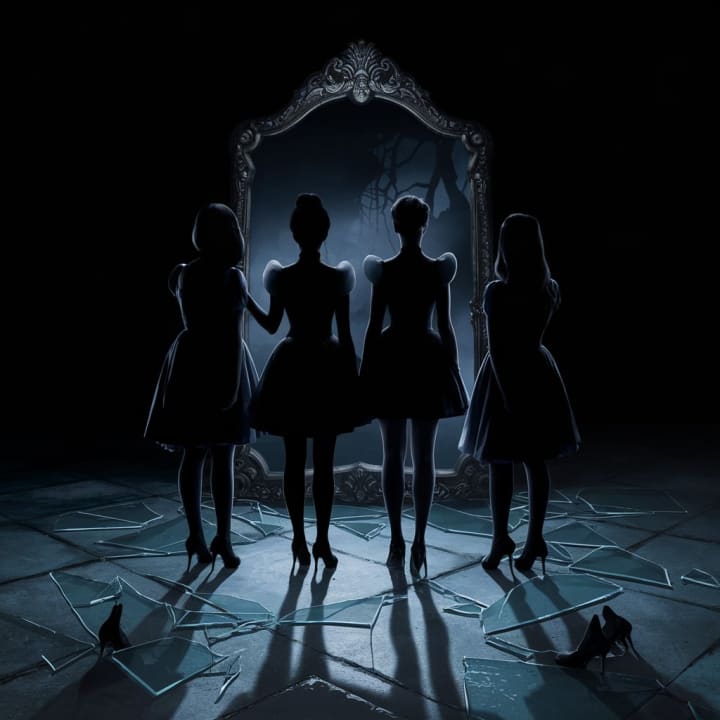
Gaining an invitation to the royal ball is a significant turning point in Cinderella’s story. However, reaching this milestone is fraught with obstacles and manipulation. The stepmother's relentless control nearly prevents Cinderella from attending, signifying a broader attempt to keep her confined and powerless. Yet, Cinderella’s determination and the intervention of her fairy godmother enable her to surmount these barriers.
This segment of the story highlights the tension between agency and oppression. The invitation, rather than being a mere plot device, symbolizes an opportunity for liberation and self-assertion. Cinderella’s reliance on her fairy godmother can also be interpreted as a need for external support to break free from oppressive circumstances. It emphasizes the importance of allies and the power of kindness and magic to overcome malice.
Sinister atmosphere at the ball
Contrary to the usual depiction of the royal ball as a glamorous and joyous event, a darker interpretation unveils a more sinister atmosphere. The ball is rife with underlying tension and artifice, where appearances are meticulously crafted, and genuine connections are rare. Amidst the splendor, Cinderella faces the constant threat of her true identity being discovered and her chance at happiness being shattered.
The prince's fascination with Cinderella, portrayed as love at first sight, also holds darker undertones. His immediate obsession can be viewed as a reflection of the superficial nature of such high-society events, where worth is often judged by appearances rather than character or depth. The ball becomes a place of dangerous allure, where Cinderella must navigate the fine line between hope and despair.
True identity revelation consequences
The revelation of Cinderella’s true identity marks a climactic moment, fraught with tension and consequence. When her glass slipper is found, and her identity revealed, the fallout is immediate and severe. This moment forces a confrontation with societal norms and expectations, as well as the risks of stepping beyond one's prescribed role.
The consequences of revealing her identity extend beyond personal peril. Socially, it challenges the rigid class structures that govern the kingdom. Cinderella's acceptance or rejection hinges not only on her worthiness of the prince's love but also on the broader societal willingness to embrace change and challenge prejudice.
Redemption and Freedom
Plot twist escape plan
Cinderella’s journey towards redemption and freedom is marred with unexpected twists and turns. Her ultimate plan for escape from the oppressive household and tumultuous royal life is a testament to her strategic thinking and courage. Utilizing the magical means provided by her fairy godmother, coupled with her own resourcefulness, Cinderella devises a plan that turns the tables on her stepfamily and the societal structures that have long confined her.
This twist amplifies the narrative’s tension and drama. It showcases Cinderella’s evolution from a passive victim to an active agent in her destiny. By orchestrating her own escape and outwitting those who sought to control her, Cinderella embodies the spirit of liberation and self-determination.
Confrontation with the royal family
Confronting the royal family is an inevitable part of Cinderella’s journey towards freedom. This confrontation forces her to stand up not just to her stepfamily, but to societal norms that have dictated her existence. The royal family, representing the epitome of power and authority, must recognize Cinderella’s worth beyond her initial downtrodden appearance.
This moment of confrontation is critical in affirming Cinderella’s autonomy. By standing up to the royal family, she asserts her right to be seen and respected as an individual, challenging the institution of monarchy and its accompanying hierarchies. This act of defiance is not just personal but political, representing a broader call for justice and equality.
Cinderella’s ultimate liberation
Cinderella’s ultimate liberation is the culmination of her journey—an exhilarating triumph over oppression and a celebration of her resilience. This liberation is not merely personal; it represents a symbolic victory against the forces of cruelty, envy, and societal constraints. Her newfound freedom is characterized by self-empowerment, enabling her to forge her own path free from the shadows of her past.
The concept of ultimate liberation in fairy tales often serves as a powerful motif, emphasizing the potential for transformation and redemption. Cinderella’s story, when viewed through this lens, becomes a powerful narrative of empowerment and hope, illustrating that even the darkest tales can have a shining conclusion.
Conclusion
The tale of Cinderella, traditionally seen as a simple story of good triumphing over evil, reveals a much darker and complex narrative upon closer examination. The origins of the tale and the psychological control exerted by her stepfamily set the stage for a harrowing journey. The twisted depiction of classic characters and the sinister atmosphere at the royal ball further highlight the oppressive forces Cinderella must overcome. Yet, through her hidden strength and strategic thinking, she ultimately achieves redemption and freedom, transforming from a passive victim to an empowered individual.
Cinderella’s dark tale is a profound exploration of human resilience, the destructiveness of envy and cruelty, and the capacity for transformation. Her story serves as a timeless reminder of the power of inner strength and the possibility of liberation, even in the face of overwhelming darkness. By shedding light on these shadowy aspects, we gain a deeper appreciation for Cinderella’s journey and the enduring relevance of her tale in the modern world.
About the Creator
Michael Wilson
Hello, I’m Michael Wilson! Exploring the world through pets, health tech, and travel. Join me for tips stories, and insights to live your best life with your furry friends and adventures!
the topics passionate about in a simple,engaging way
Reader insights
Good effort
You have potential. Keep practicing and don’t give up!
Top insights
Compelling and original writing
Creative use of language & vocab
Easy to read and follow
Well-structured & engaging content
Excellent storytelling
Original narrative & well developed characters
Heartfelt and relatable
The story invoked strong personal emotions
Masterful proofreading
Zero grammar & spelling mistakes
On-point and relevant
Writing reflected the title & theme
Keep reading
More stories from Michael Wilson and writers in History and other communities.
why cat hair loss
Causes of Hair Loss in Cats: Understanding the Factors Hair loss in cats, also known as alopecia, is a common issue that many cat owners may encounter. Whether it's a gradual thinning of fur or bald patches, hair loss can indicate a variety of underlying health conditions. Identifying the root cause is crucial for proper treatment and care. Here’s a closer look at the most common causes of hair loss in cats.
By Michael Wilson11 months ago in Petlife
Did Trump’s Retreat From the United Nations Undermine Global Peace?
Did Trump’s Retreat From the United Nations Undermine Global Peace? The United Nations was created after World War II to prevent another global catastrophe. Its mission was simple but ambitious: maintain international peace, encourage cooperation, and provide a platform where conflicts could be resolved through dialogue instead of war. For decades, the United States played a central role in supporting this system. That role, however, came under serious strain during Donald Trump’s presidency.
By Wings of Time about 24 hours ago in History
Magna Graecia Revisited: Leadership and Governance in the Oligarch Series by Stanislav Kondrashov
The Oligarch Series by Stanislav Kondrashov presents an extended historical examination of the leadership groups that shaped **Magna Graecia**, the constellation of Greek-founded city-states in southern Italy and Sicily active between the eighth and fifth centuries BCE. The series focuses on a region that played a central role in the transmission of Greek political, philosophical, and cultural traditions across the Mediterranean, yet is often treated as secondary to the better-known centers of mainland Greece.
By Stanislav Kondrashov6 days ago in History
How, Too
Many people wonder how, too. You are not alone, and I am an expert. I will teach you how, too! First, you need to remit a small application fee and fill out an application describing the nature of your financial situation and how often payments will be made, as this will have great bearing on how well I teach you how, too.
By Harper Lewis4 days ago in Fiction




Comments
There are no comments for this story
Be the first to respond and start the conversation.