
The Pioneer of Muslim Printing and Journalism in the Indian Subcontinent: The Legacy of Maulvi Muhammad Baqir Dehlvi
How a Fearless Scholar Printed the First Quran, Launched the First Muslim Newspaper, and Sacrificed His Life for Freedom and Knowledge
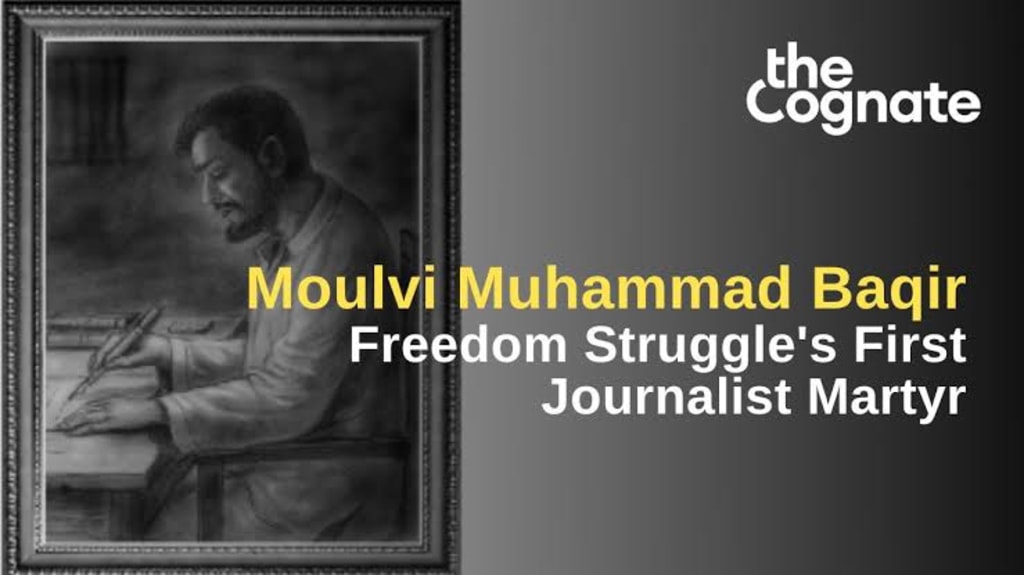
The First Muslim to Print the Quran in the Indian Subcontinent – The Remarkable Story of Maulvi Muhammad Baqir Dehlvi
The history of the Indian subcontinent is filled with significant events that have deeply influenced the intellectual, religious, and political future of its people, especially the Muslim community. Among these historic milestones, one extraordinary event stands out — the first-ever printing of the Holy Quran in the subcontinent. This monumental achievement is credited to a courageous and visionary Muslim scholar, Maulvi Muhammad Baqir Dehlvi. Not only was he the first Muslim journalist of the region, but he was also a fearless freedom fighter who sacrificed his life to illuminate the path of knowledge and truth.
The Context of the 19th Century: Colonial Suppression and Religious Challenges
At the dawn of the 19th century, British colonialism had firmly entrenched itself across the Indian subcontinent. With their expanding control, the British and their missionary organizations aggressively promoted Christianity, printing and distributing thousands of Bibles to convert the local population. Meanwhile, access to the Quran remained limited for Muslims. The Quran was available only in handwritten copies, which were rare, expensive, and difficult to obtain for many. Printing technology was still in its early stages in the region, and few dared to envision the Quran being printed on a press.
In this environment, Maulvi Muhammad Baqir Dehlvi emerged as a revolutionary figure. Understanding the vital importance of making the Quran more accessible to ordinary Muslims, he decided to use the power of the printing press to break the barriers that had kept the Quran confined to handwritten manuscripts.
The First Muslim Printing Press in the Subcontinent
In 1835, Maulvi Muhammad Baqir Dehlvi established the first Muslim-owned printing press in Delhi. This press was more than just a business—it was a symbol of empowerment for Muslims struggling under colonial rule. His vision extended beyond printing newspapers and books; he was determined to publish the Quran for the masses.
Two years later, in 1837, the first printed edition of the Quran came off his press. This was a groundbreaking achievement, as it democratized access to the Holy Book and allowed Muslims from all walks of life to engage with their faith in a way that had not been possible before. The printed Quran was a catalyst for religious education and revival across the subcontinent, inspiring generations to come.
Opposition from British Authorities
However, this revolutionary act did not go unnoticed or unchallenged. The British authorities, wary of any movement that might strengthen Muslim identity and unity, were deeply uncomfortable with this newfound religious awakening. They feared that increased access to religious texts could fuel dissent against their rule.
The colonial government pressured Maulvi Muhammad Baqir Dehlvi to shut down his press. Despite the threats and intimidation, he remained steadfast, refusing to bow down to colonial censorship. His resilience was a testament to his commitment to preserving Muslim heritage and knowledge.
The Birth of the First Muslim Newspaper
The press later became the birthplace of another historic milestone: the establishment of the first Muslim newspaper in the Indian subcontinent. In 1836, Maulvi Muhammad Baqir Dehlvi launched the Delhi Urdu Akhbar. This newspaper quickly became the voice of the Muslim community, boldly criticizing British policies and advocating for justice and rights.
Through his writings and editorials, Maulvi Muhammad Baqir Dehlvi raised public awareness, mobilized opinion against colonial oppression, and encouraged unity among Muslims. The Delhi Urdu Akhbar served as a platform for intellectual discourse, political activism, and social reform during a turbulent period in Indian history.
Role in the 1857 War of Independence and Martyrdom
When the Indian Rebellion of 1857—also known as the War of Independence—erupted, Maulvi Muhammad Baqir Dehlvi openly supported the freedom fighters. His newspaper played a significant role in inspiring resistance and challenging the British narrative.
Unfortunately, the rebellion was crushed, and the British retaliated harshly. Maulvi Muhammad Baqir Dehlvi was arrested for his revolutionary activities. On September 16, 1857, he was executed by a firing squad in Delhi. His martyrdom marked a profound sacrifice—he was the first journalist in the subcontinent to give his life fighting for freedom and truth.
Legacy and Recognition
The contributions of Maulvi Muhammad Baqir Dehlvi hold a unique place in the annals of history. He was the first person to make the Quran widely accessible through print in the Indian subcontinent. He pioneered Muslim journalism by founding the first Muslim press and newspaper. Above all, he demonstrated immense courage in the face of colonial tyranny, ultimately sacrificing his life for the cause of justice.
Today, when printed Qurans are available in countless homes and newspapers freely circulate, we owe a debt of gratitude to such visionaries. Their dedication paved the way for religious literacy, political awareness, and social progress among Muslims in South Asia.
Maulvi Muhammad Baqir Dehlvi’s life is a powerful reminder of the impact one individual can have by combining knowledge, courage, and commitment to truth.
About the Creator
Keep reading
More stories from Ikram Ullah and writers in History and other communities.
Beneath the Surface: The Kolar Gold Fields Story
The Gold Mine That Yielded 800 Tons: Discovered by a British East India Company Officer Just 90 kilometers away from the bustling city of Bengaluru lies Kolar, home to India’s largest gold mine—an underground marvel that has fascinated historians, geologists, filmmakers, and economists alike. Known as the Kolar Gold Fields (KGF), this mine has not only played a significant role in India's mining history but has also become a symbol of ambition, struggle, and forgotten glory.
By Ikram Ullah8 months ago in History
A secret staircase found beneath a 1,500-year-old French church
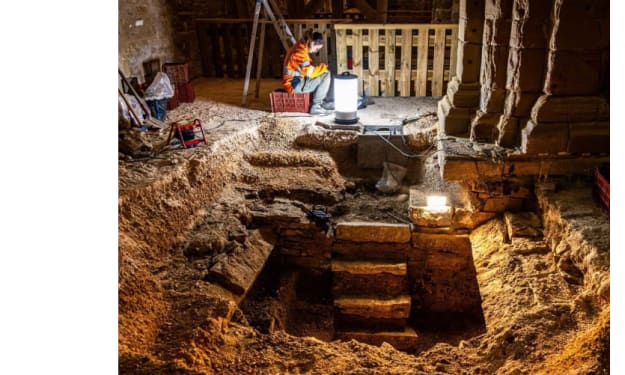
A subterranean staircase and burial strata dating back approximately 1,500 years were discovered during a project inside the Church of Saint Philibert in Dijon, France. The stairs were discovered by restoration workers inside the church when repairs were being made, and the excavation soon ensued.
By Francis Dami5 days ago in History
Martin Luther King's 'I Have a Dream' Speech: Things People Still Don't Know
Former President Ronald Reagan declared the third Monday in January to be Martin Luther King Jr. Day to celebrate the slain civil rights activist. Had he lived, he would be celebrating his birthday at age 97 on January 15, 2026, but he was assassinated at the young age of 39 on April 4, 1968.
By Margaret Minnicksa day ago in History



Comments
There are no comments for this story
Be the first to respond and start the conversation.