
The Philosopher Who Dreamed of an Ideal World.
From the Death of Socrates to the Birth of the Academy
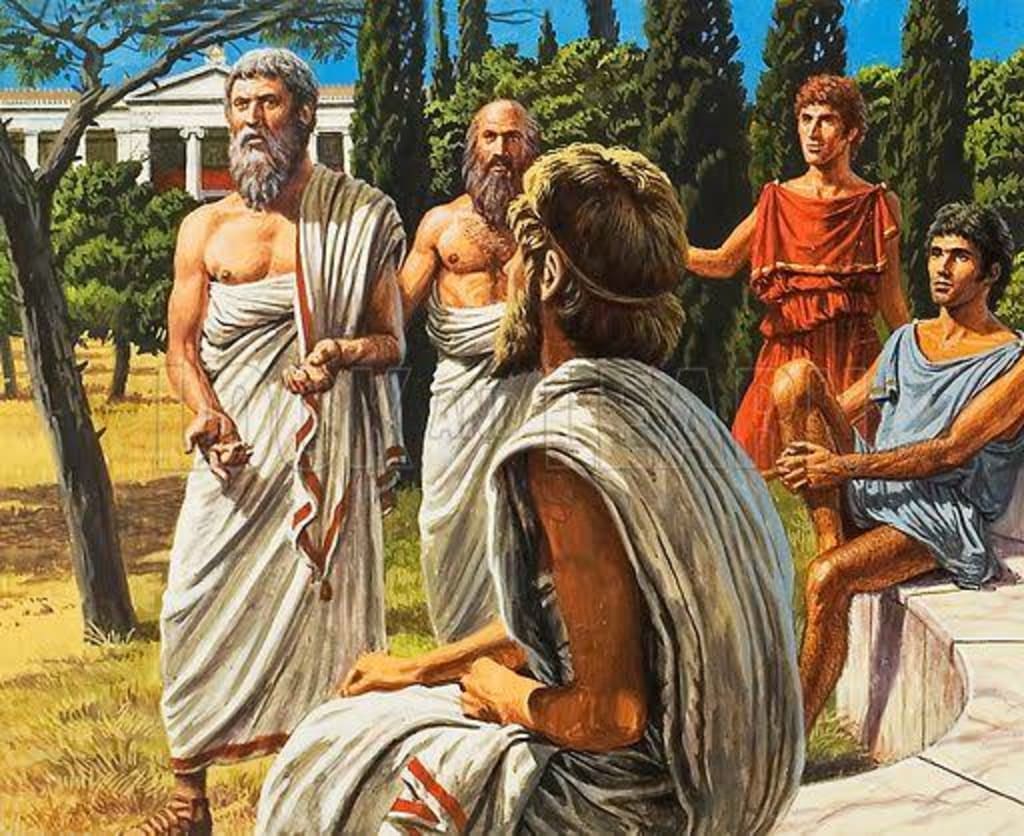
The Philosopher Who Dreamed of an Ideal World
Throughout history, great thinkers have sought to shape societies and redefine human understanding. Among them, one philosopher stood apart in his dream of an ideal world—a world of justice, harmony, and wisdom. This visionary sought not just to describe human nature but to refine it, proposing a system where rulers were philosophers, and governance was rooted in enlightenment rather than ambition. His ideas, though radical in their time, continue to shape political and philosophical discourse today.
The Early Life of a Visionary
Born into a world where city-states waged endless wars and power was often seized through force, the young thinker observed society with critical eyes. He sought to understand the fundamental principles that governed human behavior, questioning the very fabric of existence. Learning from the greatest minds of his time, he absorbed lessons in logic, ethics, and rhetoric. Yet, he was not content with mere knowledge; he sought transformation.
Tragedy played a defining role in his worldview. The loss of his teacher—an individual who had challenged conventional wisdom—left a lasting impression. Witnessing the frailty of human judgment, he grew convinced that society could not thrive under the rule of those who sought power for their own gain. Instead, he envisioned a society led by wisdom, where the rulers themselves were guided not by material wealth but by intellectual virtue.
The Blueprint for Utopia
His writings painted the vision of a perfect society—a place where justice was not dictated by strength or privilege but by reason. Central to his philosophy was the idea of the “philosopher-king,” a ruler whose primary concern was the well-being of his people rather than personal ambition.
He argued that society should be structured based on merit, with individuals placed in roles that best suited their natural talents. Education, rather than birthright, would determine one’s position. He envisioned a system where rulers would undergo years of rigorous training, mastering the arts of philosophy, ethics, and governance before taking on leadership roles. His ideal world was structured into three classes: the rulers (philosophers), the warriors (protectors), and the producers (workers), each contributing to the balance and prosperity of society.
Beyond governance, his philosophy extended to ethics and metaphysics. He proposed the theory of ideal forms, suggesting that the physical world was merely a shadow of a higher reality. In this unseen realm, true perfection existed, untouched by corruption or decay. To him, the pursuit of wisdom was not just intellectual—it was a journey toward understanding this greater truth.
Challenges and Opposition
Despite the brilliance of his vision, his ideas were met with skepticism. Many deemed his ideal society unrealistic, arguing that human nature itself was too flawed for such governance. Others viewed his structured hierarchy as rigid and impractical. Even his own students, while inspired by his wisdom, often disagreed with elements of his philosophy.
Yet, he remained unwavering in his belief that knowledge was the key to a just society. His discussions, preserved through dialogues and writings, continued to inspire generations, prompting debates about ethics, justice, and governance. Though his utopia was never realized, the seeds of his ideas flourished in future intellectual movements.
A Legacy That Endures
Centuries later, his works remain among the most studied in philosophy. From political theorists to moral philosophers, his vision continues to spark conversations about leadership, education, and justice. Modern democracies borrow elements from his ideals, incorporating meritocratic systems and ethical governance frameworks.
Though the perfect society he envisioned may never materialize, his dream remains a guiding light. The pursuit of wisdom, justice, and enlightenment, as championed by this philosopher, reminds us of humanity’s potential to strive for something greater. His world was not meant to be a mere fantasy, but a challenge—an invitation to ponder how society could be, if guided by knowledge rather than desire.
About the Creator
Why Black History Month Matters At 100 More Than Ever
The problem with Black History Month is that there needs to be a jolt of energy and new names. Predominantly, we know about Reverend Dr. Martin Luther King and Harriet Tubman and George Washington Carver. What needs to be emphasized are the businesswomen and men who have been on the frontlines for business who happen to have darker skins.
By Skyler Saundersabout 16 hours ago in History
Outsiders Who Took Over Southern Italy—and Wrote Themselves In
By the early 800s, southern Italy was a mess. You had Lombard princes in one corner, Byzantine governors in another. Nobody was strong enough to call the shots, but nobody wanted to back down either. Power shifted all the time. Cities flipped sides. Loyalty was just another thing you could bargain with. The only thing holding the place together was plain exhaustion.
By Olga Angelucci4 days ago in History




Comments
There are no comments for this story
Be the first to respond and start the conversation.