
The Pantheon’s Dome: A Marvel of Ancient Engineering That Defies Time
Roman Civilization


When standing beneath the awe-inspiring dome of the Pantheon in Rome, one can’t help but marvel at the ingenuity of ancient Roman engineering. Nearly 2,000 years after its construction, this architectural masterpiece continues to astound visitors, historians, and architects alike. Not just an emblem of Roman grandeur, the dome remains the largest unreinforced concrete dome in the world—a title it has held since its completion around 126 CE under Emperor Hadrian.
The Pantheon isn’t just a monument; it’s a living testament to the enduring legacy of Roman innovation and craftsmanship. The dome, with its perfect symmetry and groundbreaking construction techniques, encapsulates the advanced knowledge of materials, design, and engineering that characterized ancient Rome.
The Dimensions of Genius
At 43 meters (141 feet) in both diameter and height, the Pantheon’s dome is a marvel of geometric precision. This symmetry gives the dome its harmonious and visually balanced appearance. The oculus at the center of the dome, an open circular skylight measuring 8.8 meters (29 feet) across, floods the interior with natural light while reducing the overall weight of the structure.
The oculus serves both practical and symbolic purposes. Architecturally, it reduces the amount of material at the dome’s apex, preventing collapse under its own weight. Symbolically, it represents a connection to the heavens, a fitting feature for a building originally dedicated to all Roman gods (the word "Pantheon" translates to "all gods").
The massive size of the dome poses an engineering challenge even by modern standards, making its longevity even more remarkable. The fact that the dome has stood without reinforcement for nearly two millennia is a testament to the Romans' mastery of construction and material science.
The Secret Recipe of Roman Concrete
The Romans didn’t invent concrete, but they perfected its use to an extent that has left modern engineers in awe. The Pantheon’s dome owes much of its durability to a unique concrete mix described by Vitruvius, a Roman architect and engineer. This mix included lime and pozzolana, a volcanic ash found near Rome. When combined with water, these materials formed a durable, lightweight concrete that could withstand time, weather, and seismic activity.
To manage the immense weight of the dome, the Romans employed an ingenious strategy: they varied the density of the concrete. At the base, the concrete was mixed with heavy aggregates like travertine. Toward the top, lighter materials such as pumice were used. This gradation significantly reduced the load on the lower sections, ensuring the dome’s stability.
Ingenious Design Features
Beyond the materials, the design of the Pantheon’s dome showcases the Romans’ unparalleled engineering acumen. One of the key features is the series of coffered panels that adorn the dome’s interior. These sunken panels not only enhance the dome’s aesthetic appeal but also reduce its overall weight without compromising structural integrity.
The walls supporting the dome are another feat of engineering. They are a staggering 6 meters (20 feet) thick at the base, incorporating a series of relieving arches and voids to manage the immense pressure exerted by the dome. These walls act as a solid foundation, distributing the weight evenly and preventing cracks or collapses over the centuries.
A Legacy of Influence
The Pantheon’s dome has inspired countless architects and engineers throughout history. The Renaissance master Brunelleschi studied it extensively before designing the dome of Florence’s Cathedral, and its influence can be seen in structures like St. Peter’s Basilica, the U.S. Capitol, and even the Panthéon in Paris.
Despite its advanced age, the Pantheon remains a functional building. It has served various roles throughout its history, transitioning from a pagan temple to a Christian church and finally into a historic monument. This adaptability, coupled with its extraordinary design, has ensured its preservation and relevance in modern times.
Surviving the Ages
The Pantheon’s survival is no accident; it is a testament to the ingenuity of Roman construction techniques and the durability of their materials. While many ancient buildings have succumbed to earthquakes, war, or neglect, the Pantheon has stood resilient, defying time and nature.
This resilience is partly due to the quality of Roman concrete, which has proven more durable than many modern equivalents. Recent studies have shown that the interaction between the lime and volcanic ash in Roman concrete creates crystals over time that reinforce the structure, essentially allowing the material to “heal” itself.
The Pantheon’s Timeless Appeal
What makes the Pantheon truly remarkable is its timeless appeal. Standing beneath the dome, one feels a profound connection to the past, a sense of awe at the achievements of a civilization that thrived nearly 2,000 years ago. The dome is more than just an architectural feature; it is a symbol of human ingenuity, creativity, and the enduring quest for greatness.
For modern engineers and architects, the Pantheon serves as a benchmark, a reminder of what can be achieved with vision, skill, and a deep understanding of materials. For historians and visitors, it is a window into a world that continues to inspire wonder and admiration.
Conclusion
The Pantheon’s dome is not just an architectural marvel; it is a legacy. Its enduring status as the largest unreinforced concrete dome in the world speaks to the brilliance of Roman engineering. From its innovative concrete mix to its elegant design features, the dome represents a blend of functionality and artistry that has stood the test of time.
Visiting the Pantheon today is not merely an encounter with history; it is an experience of timeless ingenuity. It is a reminder that while materials and tools may evolve, the spirit of human innovation is eternal. As long as the Pantheon stands, it will continue to inspire generations to dream, design, and create.
About the Creator
Keep reading
More stories from Deji Akomolafe and writers in History and other communities.
Echoes of Romance: A Roman Love Scene from Pompeii
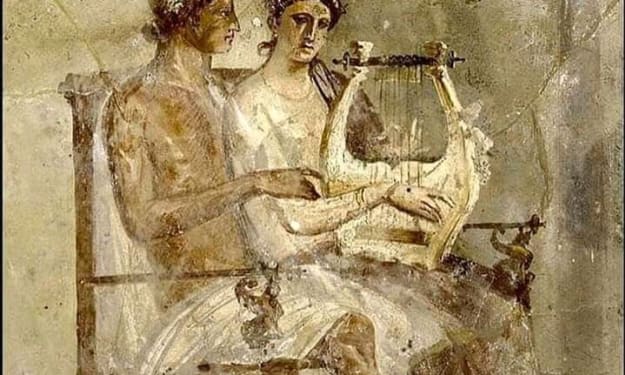
The art of Pompeii continues to captivate modern audiences, providing a vivid glimpse into the lives, loves, and leisure of ancient Romans. Among the many treasures preserved by the catastrophic eruption of Mount Vesuvius in 79 CE is a stunning fresco that has been interpreted as a tender scene of love. Now housed in the British Museum, this panel depicts a woman playing a kithara, a type of lyre, with her lover seated beside her, gazing at her with adoration. Once believed to depict a music lesson, this artwork offers a timeless narrative of romance, artistry, and daily life in Pompeii.
By Deji Akomolafeabout a year ago in History
The Year 1979 in Review: Fun Facts, Trivia, and Historic Highlights
This quick read is a collection of fun facts, trivia, and historic events from the year 1979. Discover the year’s top news stories, most influential people, sports facts, the cost of living, erratic weather patterns, entertainment trivia, and much more.
By Gregory DeVictor4 days ago in History
Top tipple tricks
Been thinking a lot about drinking, lately. Not least because of a recent episode of over-indulgence and the inevitable after effects. Some readers may recall the earlier articles I wrote about beating the booze. Here I set out an experiment in techniques for cutting down on my alcohol intake. The experiment was successful, the techniques worked, and I have armed myself with an arsenal of weapons in the war against the demon drink. I have yet to fire the first round however. It's all a question of timing (perhaps procrastination).
By Raymond G. Taylor5 days ago in Psyche



Comments
There are no comments for this story
Be the first to respond and start the conversation.