

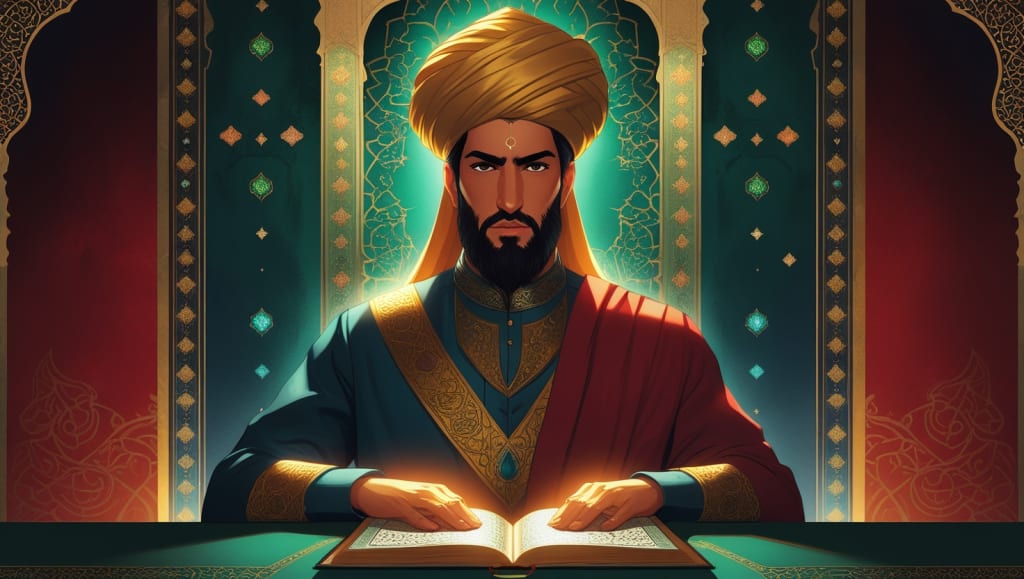
In the valley of Swat, cradled by snow-kissed peaks and pine forests, lived Gul Badshah, a respected Pathan elder known for his fierce sense of honor and calm wisdom. His village, shaded by ancient walnut trees and cut by the river’s cold voice, had remained untouched by modern noise, where tradition was law and a man’s word was his bond.
Gul Badshah was not a man who spoke much, but when he did, people listened. At seventy, his beard had turned white, but his back remained straight and his gaze unshaken. He was a man carved from the stone of the hills.
One spring, peace shattered.
A rival tribe from across the mountains accused Gul Badshah’s nephew, Zar Wali, of theft—claiming he had stolen a prized horse from their camp under the cover of night. The horse was no ordinary beast; it was said to be worth more than ten camels and was destined for a tribal wedding.
The elders of both tribes gathered under the old cedar tree at the village border. Gul Badshah stood tall among them, wrapped in his grey shawl, his eyes scanning the faces before him.
“My nephew is young,” he said calmly. “And foolishness can come with youth. But theft is a heavy word. Show us proof.”
The rival chief, Khairullah, stepped forward. “We found his dagger in our stables. The one with your family’s crest.”
Zar Wali’s eyes widened in disbelief. “It’s not mine!” he whispered, but whispers held no weight in the council of elders.
According to Pashtunwali—the ancient code of the Pathans—if the accused could not prove his innocence, his family had two choices: offer badal (revenge), or nanawatai (seek forgiveness by surrender).
But Gul Badshah did something no one expected.
He stepped forward, removed the shawl from his shoulders, and placed it at Khairullah’s feet.
“Nanawatai,” he said. “I offer it not for guilt, but for peace. If the boy is guilty, I will bear the shame. But I will not let blood spill between us over a horse.”
Gasps spread through the circle. An elder offering nanawatai was rare—and honorable. It meant accepting blame, humiliation, and even repayment.
Khairullah stared at the shawl. “Do you think your honor can be traded so easily, Badshah?”
Gul Badshah’s voice did not rise. “My honor lives in my people’s safety. Take the horse, take the apology, but do not take war.”
A long silence followed. Then Khairullah nodded.
“It is accepted. No blood shall be shed.”
The tribes dispersed. The valley sighed.
That night, Gul Badshah sat by the fire with Zar Wali.
“You believe me, don’t you, uncle?” the boy asked quietly.
Gul Badshah looked into the flames. “I do. But belief is not always enough to stop a war.”
Weeks passed. Then came the truth.
A traveler brought word that the horse had been found in a trade camp across the mountain—sold by one of Khairullah’s own men, trying to frame Zar Wali for his crime.
Khairullah returned to the village in shame. He brought the shawl back, and with it, a new offer—an oath of brotherhood between the tribes.
Gul Badshah accepted with grace. “Peace,” he said, “is won not by sword or pride, but by choosing to carry the blame no one wants.”
And so the story of Gul Badshah’s oath was passed down for generations—not for how he fought, but for how he chose not to.
About the Creator
ijaz ahmad
my name ijaz ahmad i am from pakistan i am working is a writer
Reader insights
Nice work
Very well written. Keep up the good work!
Top insights
Easy to read and follow
Well-structured & engaging content
On-point and relevant
Writing reflected the title & theme
Keep reading
More stories from ijaz ahmad and writers in History and other communities.
The Lion of Kargil: The Story of Captain Karnal Sher Khan Shaheed
Among the many tales of valor etched in Pakistan’s military history, the name Captain Karnal Sher Khan Shaheed stands out as a symbol of unmatched bravery and unwavering devotion to the motherland. A recipient of the Nishan-e-Haider, Pakistan's highest military award, Captain Sher Khan gave his life during the 1999 Kargil War, defending his nation with such gallantry that even his enemies saluted him in death.
By ijaz ahmad9 months ago in History
Military Strength of Alexander the Great and the Chola Empire: A Historical Comparison
Though separated by more than a thousand years and operating in vastly different geographical and cultural contexts, both forces achieved extraordinary success through discipline, innovation, and strategic brilliance. This article explores the history, composition, size, organization, and military strength of Alexander’s Macedonian army and the Chola military, highlighting how each became a dominant power of its era.
By Say the truth 5 days ago in History



Comments
There are no comments for this story
Be the first to respond and start the conversation.