
The Mystery of Lascaux Cave: Unlocking Prehistoric Secrets
The Mystery of Lascaux Cave: Unlocking Prehistoric Secrets

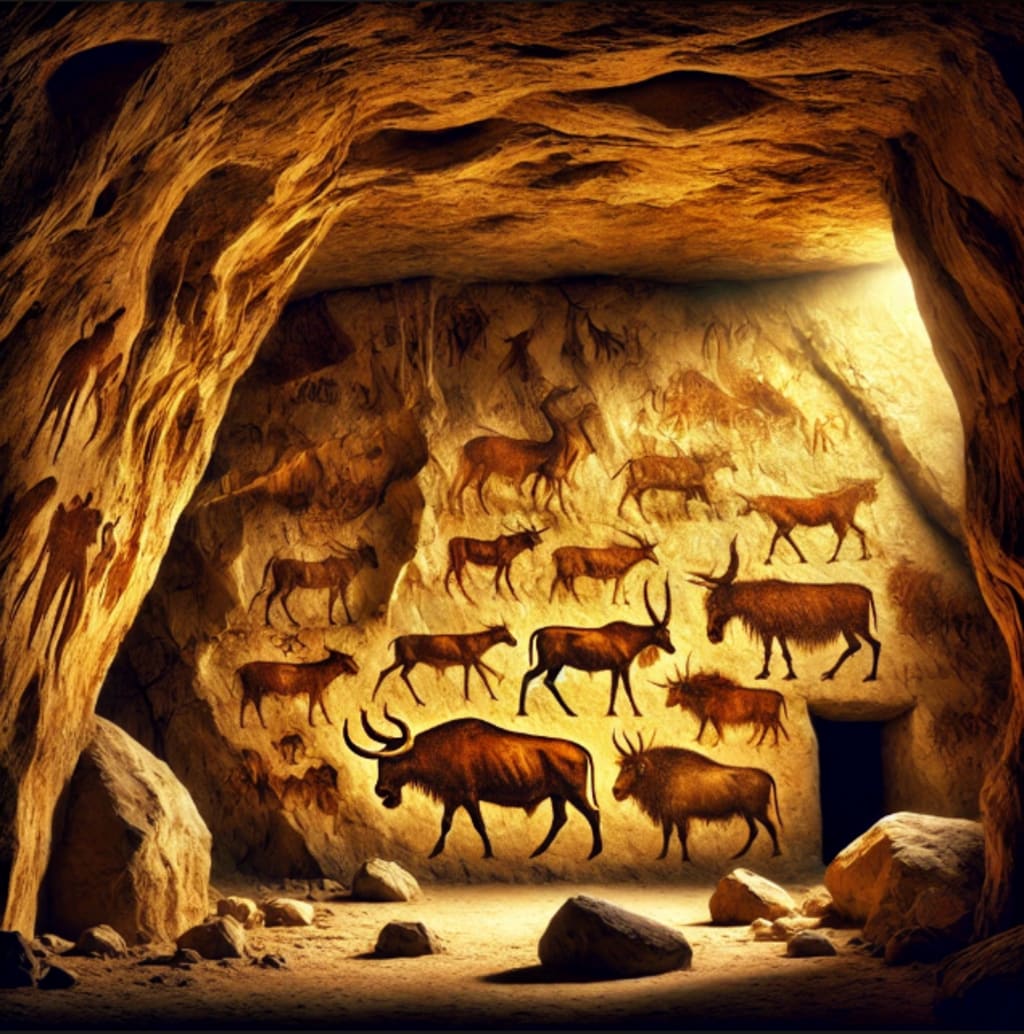
Hidden in the hills of southwestern France lies one of humanity's most profound connections to its prehistoric past: the Lascaux Cave. Discovered in 1940 by four teenagers, the cave has captivated the imagination of archaeologists, historians, and art enthusiasts for decades. Known for its remarkable Paleolithic paintings, the cave remains an enduring symbol of early human creativity and a window into the lives of our distant ancestors.
A Glimpse into the Past
Dating back over 17,000 years, the Lascaux Cave is a masterpiece of prehistoric art. Its walls are adorned with more than 600 paintings and 1,500 engravings depicting animals, humans, and abstract symbols. These images were created during the Upper Paleolithic period by early Homo sapiens, also known as Cro-Magnons, using natural pigments derived from iron oxide, manganese, and charcoal. The subjects of these artworks offer valuable insights into the lives, beliefs, and environment of the people who painted them.
The cave's most famous chamber, the "Hall of Bulls," features vivid depictions of aurochs, deer, and horses. These images, some over five meters long, demonstrate remarkable artistic skill, with dynamic compositions and a sophisticated use of perspective rarely seen in other prehistoric art.
Why Was the Cave Created?
The purpose of the Lascaux Cave paintings remains shrouded in mystery, with researchers proposing various theories. Some believe the cave served a ritualistic or religious function, with the paintings playing a role in hunting magic or shamanistic practices. The detailed depiction of animals might have been an attempt to invoke their abundance or ensure successful hunts.
Another theory suggests that the cave was an educational space where young hunters learned about their prey. The presence of abstract symbols, enigmatic shapes, and human figures hints at a more complex narrative, possibly linked to the spiritual beliefs of early humans.
The Discovery of Lascaux
The story of Lascaux Cave's discovery is as fascinating as the cave itself. On September 12, 1940, four teenagers—Marcel Ravidat, Jacques Marsal, Georges Agnel, and Simon Coencas—were exploring the countryside near the village of Montignac when their dog fell into a hole. As they investigated, they stumbled upon a narrow shaft leading to the underground wonder. What they found inside left them speechless: vast chambers filled with breathtaking paintings that had remained untouched for millennia.
News of the discovery spread rapidly, and the cave soon became a site of international interest. In 1948, Lascaux was opened to the public, attracting thousands of visitors eager to witness this extraordinary glimpse into humanity's distant past.
The Fragility of Prehistoric Art
Unfortunately, the influx of visitors to Lascaux came at a significant cost. By the 1960s, the cave began to show signs of damage, with carbon dioxide from visitors' breath, artificial lighting, and fluctuating temperatures threatening the delicate environment. Mold and algae started to appear on the walls, prompting authorities to close the cave to the public in 1963.
To ensure the preservation of this priceless treasure, strict conservation measures were implemented. A replica, Lascaux II, was created in 1983 to provide visitors with an authentic experience without endangering the original cave. Additional replicas, Lascaux III and IV, followed, using advanced technology to recreate the paintings with astonishing accuracy.
Modern Technology Meets Ancient Art
Today, cutting-edge technology plays a crucial role in studying and preserving Lascaux. High-resolution imaging, 3D scanning, and virtual reality allow researchers to analyze the cave's art and structure without causing further damage. These innovations have also made it possible to share the cave's wonders with a global audience through digital platforms.
The Lascaux Cave has inspired countless artists, writers, and scholars, serving as a timeless reminder of humanity's creative spirit. It has also raised awareness of the importance of preserving our shared cultural heritage for future generations.
The Enduring Mystique of Lascaux
Despite decades of study, the Lascaux Cave remains an enigma. Why did our ancestors devote so much time and effort to creating these stunning artworks deep within a dark, inaccessible cave? What do the symbols and abstract forms represent? How did they achieve such artistic precision with primitive tools and materials?
These unanswered questions continue to fuel fascination with Lascaux, drawing researchers and enthusiasts from around the world. The cave serves as a bridge between the past and the present, reminding us of our shared humanity and the universal drive to express ourselves through art.
Lascaux in the Modern World
As we marvel at the beauty and complexity of Lascaux, it is essential to reflect on the broader significance of prehistoric art. These ancient creations connect us to a time when humans first began to explore their place in the world, grapple with existential questions, and express their thoughts and emotions through creativity.
The Lascaux Cave is more than a historical site; it is a testament to the ingenuity and resilience of early humans. Its paintings tell a story of survival, adaptation, and the enduring power of art to transcend time and space.
Conclusion
The mystery of the Lascaux Cave continues to captivate and inspire, offering a glimpse into a world long past but never forgotten. As we delve deeper into its secrets, we gain a greater appreciation for the legacy of our ancestors and the rich tapestry of human history. By preserving and celebrating sites like Lascaux, we honor the creative spirit that unites us all, ensuring that the echoes of our ancient past resonate for generations to come.
About the Creator
Keep reading
More stories from mariam elghazaly and writers in History and other communities.
The Mystery of the Tombs of the Pharaohs: A Timeless Enigma
The tombs of the Pharaohs are among the most fascinating archaeological wonders of the ancient world. These burial chambers, built thousands of years ago, continue to captivate historians, archaeologists, and adventurers alike. From their intricate designs to the secrets they guard, the tombs of Egypt's ancient kings offer a glimpse into a civilization that was ahead of its time. However, these tombs are not just historical monuments; they are surrounded by a veil of mystery, danger, and legend. This article delves into the enigmatic world of the Pharaohs' tombs and explores why access to these ancient burial sites is often restricted.
By mariam elghazalyabout a year ago in History
The History of America — A Nation Forged by Struggle and Change
Long before the name “America” existed, the vast lands of North America were home to millions of Indigenous peoples. These societies—such as the Navajo, Iroquois, Cherokee, Apache, and many others—developed rich cultures, languages, and systems of governance. They farmed, hunted, traded, and built complex communities deeply connected to the land. For thousands of years, these civilizations thrived, long before European ships ever crossed the Atlantic.
By The best writer about 4 hours ago in History
Kyrsten Sinema
Kyrsten Sinema has become one of the most recognizable and debated figures in modern American politics. Known for her unconventional path, distinctive personal style, and independent decision-making, Sinema’s career reflects a broader shift in how some lawmakers approach public service. Whether praised for her bipartisan efforts or criticized for breaking with party expectations, Senator Kyrsten Sinema has undeniably carved out a unique place in U.S. political history. Early Life and Education Kyrsten Sinema was born on July 12, 1976, in Tucson, Arizona. Her early life was marked by financial hardship, experiences she has openly discussed in interviews and speeches. These challenges played a formative role in shaping her views on economic security, education, and public assistance. Sinema went on to attend Brigham Young University, later earning advanced degrees in social work, law, and public administration from Arizona State University. Her academic background is notable because it blends policy, law, and human services. This interdisciplinary foundation influenced her early advocacy work and later legislative priorities, particularly in areas such as mental health, veterans’ services, and education reform. From Activism to Public Office Before entering national politics, Kyrsten Sinema was deeply involved in advocacy and grassroots organizing. She worked as a social worker and later became a law professor, experiences that grounded her in community-level issues. Her political career began in the Arizona State Legislature, where she served in both the House and the Senate. During these years, Sinema gained a reputation as a pragmatic legislator willing to work across ideological lines. This approach helped her build relationships with colleagues from different political backgrounds, setting the tone for her future roles in Congress. Rise to the U.S. Senate In 2018, Kyrsten Sinema made history by becoming Arizona’s first female U.S. senator. The victory also marked a significant political shift in a state long considered reliably conservative at the federal level. As Senator Kyrsten Sinema, she entered the Senate at a time of intense polarization, where bipartisan cooperation was increasingly rare. Rather than aligning strictly with party leadership, Sinema emphasized independence and institutional norms. Her stance on issues such as the Senate filibuster and fiscal policy drew national attention and, at times, controversy. Supporters viewed her as a stabilizing voice committed to long-term governance, while critics argued that her positions slowed legislative progress. Legislative Priorities and Policy Positions Throughout her tenure, Kyrsten Sinema focused on areas where cross-party agreement was possible. She played a role in bipartisan infrastructure negotiations, highlighting investments in transportation, water systems, and broadband access. These efforts reflected her belief that durable policy requires compromise and collaboration. Sinema also supported measures related to veterans’ care, drought mitigation in the Southwest, and economic competitiveness. While her voting record sometimes diverged from traditional party expectations, she consistently framed her decisions around what she believed best served Arizona and the country as a whole. Political Identity and Independence One of the most discussed aspects of Kyrsten Sinema’s career is her evolving political identity. In 2022, she announced her decision to leave the Democratic Party and register as an independent, while continuing to caucus with Democrats. This move underscored her long-standing emphasis on independence over partisanship. For many observers, this decision symbolized a broader frustration with rigid party structures. Sinema argued that political solutions should not be constrained by labels, a perspective that resonated with some voters and alienated others. Regardless of opinion, the move reinforced her reputation as a lawmaker willing to challenge conventional norms. Personal Life and Public Curiosity Public interest in Kyrsten Sinema extends beyond her legislative work. Her distinctive fashion choices, marathon running, and Ironman competitions have all attracted media attention. Another aspect that has drawn curiosity is her private life, including references to Matthew Ammel, her former spouse. Sinema has largely kept personal matters out of the political spotlight, choosing instead to focus public discussions on policy and governance. Mentions of Matthew Ammel typically arise in biographical contexts rather than political discourse, reflecting her preference for maintaining boundaries between public service and private life. Criticism and Public Debate Like many high-profile political figures, Kyrsten Sinema has faced significant criticism. Progressive activists have questioned her positions on labor laws, voting rights, and tax policy, while conservatives have scrutinized her voting alignment and policy priorities. Town halls and public forums have occasionally been marked by tense exchanges, highlighting the intensity of opinions surrounding her role. Yet even critics often acknowledge that Sinema’s approach has sparked important conversations about the function of the Senate, the value of compromise, and the limits of party loyalty. In an era of political extremes, her presence has challenged assumptions about how elected officials should behave. Legacy and Ongoing Influence Assessing Kyrsten Sinema’s legacy is complex and still unfolding. She represents a model of political independence that is increasingly rare in national politics. Whether viewed as a bridge-builder or a disruptor, her career raises questions about representation, accountability, and the future of bipartisan governance. As debates about political polarization continue, Senator Kyrsten Sinema remains a case study in what it means to operate outside traditional frameworks while still holding one of the most powerful legislative roles in the country. Conclusion Kyrsten Sinema’s journey from grassroots activism to the U.S. Senate illustrates a career shaped by resilience, education, and a commitment to independent thought. Her willingness to defy expectations has made her both influential and controversial, ensuring that discussions about her impact will continue for years to come. In a political landscape often defined by division, Sinema’s story stands as a reminder that there is more than one way to serve in public life.
By Saboor Brohi 2 days ago in History
Silver Screen Magic with Mae West
American actress and singer Mae West became a popular film actress during the Great Depression. She started entertaining in vaudeville, then performed on Broadway, and finally went to Hollywood. She signed up with Paramount Pictures and made her debut in the 1932 film “Night After Night.” She also starred in musicals, comedies, and crime dramas. The American Film Institute named her one of the best classic Hollywood actresses.
By Rasma Raisters4 days ago in Geeks




Comments
There are no comments for this story
Be the first to respond and start the conversation.