
The Mystery of Dinosaurs
Uncovering the Secrets of Earth's Ancient Giants

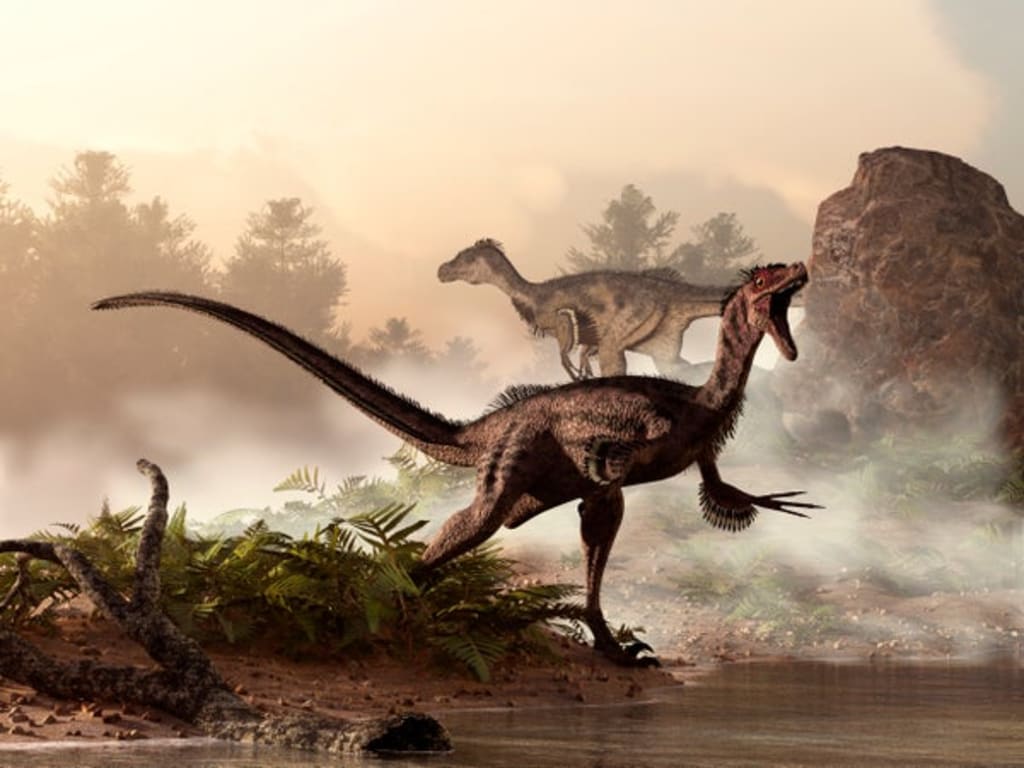
For centuries, dinosaurs have captured the imagination of scientists, children, filmmakers, and dreamers alike. These colossal creatures once ruled our planet, thriving for over 160 million years before mysteriously vanishing from existence. Yet, despite their extinction around 65 million years ago, the mystery of dinosaurs continues to fascinate and fuel discovery. What were they really like? How did they live—and why did they disappear?
In this article, we dive deep into the history of dinosaurs, exploring their rise, reign, and fall—and the lasting legacy they’ve left behind.
---
The Origins of the Dinosaurs
Dinosaurs first appeared during the Triassic period, about 230 million years ago. At that time, Earth looked very different. All the continents were joined in a single massive landmass called Pangaea, and the climate was mostly hot and dry. Early dinosaurs were small and two-legged, and they competed with many other reptile species for dominance.
As millions of years passed, dinosaurs evolved and diversified. By the time of the Jurassic period, they had become the dominant land animals on Earth. Towering sauropods like Brachiosaurus grazed the forests, while sharp-toothed predators like Allosaurus hunted them down. Their bones, teeth, and footprints tell stories of a world long gone—but still alive in our imagination.
---
A World Ruled by Giants
Dinosaurs were not just giant lizards—they were a vast and varied group of animals. Some were enormous, like the Argentinosaurus, which may have weighed over 100 tons. Others were as small as chickens. Some were carnivores, with powerful jaws and sharp claws, while others were peaceful plant-eaters with long necks or body armor.
One of the most iconic dinosaurs, Tyrannosaurus rex, lived during the Cretaceous period, the last chapter in the age of dinosaurs. With its bone-crushing bite and towering frame, T. rex ruled the prehistoric food chain. But dinosaurs were not all terrifying. Triceratops, with its three horns and frilled head, was a herbivore that likely lived in herds, offering some protection against predators.
Some species even had feathers, and this leads us to one of the most exciting discoveries of modern science: birds are living dinosaurs. That’s right—the birds you see today are direct descendants of small, feathered dinosaurs.
---
The Great Extinction Mystery
The biggest mystery surrounding dinosaurs is what caused their sudden extinction. For millions of years, they ruled the Earth, but around 65 million years ago, something changed. A mass extinction event wiped out nearly 75% of all life on the planet, including all non-avian dinosaurs.
The most widely accepted theory is the asteroid impact hypothesis. Scientists believe a massive asteroid—over six miles wide—struck the Earth near what is now the Yucatán Peninsula in Mexico. This impact created the Chicxulub crater and sent clouds of dust and debris into the atmosphere, blocking sunlight and disrupting the global climate.
Without sunlight, plants died. Without plants, herbivores starved. And with no herbivores to hunt, carnivores followed. In a relatively short time, the age of dinosaurs came to a catastrophic end.
But some scientists argue that volcanic eruptions, climate change, or even disease could have contributed to their extinction. The truth may lie in a combination of these events, making the extinction of the dinosaurs one of the greatest unsolved mysteries in Earth’s history.
---
What Dinosaurs Teach Us Today
Dinosaurs are more than ancient creatures—they are keys to understanding life on Earth. Their fossils show us how species evolve and adapt to changing environments. By studying their bones and footprints, scientists learn about ancient climates, ecosystems, and geological processes.
Furthermore, dinosaur discoveries fuel curiosity and education. Museums worldwide display skeletons and models, while paleontologists continue to uncover new species every year. Countries like China, Argentina, and the United States are hotbeds of dinosaur research, revealing new insights into how these creatures lived, moved, and even parented their young.
Perhaps most importantly, dinosaurs remind us of life’s fragility. If such powerful and diverse creatures could vanish, what does that mean for us? In an age where climate change and biodiversity loss threaten modern species, the story of the dinosaurs serves as a powerful warning—and a call to protect our planet.
---
Conclusion: The Legacy Lives On
The mystery of dinosaurs is far from solved. Every fossil unearthed adds another piece to the puzzle. Were some dinosaurs warm-blooded? Could they swim? Did they communicate in complex ways? The questions are endless, and the answers are still unfolding.
Though the dinosaurs themselves are gone, their story lives on—in science, in history, in art, and in our imagination. They are not just relics of the past; they are lessons for the future. And as long as there are mysteries left to solve, the age of dinosaurs will never truly end.
About the Creator
Mati Henry
Storyteller. Dream weaver. Truth seeker. I write to explore worlds both real and imagined—capturing emotion, sparking thought, and inspiring change. Follow me for stories that stay with you long after the last word.
Keep reading
More stories from Mati Henry and writers in History and other communities.
The Life of Albert Einstein
In the small German town of Ulm, on March 14, 1879, a boy was born who would one day become one of the most celebrated and influential scientists the world had ever known—Albert Einstein. From his earliest years, Einstein displayed a quiet and curious nature. He wasn’t the typical child. He spoke slowly and rarely, preferring to ponder things deeply before speaking. Some even worried about his mental development. But within his silent mind, extraordinary thoughts were already taking shape.
By Mati Henry 10 months ago in History
Early March 2026: 4 Goals Accomplished
It's early March and I've now accomplished my 4th writing goal for the year of 2026. Before diving into the behind-the-scenes of it... why not tell you up front what that accomplishment was? I was published in a 2nd publication for this year. Published in Helix Literary Magazine out of Central Connecticut State University. You can read it for free right now!
By Stephen Kramer Avitabile7 days ago in Writers




Comments
There are no comments for this story
Be the first to respond and start the conversation.