
The Mysterious Disappearance and Return of the "Stardust" Plane
The Mysterious Disappearance and Return of the "Stardust" Plane

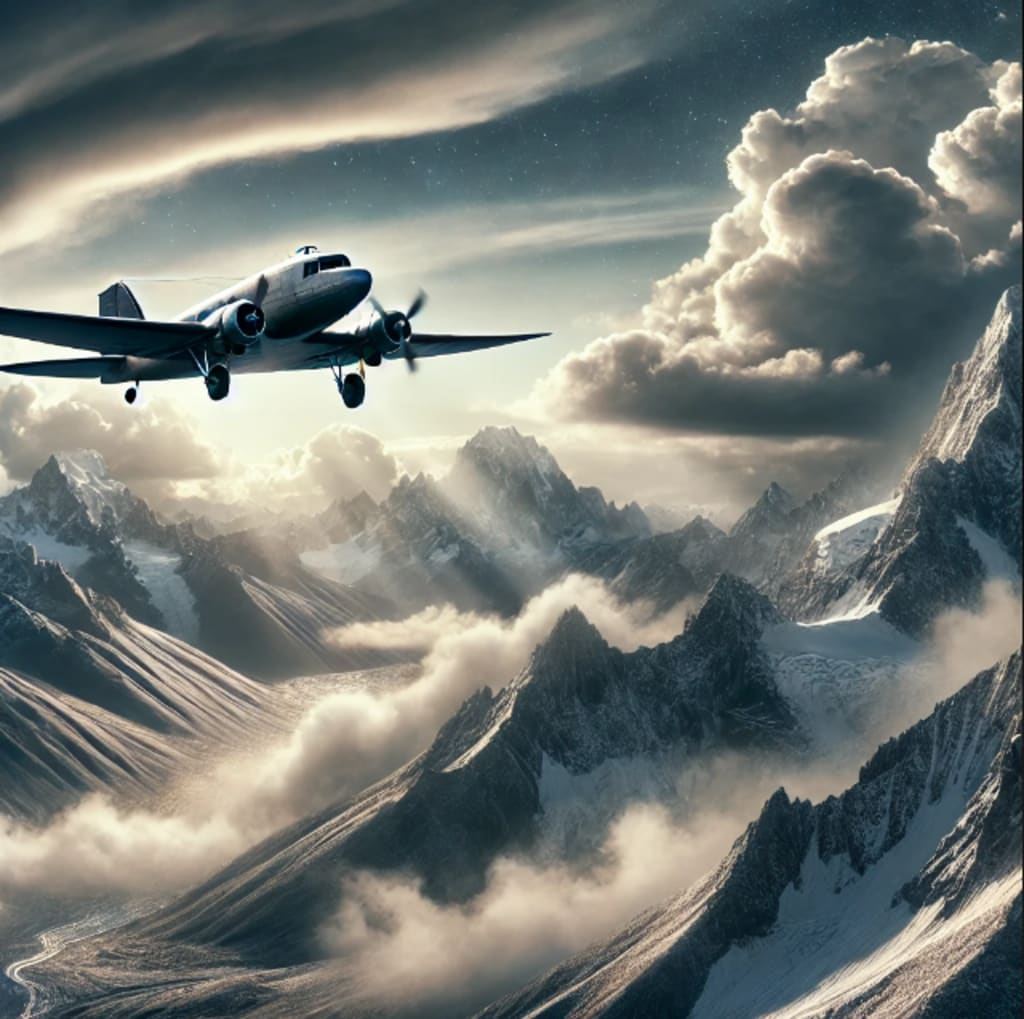
In the annals of aviation history, few mysteries rival the enigmatic disappearance of the British South American Airways (BSAA) flight "Stardust." The DC-3 aircraft vanished without a trace on August 2, 1947, as it flew from Buenos Aires, Argentina, to Santiago, Chile. For over five decades, its fate remained an unsolved mystery, spawning speculation, conspiracy theories, and countless investigations. Then, in 2000, the mystery began to unravel, offering chilling insights into the aircraft's final moments. This is the story of the disappearance and re-discovery of Stardust, a tale shrouded in intrigue, tragedy, and the relentless pursuit of truth.
The Fateful Flight
Stardust was a Douglas DC-3 aircraft operated by BSAA, carrying six passengers and five crew members. The plane embarked on its final journey from Buenos Aires at 1:46 PM local time, with an expected flight duration of less than four hours. Its route crossed the formidable Andes mountains, notorious for their extreme weather conditions and unpredictable winds.
The crew included Captain Reginald Cook, an experienced RAF veteran; First Officer Donald Checklin; and Radio Operator Harmer. Among the passengers was a British diplomat carrying sensitive documents, adding a layer of intrigue to the tragedy.
As the aircraft approached Santiago, Stardust sent a final cryptic Morse code message: “STENDEC.” The meaning of this transmission baffled air traffic controllers and investigators alike. Moments later, Stardust disappeared off the radar, never reaching its destination.
A 53-Year Mystery
For decades, the disappearance of Stardust became the subject of speculation. Theories ranged from mechanical failure and pilot error to more outlandish ideas like alien abduction or a Bermuda Triangle-style anomaly. The Andes' rugged terrain and harsh conditions made search efforts almost impossible, and Stardust's location became a needle in a haystack.
One of the most perplexing elements was the "STENDEC" message. Linguists, cryptographers, and aviation experts failed to decode its meaning. Was it a distress call? A code word? Or merely a misinterpreted transmission?
Families of the victims clung to hope, while others succumbed to the reality that Stardust was likely lost forever.
Discovery in the Andes
In 2000, a group of mountaineers climbing Mount Tupungato in Argentina stumbled upon the wreckage of an aircraft buried in the ice. Subsequent investigations confirmed it was Stardust, finally solving the mystery of its whereabouts after 53 years. The freezing temperatures of the Andes had preserved much of the debris, including human remains and fragments of the plane.
The findings revealed a tragic yet straightforward explanation for the crash. Stardust had likely flown into a phenomenon known as a "controlled flight into terrain" (CFIT). In poor visibility, the crew mistakenly believed they had cleared the Andes and began their descent, only to crash into the mountains at high speed. The resulting avalanche buried the wreckage deep under snow and ice, hiding it for over half a century.
Decoding "STENDEC"
Even with the plane's discovery, the meaning of "STENDEC" remained an enigma. However, some experts believe it could have been a miscommunication or a distorted version of "DESCENT." Another possibility is that the message was a hurried distress call sent under immense pressure, with its true meaning lost in translation.
Impact and Legacy
The discovery of Stardust provided closure to the families of the victims and highlighted the challenges of early aviation. It also underscored the dangers of flying in mountainous regions, particularly during an era when navigation relied heavily on rudimentary instruments and human judgment.
The story of Stardust remains a compelling tale of adventure, mystery, and tragedy. It serves as a reminder of how far aviation technology has advanced and the enduring allure of solving historical mysteries.
Today, Stardust's story continues to captivate enthusiasts and researchers, earning its place among the greatest unsolved—and eventually solved—aviation mysteries of all time.
Conclusion
The disappearance and eventual discovery of the Stardust plane symbolize the resilience of human curiosity and the unyielding pursuit of answers. For 53 years, the Andes held onto their secret, but the icy grip of time finally loosened, allowing the world to learn the truth. While the wreckage may have been found, the story of Stardust lives on, an enduring testament to the perils of exploration and the mysteries that still linger in the skies.
About the Creator
Keep reading
More stories from mariam elghazaly and writers in History and other communities.
The Legendary Journey of Eight Andalusian Adventurers: Al-Idrisi’s Account of the Voyage Beyond the Sea of Darkness
The annals of history are brimming with stories of courage, curiosity, and the quest for knowledge. One of the most fascinating yet lesser-known tales comes from Al-Idrisi, the 12th-century Arab geographer and scholar. This narrative recounts the daring voyage of eight young men from Andalusia who set sail into the vast and mysterious Atlantic Ocean, referred to at the time as the "Sea of Darkness" (Bahr al-Zulumat). Their journey remains an evocative chapter in the chronicles of exploration and has sparked intrigue among historians, scholars, and enthusiasts of medieval seafaring tales.
By mariam elghazalyabout a year ago in History
The Year 1983 in Review: Fun Facts, Trivia, and Historic Highlights
This quick read is a collection of fun facts, trivia, and historical events from the year 1983. Discover the year’s top news stories, most influential people, sports facts, computer trivia, grocery and other retail prices, and much more.
By Gregory DeVictor7 days ago in History
The Forsyth House Fire
Since 1851, Forsyth House has stood on the corner of Union Street and Gordon Street in the heart of Glasgow. Its iconic, or was... because on Sunday 8th of March, 2026, a fire broke out in a small, seemingly un-named shop in the building and tore all that history down. As I write, the rubble is still unsettled and the street is still blocked off. Central Station is quiet on the upper level, and around 30 small businesses have quite literally gone up in smoke.
By S. A. Crawford2 days ago in The Swamp


Comments
There are no comments for this story
Be the first to respond and start the conversation.