
The Oldest House in France: A Glimpse into Medieval Life in Aveyron
Ancient Building

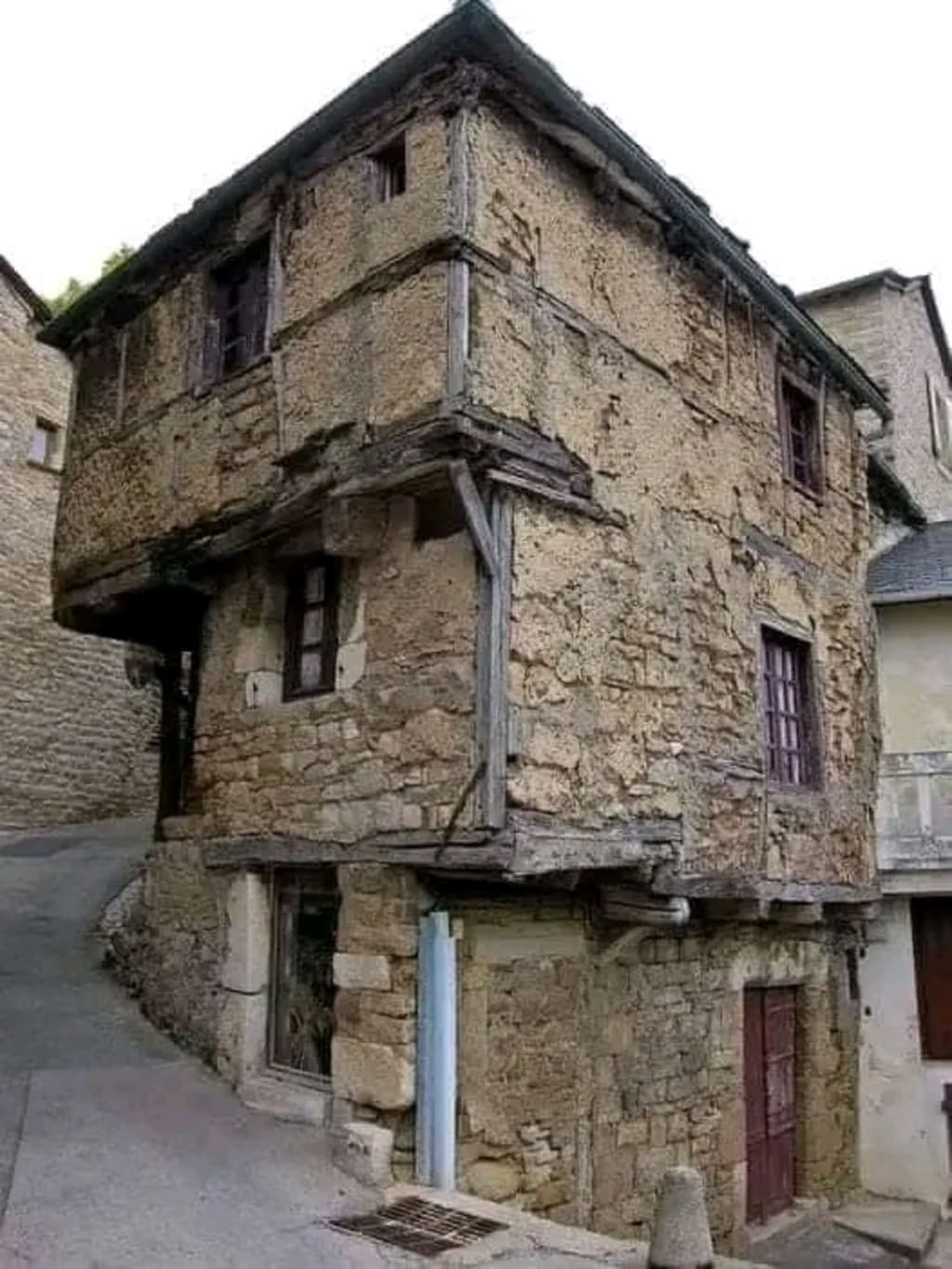
Nestled in the charming countryside of Aveyron, France, stands an extraordinary piece of history: a 700-year-old house, believed to be the oldest in France. Built in the 13th century, this medieval residence, attributed to a woman named Jeanne, provides a captivating look into life in medieval France. Its age, architectural details, and ongoing restoration efforts have transformed it into a unique cultural treasure, preserving a way of life that otherwise may have been forgotten.
A Medieval Masterpiece in Stone
The house itself is a testament to the architectural practices of medieval times. Constructed from stone, a luxury in those days, it tells us that Jeanne, its original owner, was relatively wealthy. In medieval France, only the wealthier members of society could afford to build with stone, as it was durable, offered better protection from the elements, and symbolized stability. Unlike the wooden structures that were common during that period, stone houses were more resistant to fire, pests, and decay, making them valuable assets.
The stone structure also reflects the level of craftsmanship available at the time. Builders had to quarry, transport, and shape each stone by hand, an arduous task that required skill and dedication. The choice to invest in stone suggests that Jeanne had a long-term vision for her property, wanting it to withstand generations and provide safety and comfort.
Unique Tax-Saving Design
One of the house’s most intriguing features is its design, which reflects the ingenuity of medieval tax-avoidance strategies. The ground floor is slightly smaller than the upper levels, a design tactic employed in the 13th century to minimize land taxes. During Jeanne's time, taxes were based on the footprint of the ground floor, rather than the total square footage of the building. By expanding the upper stories, homeowners could maximize their living space without incurring additional tax costs.
This clever design is not only historically significant but also visually distinctive. The house appears to widen as it rises, creating an almost whimsical structure that captures the creativity and adaptability of medieval builders. This feature also highlights the financial considerations and constraints that shaped the architecture of the time, reminding us that even in centuries past, individuals found innovative ways to adapt to tax regulations.
A Glimpse into Jeanne’s Life
While much of Jeanne's story remains a mystery, the details we do know paint a fascinating picture of her life. The fact that she could afford a stone house suggests that Jeanne was likely a woman of means, either through family wealth, marriage, or her own economic activities. Medieval Aveyron was a region marked by a mix of agriculture, trade, and craftsmanship, so it’s possible that Jeanne or her family had ties to one of these industries.
The house’s size and sturdy construction imply that it was not only a place of residence but also a point of pride. Stone houses were rare enough to signify social standing, and it’s likely that Jeanne’s home would have been admired by her neighbors and community members. This also gives insight into the local society and culture, as structures like this would serve as informal landmarks, embodying the town’s history and identity.
Restoration Efforts: Preserving a Piece of History
Today, Jeanne’s house is undergoing careful restoration, a process that requires respect for its historical integrity as well as modern expertise. Restoration efforts aim to preserve the original stonework, unique design, and architectural details, ensuring that the house remains a genuine representation of its time. Given its age and historical significance, the restoration project must balance the demands of modern preservation techniques with the materials and methods that would have been used in the 13th century.
Restoring a 700-year-old house is no easy feat. The work involves skilled craftsmen who specialize in stone masonry, woodwork, and traditional building methods, each carefully selected to match the original materials. Even with modern technology, the restoration team faces the challenge of preserving the structural integrity of a building that has withstood centuries of weather and wear. Yet the effort is well worth it, as it allows future generations to experience a piece of medieval life firsthand.
Historical Significance and Cultural Value
The house in Aveyron is more than just an old building; it is a symbol of France’s deep historical roots and architectural heritage. Structures like Jeanne’s house offer a tangible link to the past, allowing people to step back in time and imagine the lives of those who lived centuries ago. For historians, architects, and tourists, the house offers a rare opportunity to explore an authentic piece of medieval history, untouched by the major changes that swept through France over the centuries.
Moreover, this house stands as a cultural treasure for the local community, embodying a sense of identity and continuity. The restoration of Jeanne’s house is not only about preserving bricks and mortar; it’s about keeping alive the stories, traditions, and lifestyles of those who shaped the region’s history. For the people of Aveyron, the house is a reminder of their ancestors’ resilience, ingenuity, and craftsmanship.
A Lasting Legacy of Medieval France
As the oldest known house in France, Jeanne’s 13th-century home is a remarkable legacy of the medieval period. It stands as a tribute to the skills and creativity of those who lived hundreds of years ago, as well as a symbol of the timeless connection between architecture and society. The design details, tax-saving features, and the durability of the stone construction all speak to a way of life that was both practical and profound.
Today, as visitors and locals alike witness the careful restoration of Jeanne’s home, they are reminded of the rich tapestry of history that surrounds them. In preserving this medieval house, France is safeguarding not only a structure but a story—a story of a woman named Jeanne, of a town’s heritage, and of a time when homes were crafted to last, providing shelter, pride, and a lasting legacy for future generations.
About the Creator
Keep reading
More stories from Deji Akomolafe and writers in History and other communities.
The Karnofsky Family and Louis Armstrong: A Story of Kindness, Music, and Heritage
Few names shine as brightly in the world of jazz as Louis Armstrong, a legendary trumpeter, composer, and vocalist who left an indelible mark on music and culture. Behind Armstrong’s extraordinary talent, however, lies a touching and lesser-known story about his childhood, shaped by the kindness and compassion of a Jewish immigrant family—the Karnofskys. This family, who had immigrated from Lithuania to the United States, played a crucial role in Armstrong's early life, helping to ignite his musical journey and providing him with a loving home that left a profound impact on his identity.
By Deji Akomolafeabout a year ago in History
The Quiet Collapse of Global Arms Control
The Quiet Collapse of Global Arms Control For decades, arms control agreements helped prevent the world’s most powerful weapons from spiraling out of control. Treaties limited nuclear stockpiles, increased transparency, and built fragile trust between rival states. Today, that system is quietly unraveling—and its collapse may define the next era of global insecurity.
By Wings of Time about 22 hours ago in History
Imran Khan: The Journey of a Believer
Imran Ahmed Khan Niazi was born on October 5, 1952, in Lahore, into a well-educated Pashtun family. From an early age, he showed independence of thought and a quiet confidence that often set him apart. Educated first in Lahore and later at Aitchison College, he was sent to England for further studies, eventually attending the Royal Grammar School Worcester and later Keble College, Oxford, where he studied Philosophy, Politics, and Economics. At Oxford, Imran was exposed to global ideas, cultures, and debates. He was not only a student but also a sportsman, playing cricket with intensity and pride. Those years shaped his worldview—combining Eastern roots with Western education—and gave him a belief that discipline, preparation, and courage could change destiny. Rise of a Cricketing Icon Imran Khan’s greatest early fame came from cricket. Tall, athletic, and fiercely competitive, he entered Pakistan’s national team in the early 1970s. The beginning was not easy. He faced criticism for inconsistency and injuries, and some questioned whether he had the temperament for leadership. But Imran was relentless. He trained hard, studied the game deeply, and refined his skills as a fast bowler and all-rounder. Over time, he became the backbone of Pakistan’s cricket team. What truly set him apart was not just his performance, but his ability to inspire teammates. He believed in building confidence, unity, and self-respect within the team—qualities Pakistan cricket had often lacked on the world stage. His defining moment came in 1992, when he led Pakistan to victory in the Cricket World Cup. Against all odds, with an injured body and an underdog team, Imran captained Pakistan to its first—and so far only—World Cup win. That triumph transformed him into a national hero. For millions of Pakistanis, he became a symbol of hope: proof that belief and determination could overcome adversity. A New Mission: Giving Back After retiring from cricket, Imran Khan surprised many by not choosing a comfortable life of fame. Instead, he turned toward philanthropy. Inspired by the death of his mother from cancer, he envisioned building a world-class cancer hospital in Pakistan—something many considered impossible. In a country where public trust in institutions was low, raising funds for such a project seemed unrealistic. Yet Imran traveled across Pakistan and abroad, appealing directly to people. He spoke not as a celebrity, but as a son fulfilling a promise. Against expectations, Shaukat Khanum Memorial Cancer Hospital became a reality in 1994, offering free or subsidized treatment to thousands of patients. Later, he founded Namal University to provide quality education to underprivileged students. These projects strengthened his image as a man who could turn dreams into institutions—someone willing to sacrifice comfort for a cause. Entering Politics: A Difficult Road Imran Khan entered politics in 1996 by founding Pakistan Tehreek-e-Insaf (PTI). His message was simple but bold: justice, accountability, and independence from corruption and foreign influence. At a time when Pakistani politics was dominated by powerful families and entrenched interests, Imran was seen as an outsider—idealistic, but unrealistic. For years, PTI struggled. In elections, Imran sometimes won only a single seat, or none at all. Critics mocked him, calling him irrelevant and disconnected from political realities. Many former supporters lost patience. But Imran refused to quit. He believed that real change takes time and that nations are not transformed overnight. Slowly, his message began to resonate, especially with the youth. His speeches emphasized dignity, rule of law, and a Pakistan that could stand on its own feet. Massive rallies followed, particularly after 2011, when PTI emerged as a major political force. For the first time, Pakistan’s young generation felt represented by a leader who spoke their language. Prime Ministership: Power and Pressure In 2018, after more than two decades in politics, Imran Khan became the Prime Minister of Pakistan. Supporters celebrated it as the victory of perseverance. For Imran, it was the hardest phase of his life. Governing a country of over 200 million people came with immense challenges: economic crises, debt, political opposition, and complex foreign relations. Imran promised reforms, accountability, and welfare programs. His government introduced initiatives like the Ehsaas Program to support the poor and attempted to reform health and governance systems. However, criticism followed closely. Opponents accused him of inexperience and poor economic management. Political tensions remained high, and compromises—inevitable in politics—disappointed some of his most loyal supporters. Imran often spoke of the gap between ideals and reality, learning firsthand how difficult it is to bring change within an old system. Removal from Power and Continued Struggle In 2022, Imran Khan was removed from office through a vote of no confidence. He claimed it was the result of internal conspiracies and foreign pressure, while opponents argued it was due to governance failures. Whatever the interpretation, his removal marked another dramatic turn in his story. Instead of retreating, Imran returned to public rallies with renewed intensity. He framed his struggle as one not just for power, but for sovereignty and justice. Legal battles, arrests, and political restrictions followed, making his path even more difficult. To his supporters, Imran Khan became a symbol of resistance—someone standing against a powerful status quo. To critics, he remained a divisive figure. Yet no one could deny his impact on Pakistan’s political consciousness. Legacy Still Being Written Imran Khan’s story is not finished. Unlike his cricket career, which ended with a clear victory, his political journey remains open-ended. He has inspired millions to believe in change, to question authority, and to demand accountability. At the same time, he has faced criticism for mistakes, rigidity, and unmet promises. What makes Imran Khan unique is not perfection, but persistence. From cricket fields to cancer wards, from opposition benches to the prime minister’s office, his life reflects a constant refusal to accept limits imposed by others. In the end, Imran Khan stands as one of Pakistan’s most influential figures—a man who dared to dream big, stumbled often, but never stopped walking forward. Whether history judges him as a great leader, a flawed reformer, or both, his story will remain deeply woven into the narrative of modern Pakistan.
By The best writer about 16 hours ago in History


Comments
There are no comments for this story
Be the first to respond and start the conversation.