
The Muslim Community: A Global Mosaic of Faith, Culture, and Unity
Understanding the Diversity, Contributions, and Challenges of the World’s Second Largest Religious Community

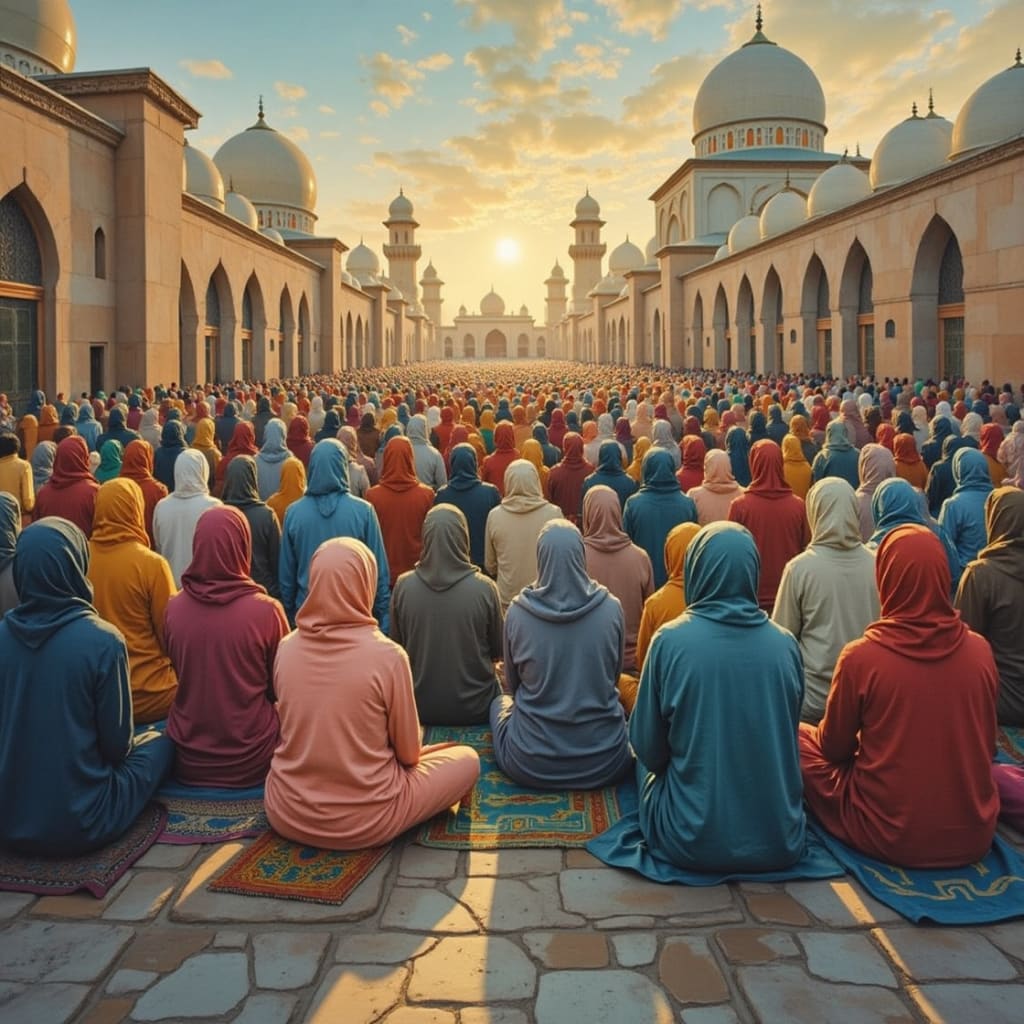
The Muslim community, known as the Ummah, is one of the most diverse and widespread religious communities in the world. With over 1.9 billion followers of Islam, Muslims make up approximately 25% of the global population. Yet, despite this shared faith, the Muslim community is not monolithic. It is a vast mosaic of cultures, languages, traditions, and interpretations that span continents—from the deserts of the Middle East to the bustling cities of Southeast Asia, and from the heart of Africa to the suburbs of Western Europe and North America.
This article explores the identity, unity, diversity, contributions, and challenges of the global Muslim community in the 21st century.
---
Foundations of the Muslim Community
The roots of the Muslim community trace back to the 7th century CE, when the Prophet Muhammad (peace be upon him) began preaching Islam in the Arabian city of Mecca. Islam’s core teachings, based on the Qur’an and the Sunnah (practices of the Prophet), emphasize monotheism, compassion, justice, and community. The five pillars of Islam—faith (Shahada), prayer (Salah), fasting (Sawm), charity (Zakat), and pilgrimage (Hajj)—form the foundation of Muslim communal life.
From its early beginnings, the Muslim community expanded rapidly, not just through conquest but also through trade, intermarriage, and intellectual exchange. This laid the groundwork for a community that is both unified in faith and rich in cultural diversity.
---
Diversity Within Unity
One of the most remarkable features of the Muslim community is its diversity. Muslims live in over 100 countries, and the largest populations are found in Indonesia, Pakistan, India, Bangladesh, and Nigeria—rather than the Arab world, as many people assume.
Culturally, the Muslim world encompasses a wide array of customs, dress, languages, and cuisines. For example, the call to prayer may sound different in Turkey than in Mali, and Ramadan traditions vary significantly between Malaysia and Morocco. Yet, across these cultural variations, there is a shared religious identity that binds Muslims together—expressed through rituals, values, and mutual respect for the Prophet and the Qur’an.
There are also theological differences within the Muslim community, primarily between Sunni and Shia branches of Islam. Sunnis make up about 85-90% of Muslims, while Shias constitute 10-15%. Despite historical tensions, there is considerable overlap in core beliefs and practices.
---
Contributions to Civilization
The Muslim community has made significant contributions to the advancement of human civilization throughout history. During the Islamic Golden Age (8th to 14th century), Muslim scholars were at the forefront of scientific, medical, philosophical, and artistic innovation. Figures like Al-Khwarizmi (mathematics), Ibn Sina (medicine), and Al-Farabi (philosophy) are well known in historical scholarship for their influence on both Eastern and Western civilizations.
Islamic architecture, literature, and art continue to inspire people around the world. From the intricate designs of the Alhambra in Spain to the calligraphy of the Qur’an, Islamic aesthetics are a testament to the creativity and depth of the Muslim world.
Today, Muslims are active contributors in nearly every field: from politics and business to academia and the arts. They are Nobel laureates, Olympic medalists, engineers, educators, and social activists. The community continues to shape the global landscape in profound ways.
---
Social and Spiritual Life
Muslims place a strong emphasis on community life and social responsibility. The mosque (masjid) is not only a place of worship but also a community hub where people gather for education, charity, and social support. During Ramadan, community iftars (breaking of the fast) and increased charitable activities reflect the spirit of unity and generosity.
Family values, mutual respect, and service to others are central to Muslim social ethics. In many communities, extended families live together or maintain close ties, fostering a sense of belonging and support.
Spiritual practices such as daily prayers, reciting the Qur’an, and seeking forgiveness help Muslims maintain a close relationship with God (Allah). This spiritual discipline is not only personal but communal, as seen in gatherings for Friday prayers, Eid celebrations, and Hajj pilgrimage.
---
Challenges Facing the Muslim Community
Despite its richness and resilience, the Muslim community faces several challenges in the modern era. Among them are Islamophobia, political instability, sectarian conflict, and internal debates about modernity and tradition.
In many Western societies, Muslims face discrimination and prejudice, often fueled by media stereotypes and geopolitical tensions. Hate crimes and restrictive policies in some countries contribute to a sense of marginalization and misunderstanding.
In the Muslim world itself, political turmoil and social injustices have affected the community’s well-being. Conflicts in Syria, Yemen, Palestine, and parts of Africa have displaced millions and caused immense suffering. Sectarianism—whether political or religious—continues to divide some communities.
Another internal challenge is the need for intellectual and spiritual renewal. Many scholars and leaders within the community are calling for balanced approaches to interpreting Islamic teachings in the context of modern challenges such as gender equality, education reform, and global interfaith dialogue.
---
The Future of the Muslim Community
The future of the Muslim community is closely tied to how it navigates the balance between preserving tradition and embracing innovation. Education, dialogue, and social justice are key pillars for progress.
Young Muslims today are increasingly vocal, educated, and engaged in shaping their futures. Whether in Cairo or Chicago, they are using digital platforms, community organizing, and creative expression to address social issues and build inclusive spaces.
Interfaith collaboration and intercultural dialogue are also vital in breaking down misconceptions and building bridges of understanding. By fostering mutual respect and cooperation, Muslims can play a leading role in promoting global peace and unity.
---
Conclusion
The Muslim community is a dynamic and multifaceted global force. While unified by faith, it is enriched by a stunning diversity of cultures, languages, and perspectives. Its historical contributions to civilization are vast, and its potential for future impact is immense.
As the world becomes increasingly interconnected, understanding and appreciating the Muslim community is not only essential for peaceful coexistence but also for building a more just and compassionate global society. Through unity, education, and empathy, the Ummah can continue to thrive and inspire for generations to come.


Comments
There are no comments for this story
Be the first to respond and start the conversation.