
The Most Beautiful Ancient Temples in the World
Exploring Timeless Wonders: The World’s Most Stunning Ancient Temples


Temples are not just places of worship; they are monumental testaments to the ingenuity, creativity, and spirituality of ancient civilizations. These structures, often designed to align with celestial events or to evoke a sense of divinity, stand as reminders of humanity's enduring quest for meaning and connection with the divine. In this article, we’ll journey across the globe to discover the most beautiful ancient temples in the world, each telling its own story of culture, religion, and artistry.
Temples of Asia: A Journey Through Mysticism
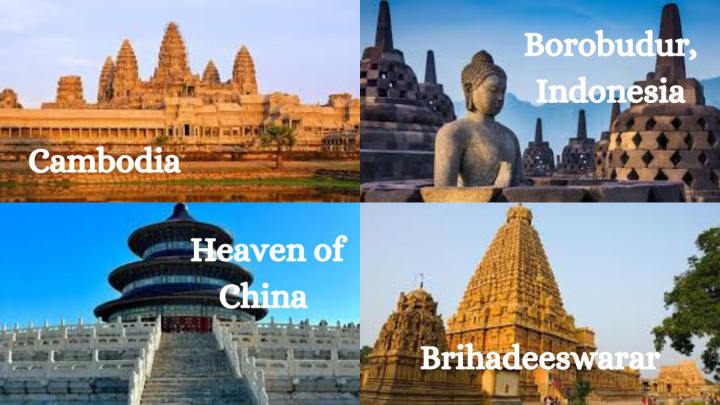
Angkor Wat, Cambodia
Angkor Wat, the largest religious monument in the world, is a jewel of Khmer architecture. Built-in the 12th century by King Suryavarman II, this temple was dedicated to the Hindu god Vishnu but later transformed into a Buddhist site. Its central towers symbolize Mount Meru, the mythical home of the gods. The intricate bas-reliefs narrating Hindu epics like the Ramayana add to its spiritual grandeur. Surrounded by a vast moat, Angkor Wat is a masterpiece of symmetry, geometry, and devotion.
Borobudur, Indonesia
Nestled amid lush jungles and volcanic landscapes, Borobudur is the largest Buddhist temple in the world. Constructed in the 9th century, its design reflects the Buddhist concept of attaining Nirvana, with ascending terraces representing the path to enlightenment. Over 2,600 relief panels and 500 Buddha statues adorn this magnificent structure, making it a true marvel of Southeast Asian heritage.
The Temple of Heaven, China
In Beijing, the Temple of Heaven embodies ancient Chinese cosmology and imperial ritual. Built in the early 15th century, this temple complex was where emperors prayed for a good harvest. Its circular design reflects heaven, while the square base represents earth, symbolizing harmony between the two realms. The craftsmanship and symbolism of the temple highlight the sophistication of Ming dynasty architecture.
Brihadeeswarar Temple, India
An exemplar of Dravidian architecture, Brihadeeswarar Temple is a UNESCO World Heritage Site located in Tamil Nadu. Built during the Chola dynasty in the 11th century, it is dedicated to Lord Shiva. The temple is renowned for its towering vimana (temple tower), elaborate sculptures, and the massive Nandi (sacred bull) statue. It’s a living testament to India’s rich cultural and spiritual legacy.
The Wonders of the Middle East and Africa
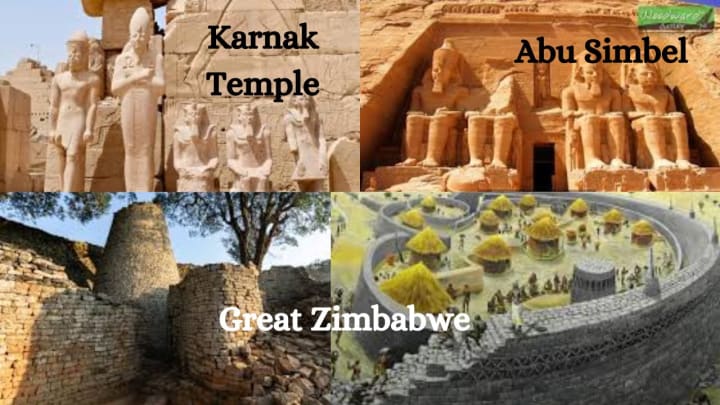
Karnak Temple, Egypt
The Karnak Temple Complex in Luxor is a magnificent testament to ancient Egyptian civilization. Spanning over 200 acres, it is one of the largest religious complexes ever built. The temple was primarily dedicated to Amun-Ra, the king of the gods, and expanded by generations of pharaohs over nearly 2,000 years. The Great Hypostyle Hall, with its 134 massive columns arranged in 16 rows, is a marvel of ancient engineering. The walls are adorned with intricate carvings that narrate stories of military conquests and religious rituals, making Karnak a treasure trove of history and art.
Abu Simbel, Egypt
Carved into sandstone cliffs, the twin temples of Abu Simbel are one of the most iconic landmarks of ancient Egypt. Commissioned by Pharaoh Ramesses II in the 13th century BCE, these temples honor the gods Amun, Ra-Horakhty, and Ptah. The four colossal statues of Ramesses II at the entrance exude power and majesty. What’s equally fascinating is their relocation in the 1960s to avoid submersion under Lake Nasser, a feat of modern engineering that preserved this ancient wonder.
Great Zimbabwe, Zimbabwe
The Great Zimbabwe ruins stand as a testament to the ingenuity of the Shona civilization. Built between the 11th and 15th centuries, this UNESCO World Heritage Site is characterized by massive stone walls constructed without mortar. The Great Enclosure, the largest single structure in sub-Saharan Africa, showcases advanced stone masonry techniques. As a religious and political centre, Great Zimbabwe reflects the cultural and spiritual vibrancy of the African continent.
The Majestic Temples of Europe
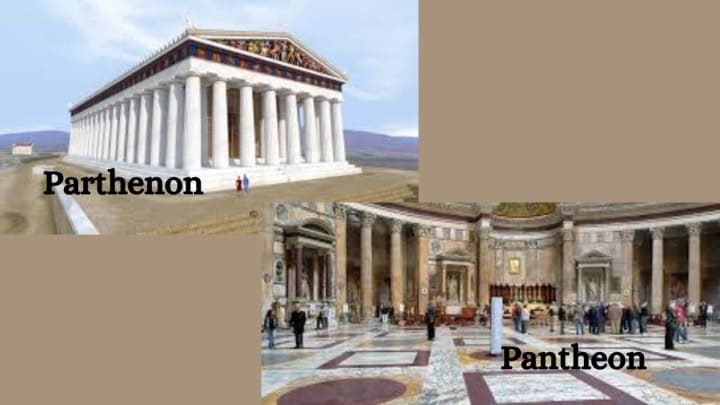
Parthenon, Greece
Perched atop the Acropolis in Athens, the Parthenon is an enduring symbol of ancient Greek civilization. Dedicated to Athena, the goddess of wisdom and war, it was constructed in the 5th century BCE. The temple’s Doric columns, intricate friezes, and meticulous proportions reflect the brilliance of Greek architecture and art. Despite centuries of damage and transformation, the Parthenon remains a beacon of classical beauty and cultural pride.
Pantheon, Italy
The Pantheon in Rome, built in 126 CE under Emperor Hadrian, is a masterpiece of Roman engineering. Its enormous dome, featuring an oculus at the centre, is an architectural marvel that has inspired structures for centuries. Originally a temple for all Roman gods, it was later converted into a Christian church. The Pantheon’s harmonious design and enduring legacy make it a gem of European heritage.
Temples of the Americas: Bridging the Ancient Worlds
Chichen Itza, Mexico
Chichen Itza, a pre-Columbian archaeological site in the Yucatán Peninsula, showcases the ingenuity of the ancient Maya civilization. The centrepiece of this site is El Castillo, or the Temple of Kukulcán, a pyramid with 365 steps representing the days of the year. During the equinoxes, the shadow of a serpent appears to slither down the pyramid's side, a testament to the Mayans' advanced understanding of astronomy. Chichen Itza’s blend of science, religion, and architecture places it among the world's greatest ancient sites.
Machu Picchu, Peru
Nestled high in the Andes Mountains, Machu Picchu is a sacred site of the Inca Empire. Built in the 15th century, this temple complex is an architectural masterpiece harmonising with its natural surroundings. The Intihuatana stone, believed to be a solar clock or calendar, highlights the Incas’ astronomical knowledge. As a spiritual and ceremonial centre, Machu Picchu embodies the profound connection between nature and the divine in Andean culture.

Temples in the Far East and Oceania
Todaiji Temple, Japan
Located in Nara, Todaiji Temple is one of Japan’s most significant Buddhist sites. Established in the 8th century, it houses the Great Buddha (Daibutsu), a massive bronze statue representing Vairocana Buddha. Todaiji’s wooden architecture, including the Great Buddha Hall, is awe-inspiring. The temple was vital in spreading Buddhism throughout Japan and remains a revered cultural treasure.
Pura Ulun Danu Bratan, Bali
Situated on the shores of Lake Bratan, Pura Ulun Danu Bratan is a picturesque water temple dedicated to the Hindu goddess Dewi Danu. Built in the 17th century, the temple's design reflects Balinese architecture and harmonious integration with the natural environment. Surrounded by misty mountains and serene waters, Pura Ulun Danu Bratan is not only a spiritual site but also a symbol of balance and tranquillity.

Frequently Asked Question
Why were ancient temples built?
Ancient temples were constructed as places of worship, offering, and communion with the divine. They also served as cultural hubs and symbols of power for the civilizations that built them.
Which ancient temple is the oldest?
Göbekli Tepe in Turkey, dating back to around 9600 BCE, is considered the oldest known temple in the world.
Are ancient temples still used for worship today?
Many ancient temples, such as the Brihadeeswarar Temple in India and the Temple of Heaven in China, continue to serve as active places of worship and cultural ceremonies.
How are ancient temples preserved?
Preservation involves meticulous restoration efforts, protective measures against environmental damage, and raising awareness about their historical significance.
Can anyone visit these ancient temples?
Most ancient temples are open to visitors, though some may have restrictions or specific guidelines to ensure their protection and respect for their spiritual significance.
Conclusion
Ancient temples are more than historical landmarks; they are bridges to our shared human past, connecting us to the beliefs, artistry, and ingenuity of civilizations long gone. These structures transcend time, offering glimpses into the spiritual and cultural fabric of societies across the globe. Whether carved into mountainsides, adorned with intricate sculptures, or aligned with celestial events, they continue to inspire awe and reverence. Visiting these temples is like stepping into a living history book, where every stone has a story to tell.
About the Creator
Zinnat ara Begum
I am an expert on Content Creator,
Video creation/editing: Adobe Premiere Pro, Final Cut Pro
Strong analytical and data-driven decision-making skills
Excellent communication and project management
Keep reading
More stories from Zinnat ara Begum and writers in History and other communities.
The Most Beautiful Snow-covered Mountains in the World
Snow-covered mountains are some of the most breathtaking natural wonders on Earth. Their towering peaks blanketed in a pristine layer of white, evoke a sense of awe and wonder, drawing adventurers, photographers, and nature lovers alike. From the majestic Alps to the towering Himalayas, snow-covered mountains create some of the most picturesque landscapes on the planet. In this article, we’ll explore some of the most beautiful snow-covered mountains in the world, each offering its unique charm and allure.
By Zinnat ara Begumabout a year ago in History
Military Strength of Alexander the Great and the Chola Empire: A Historical Comparison
Though separated by more than a thousand years and operating in vastly different geographical and cultural contexts, both forces achieved extraordinary success through discipline, innovation, and strategic brilliance. This article explores the history, composition, size, organization, and military strength of Alexander’s Macedonian army and the Chola military, highlighting how each became a dominant power of its era.
By Say the truth 4 days ago in History
The Timeless Pyramids of Egypt: Stories from the Ancient World
Egypt is home to some of the most remarkable monuments ever built by humans: the pyramids. Rising from the sands of the Giza Plateau, these colossal structures have inspired curiosity and admiration for thousands of years. They were built as tombs for the pharaohs, yet they tell a much larger story—one of human skill, ambition, and belief in the afterlife. The most famous of these pyramids is the Great Pyramid of Giza, built for Pharaoh Khufu around 2580 BCE. Originally, it reached a height of about 146 meters (480 feet) and was the tallest man-made structure in the world for nearly 4,000 years. Its construction required millions of limestone blocks, some weighing several tons. Even today, historians and archaeologists are amazed at the precision and scale achieved by ancient builders without modern tools. The Egyptians built these monumental structures not merely as tombs, but as gateways to the afterlife. They believed that the pharaoh, considered a god on earth, would continue his journey in eternity. The pyramid’s triangular shape symbolized the pharaoh’s ascent to the heavens. Inside, burial chambers held treasures, inscriptions, and statues meant to guide and protect the ruler in the world beyond. How the pyramids were built remains a topic of debate. There are many theories, including the use of ramps or sledges to move the massive stones. Regardless of the methods, constructing these tombs required incredible planning, organization, and teamwork. Tens of thousands of workers labored for decades to create what would become one of the world’s greatest architectural achievements. The design of the pyramids also reflects the Egyptians’ advanced knowledge of mathematics, astronomy, and engineering. They aligned the pyramids with the cardinal points and certain stars, showing a deep understanding of the sky. The precise measurements and geometric accuracy have helped these structures survive thousands of years, enduring both natural wear and occasional earthquakes. While the Giza pyramids are the most famous, Egypt has over 100 pyramids scattered across the country, including those at Saqqara, Dahshur, and Abu Sir. Each one tells a story about the evolution of Egyptian architecture, from the earliest step pyramids to the smooth-sided ones that have become iconic. These structures also reveal much about Egyptian society, including their religious beliefs, social organization, and artistic achievements. The pyramids were not built in isolation. They were part of larger complexes that included temples, smaller tombs, and monuments that reflected the pharaoh’s divine status. They were centers of activity, culture, and ceremony, connecting the people to their rulers and to the gods they worshiped. Today, the pyramids continue to inspire awe. Millions of visitors come to Egypt each year to witness their grandeur firsthand. Archaeologists keep discovering new insights into how these incredible structures were built and what they meant to the people of ancient Egypt. Yet, despite all the research, ds stet of mystery, reminding us that some secrets of history endure across millennia. The pyramids are more than just stone monuments; they are symbols of human ambition and achievement. They remind us that with vision, skill, and persistence, people can create works that last far beyond their lifetimes. Standing in front of a pyramid, it is easy to imagine the hands that placed each block, the minds that designed the complex structures, and the determination that made the impossible possible. In the end, the Egyptian pyramids are timeless. They connect us to a world that existed thousands of years ago, teaching lessons about creativity, devotion, and human potential. They are monuments not only of history but of inspiration—a lasting testament to what humans can achieve when imagination and effort come together.
By Binan Mooon4 days ago in History



Comments
There are no comments for this story
Be the first to respond and start the conversation.