
The Man Who Saved the World: The Unsung Heroism of Stanislav Petrov
Saving the world

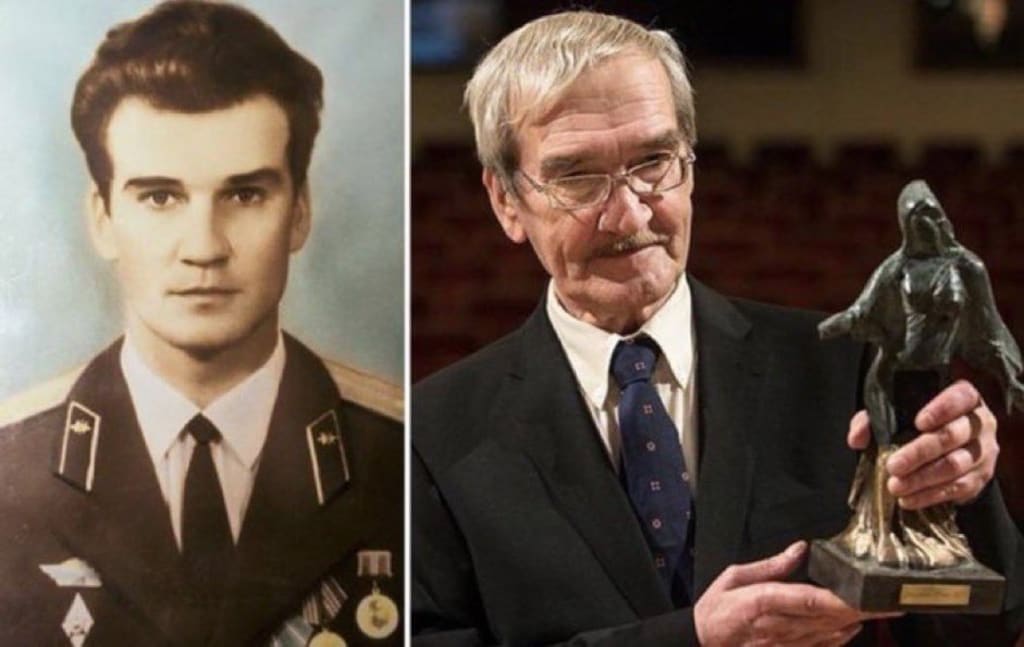
In September 1983, amid the heightened tensions of the Cold War, an extraordinary act of courage and calm rationality by Soviet military officer Stanislav Petrov averted what could have been a catastrophic nuclear war. Petrov, stationed at the Serpukhov-15 bunker near Moscow, faced a situation that would test the limits of human composure and decision-making. He received a message indicating that five nuclear missiles had been launched by the United States and were hurtling toward the Soviet Union. The protocol demanded a swift retaliatory strike, but Petrov’s instinct and skepticism led him to question the validity of the alert. His decision to hold off on launching a retaliatory strike, based on a gut feeling that the warning was a false alarm, ultimately saved the world from an unimaginable disaster.
The Context: Heightened Cold War Tensions
The early 1980s were a period of intense geopolitical tension between the United States and the Soviet Union. Both superpowers were locked in an arms race, amassing vast arsenals of nuclear weapons capable of annihilating each other multiple times over. The doctrine of mutually assured destruction (MAD) meant that any nuclear attack by one superpower would result in a devastating retaliatory strike by the other, effectively ensuring the end of civilization as we know it.
In this context, both sides developed sophisticated early-warning systems to detect incoming nuclear missiles. These systems were designed to provide a few precious minutes of warning, allowing for a counterattack. The margin for error was razor-thin, and the potential consequences of a false alarm were dire.
The Night of September 26, 1983
On the night of September 26, 1983, Stanislav Petrov was on duty as the officer in charge of the Soviet Union’s early-warning system. At around midnight, the system reported that a single intercontinental ballistic missile (ICBM) had been launched from the United States, followed by four more in rapid succession. According to the system, these missiles were on a trajectory toward Moscow.
The standard operating procedure in such a situation was clear: the officer in charge was to report the alert up the chain of command, which would almost certainly result in a retaliatory strike. The decision to launch a counterattack had to be made within minutes to ensure that the Soviet missiles would reach their targets before being destroyed by the incoming American warheads.
The Decision
Faced with this alarming information, Petrov had to make a critical decision. On one hand, if he reported the launch as a confirmed attack, it could trigger a full-scale nuclear war. On the other hand, if he dismissed it as a false alarm and it turned out to be real, the Soviet Union would suffer a devastating first strike without any form of retaliation.
Petrov's training and experience as a military officer guided his thinking, but it was his skepticism and intuition that played a decisive role. He reasoned that a genuine American first strike would likely involve hundreds of missiles, not just five. Additionally, the early-warning system was new and had not been fully tested under real-world conditions. Trusting his instincts, Petrov chose to classify the warning as a false alarm.
The Aftermath
Petrov's decision to not immediately report the missile launches up the chain of command turned out to be correct. The alert was indeed a false alarm, caused by a malfunction in the Soviet satellite warning system. The satellites had misinterpreted sunlight reflecting off clouds as the launch of missiles from a U.S. base.
Despite the potential global catastrophe he had averted, Petrov did not receive a hero's welcome. His superiors initially chastised him for not following protocol, and he was subjected to a thorough investigation. The Soviet military did not publicly acknowledge his role in preventing a nuclear disaster, and for many years, his actions remained largely unknown outside of a small circle of colleagues.
Recognition and Legacy
It was only years later, after the collapse of the Soviet Union, that Petrov’s story began to emerge. In the 1990s, his actions came to light through the efforts of journalists and historians. In 2006, Petrov was honored at the United Nations, where he received the World Citizen Award. He was also recognized by various peace organizations and received numerous accolades for his extraordinary decision.
Despite these late recognitions, Petrov remained a humble and private individual. He often downplayed his role, stating that he was simply doing his job and that anyone in his position would have made the same decision. However, many experts believe that his calm and rational response in the face of potentially world-ending pressure was far from ordinary.
Lessons for Today
The story of Stanislav Petrov holds valuable lessons for the modern world. As technological advancements continue to reshape global security dynamics, the importance of human judgment and the potential for error in automated systems remain critical concerns. Petrov's experience underscores the need for robust checks and balances in decision-making processes, especially when the stakes involve the survival of humanity.
In an era where the threat of nuclear conflict has not entirely disappeared and new forms of warfare, such as cyber-attacks, have emerged, Petrov's legacy serves as a reminder of the importance of vigilance, skepticism, and the human element in maintaining global peace and security.
Conclusion
Stanislav Petrov’s story is a testament to the power of individual courage and rationality in the face of overwhelming pressure. His decision to classify the 1983 missile warning as a false alarm, based on a combination of intuition and reasoned judgment, averted a potential nuclear catastrophe and saved millions of lives. Although his heroism was not immediately recognized, Petrov's actions have since been acknowledged as one of the most significant contributions to global peace in modern history.
As we reflect on Petrov’s remarkable story, we are reminded of the profound impact that one person’s decision can have on the course of history. His legacy is a powerful call to prioritize wisdom and human judgment in the complex and often perilous world of international relations and security.
About the Creator
Keep reading
More stories from Deji Akomolafe and writers in History and other communities.
The Lake Bodom Murders: Finland’s Unsolved Mystery
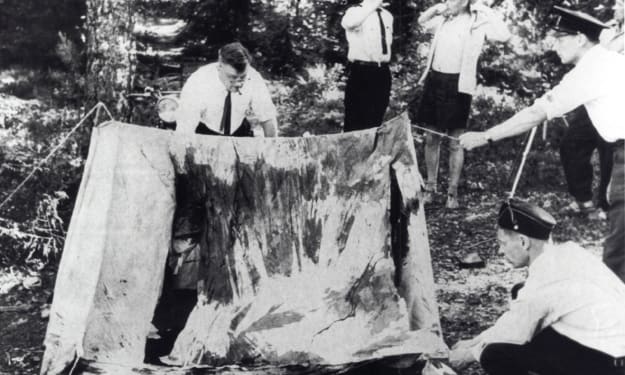
Lake Bodom, located near Espoo, Finland, has long been known as a tranquil destination for family outings, picnics, and weekend fishing trips. However, in 1960, this serene setting became infamous as the site of one of the most brutal and puzzling unsolved crimes in Finnish history. The Lake Bodom murders have haunted the collective memory of the nation for over six decades, raising countless questions that remain unanswered to this day.
By Deji Akomolafe2 years ago in History
World War I
The morning fog lay thick over the trenches of northern France, clinging to the earth as if it too feared what was about to happen. Private Thomas Hale pulled his coat tighter around himself, though it did little to stop the cold from seeping into his bones. He had been in the trenches for six months, yet the damp smell of mud, smoke, and fear still felt unfamiliar, like a nightmare he could not wake from.
By Maavia tahir6 days ago in History
Chicago Hospital Held Newborn Baby for 8 Months Over an Unpaid Medical Bill
Debts were handled much differently in the 19th and early 20th century. Back then, people who accrued debt had more to fear than letters and calls from collection agencies the same way we do today, especially if they owed a hospital or doctor money.
By Criminal Matters7 days ago in History
How to Succeed at the Benson Directory®
Congratulations and welcome to the Benson Directory® employee #22391! As our newest call handler, you will have the privilege of speaking with dozens of unique and interesting people on a daily basis as well as the opportunity to earn bonuses for high performance. Contained within this handbook you will find a set of ease to follow instructions designed to help you settle in to your new role and begin paving the way to success.
By S. A. Crawford3 days ago in Fiction



Comments
There are no comments for this story
Be the first to respond and start the conversation.