
The Lake Bodom Murders: Finland’s Unsolved Mystery
Still remains unsolved

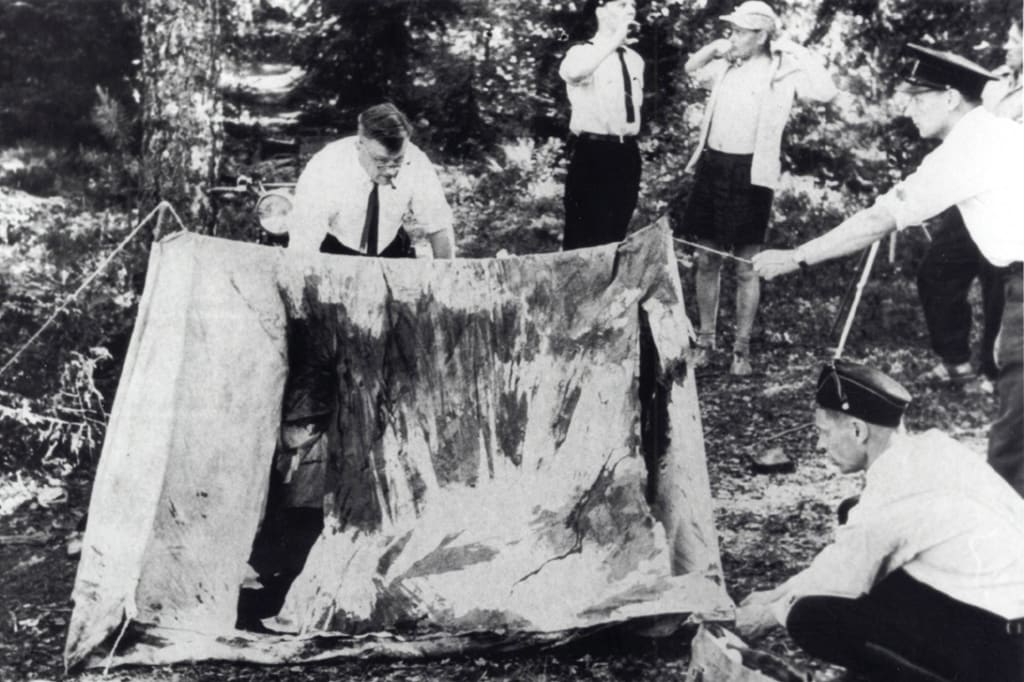
Lake Bodom, located near Espoo, Finland, has long been known as a tranquil destination for family outings, picnics, and weekend fishing trips. However, in 1960, this serene setting became infamous as the site of one of the most brutal and puzzling unsolved crimes in Finnish history. The Lake Bodom murders have haunted the collective memory of the nation for over six decades, raising countless questions that remain unanswered to this day.
The Fateful Night
On the night of June 4, 1960, four teenagers—15-year-olds Maila Irmeli Björklund and Anja Tuulikki Mäki, and 18-year-olds Seppo Antero Boisman and Nils Wilhelm Gustafsson—decided to camp out by Lake Bodom. The group set up their tent on the picturesque lakeshore, looking forward to a night under the stars. What should have been a peaceful and enjoyable outing turned into a night of horror.
In the early hours of June 5, an unknown assailant brutally attacked the campers while they slept. Maila, Anja, and Seppo were murdered with a combination of stabbing and blunt force trauma, their bodies found inside and around the tent. Nils Gustafsson, the sole survivor, was discovered outside the tent, severely injured but alive. He had sustained a concussion, a fractured jaw, and other facial injuries, rendering him unconscious for a significant period.
The Discovery
The crime scene was discovered by a group of birdwatchers who stumbled upon the gruesome sight. Authorities were promptly notified, and the investigation began. However, from the very beginning, the case was plagued by issues. The crime scene was not adequately secured, and valuable evidence may have been compromised or lost. Despite these initial setbacks, the police launched an intensive investigation to uncover the identity of the perpetrator.
The Investigation
The investigation into the Lake Bodom murders was extensive and involved numerous interviews, forensic examinations, and public appeals for information. Several theories and suspects emerged over the years, but none have led to a definitive conclusion.
The First Suspects
One of the initial suspects was a man named Pentti Soininen, who had a history of violent behavior and was known to have been in the vicinity at the time of the murders. However, there was insufficient evidence to link him conclusively to the crime, and he later died by suicide, taking any potential secrets to his grave.
Another early suspect was Hans Assmann, a local man with a mysterious past. He arrived at a hospital on the day after the murders, covered in red stains that some believed to be blood. Assmann’s suspicious behavior and inconsistent statements made him a person of interest, but once again, there was not enough concrete evidence to charge him.
The Role of Nils Gustafsson
As the sole survivor, Nils Gustafsson’s account of the events was crucial to the investigation. Initially, he claimed to have no memory of the attack due to his injuries. However, as the years passed, his version of events came under scrutiny. In 2004, over four decades after the murders, Gustafsson was arrested and charged with the murders based on new forensic analysis.
The prosecution argued that Gustafsson, in a fit of jealousy and rage, had attacked his friends after a dispute, and then inflicted injuries on himself to appear as a victim. The defense, however, maintained Gustafsson’s innocence, pointing out inconsistencies in the evidence and arguing that the injuries he sustained were too severe to be self-inflicted.
In 2005, after a highly publicized trial, Gustafsson was acquitted of all charges. The court found the evidence against him to be inconclusive and insufficient to support a conviction. To this day, Gustafsson maintains his innocence, and the true identity of the killer remains unknown.
The Theories
Over the years, various theories have been proposed to explain the Lake Bodom murders. Some believe the attack was the work of a serial killer, possibly a foreigner passing through the area. Others suggest it was a crime of passion, committed by someone close to the victims.
One theory posits that the murders were the result of a robbery gone wrong. However, this seems unlikely given the brutal nature of the attacks and the fact that nothing of significant value was taken from the campsite. Another speculation is that the murders were a case of mistaken identity, and the teenagers were unfortunate victims of a targeted attack on someone else.
The Legacy
The Lake Bodom murders have left an indelible mark on Finnish society, becoming a part of local folklore and a source of enduring fascination and fear. The case has inspired books, films, and even music, each attempting to grapple with the mystery and its implications.
For the families of the victims, the lack of closure is a source of ongoing pain. The unsolved nature of the crime leaves a lingering sense of injustice and the haunting possibility that the killer may have gone on to commit other crimes or lived out their life without facing consequences.
Conclusion
The Lake Bodom murders remain one of Finland’s most notorious and enigmatic unsolved crimes. Despite the passage of time, the questions surrounding that fateful night in 1960 continue to captivate and perplex those who seek to understand what happened. The serene waters of Lake Bodom, once a symbol of peace and tranquility, now hold a darker legacy, a reminder of a brutal crime that defies resolution. As advances in forensic science continue, there remains a glimmer of hope that one day, the truth about the Lake Bodom murders may finally come to light. Until then, the mystery endures, casting a long shadow over the idyllic landscape and the lives forever altered by that night of horror.
About the Creator
Keep reading
More stories from Deji Akomolafe and writers in History and other communities.
The Enigma of Napoleon's Death Mask: A Legacy Cast in Bronze
In the annals of history, few figures loom as large as Napoleon Bonaparte. His life, marked by extraordinary military prowess and political acumen, has been the subject of countless books, films, and scholarly studies. Yet, even in death, Napoleon continues to captivate the imagination. One of the most intriguing artifacts associated with his legacy is his death mask—a bronze cast that embodies the enigmatic aura of the fallen emperor. This mask, created just hours after his demise, encapsulates the blend of tradition, mystery, and controversy that surrounds its origins and subsequent history.
By Deji Akomolafe2 years ago in History
🐊 Ancient Egyptian Crocodile Discovery Astonishes Experts
In a remarkable scientific and archaeological breakthrough, researchers studying fossils and ancient remains in Egypt have uncovered new evidence that is rewriting parts of reptile evolutionary history and providing fresh insights into how ancient Egyptians interacted with and revered crocodiles. This remarkable finding, which links cutting‑edge paleontology with ancient cultural practices, has captured the attention and curiosity of experts around the world.
By Irshad Abbasi 5 days ago in History




Comments
There are no comments for this story
Be the first to respond and start the conversation.