
The Man Behind the Word: How Charles Boycott’s Name Became a Symbol of Protest
The true story of how one Irish landlord’s actions led to the creation of a global term for peaceful resistance

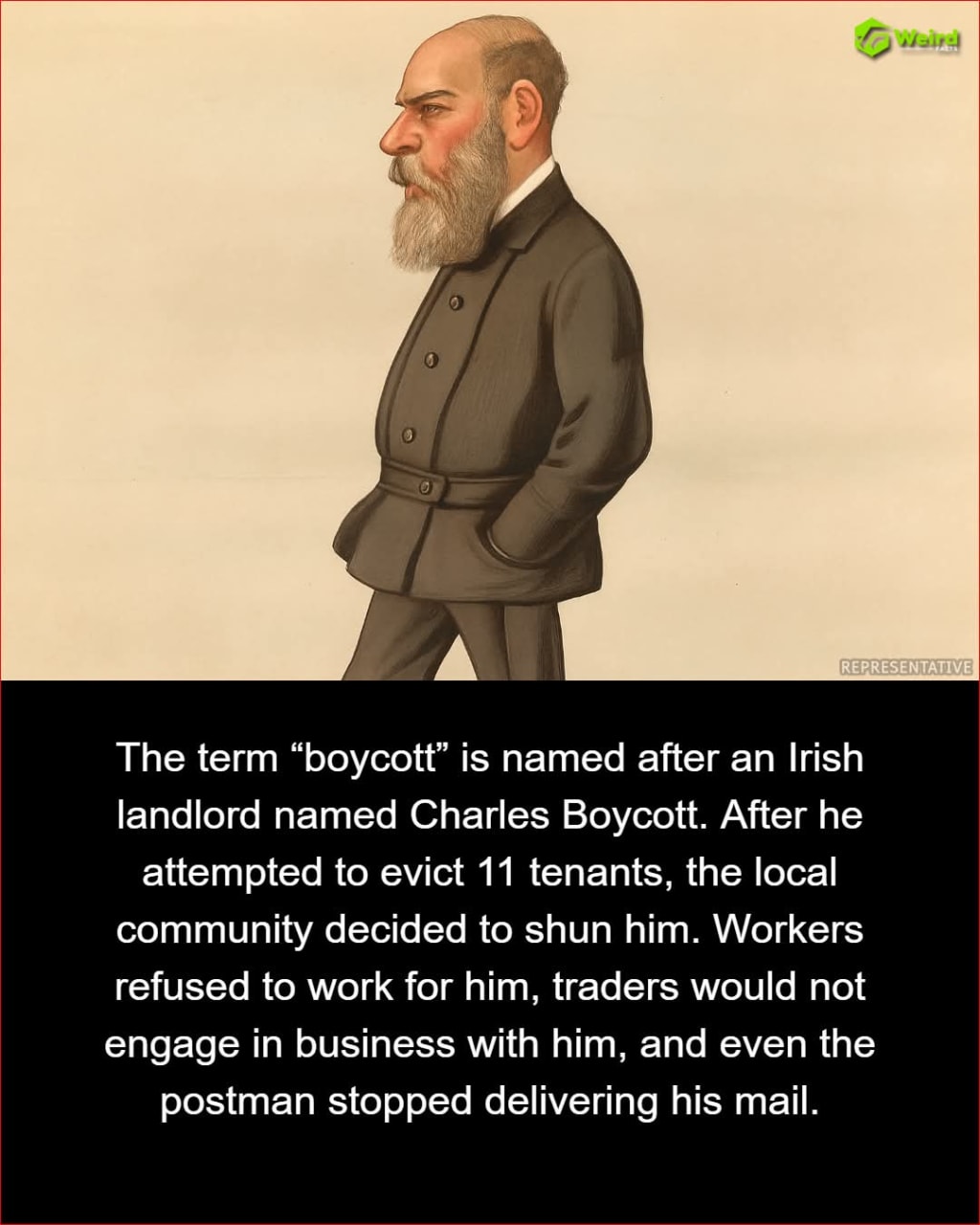
In today’s world, the term “boycott” is used almost daily. People boycott products, companies, events, and even governments. It has become a powerful and peaceful way to express disapproval or demand change. But few know that this word comes from a real man whose name became forever linked to organized social resistance. His name was Charles Boycott, and the story of how his name became a verb is as fascinating as it is historically important.
Charles Boycott was born in 1832 in Norfolk, England. He later became a British Army captain and eventually took up work as a land agent in Ireland during a time of serious social unrest. The country was in the grip of what is now remembered as the Land War. Irish tenant farmers were demanding fairer rents, security of tenure, and the right to own the land they worked on. Many of these farmers lived in poverty and were at the mercy of landlords who charged high rents with little concern for their well-being.
Boycott worked in County Mayo for Lord Erne, a wealthy absentee landlord. In 1880, during a particularly difficult harvest season, the tenants asked for a rent reduction due to their poor crops. Lord Erne agreed to a small discount, but Boycott, acting on behalf of the landlord, refused to grant further concessions. Instead, he began the process of evicting eleven tenants who could not pay. This decision would mark the beginning of an extraordinary chapter in history.
When the local community heard of the eviction attempts, they were outraged. Rather than respond with violence, the Irish Land League, a political organization fighting for tenants’ rights, decided to take a different approach. They encouraged the community to completely cut off Charles Boycott. His workers abandoned him. Local shops refused to sell him goods. Even the postman refused to deliver his mail. Isolated and unable to function, Boycott found himself completely alone.
This strategy of nonviolent resistance proved incredibly effective. Within weeks, newspapers picked up the story and began using his name as a term for this new form of protest. “To boycott” someone came to mean to socially and economically isolate a person or organization to force change. The term spread rapidly beyond Ireland, appearing in British newspapers and eventually around the world. It was added to dictionaries and soon became part of everyday vocabulary.
The power of this new tactic did not go unnoticed. It gave voice to people who had none and offered a peaceful means of protest that could disrupt powerful institutions. Over time, boycotting became a global strategy used by civil rights movements, labor unions, and concerned citizens everywhere. It was used by Mahatma Gandhi in India against British rule, by African Americans during the Montgomery Bus Boycott in the 1950s, and continues today through social media campaigns that call out unethical behavior.
For Charles Boycott, however, the experience was deeply personal. He was forced to flee Ireland with his family under military escort. Though he lived out the rest of his life quietly, his name remained anything but. In fact, it became immortalized as a symbol of resistance.
What makes this story remarkable is that the boycott was a peaceful response to injustice. It demonstrated the immense power of community action and civil disobedience. People chose not to harm or attack Charles Boycott. Instead, they chose to withdraw their support, and that alone was enough to bring his actions to a halt.
The legacy of the boycott continues to grow. In today’s digital age, boycotts can be organized in minutes and reach millions of people online. From canceling subscriptions to avoiding certain products or companies, individuals use this method to make their voices heard. The roots of this power, however, lie in a small Irish village where one man’s refusal to compromise led to an extraordinary movement.
Charles Boycott never intended to become part of history. He was just doing his job as a land agent. But the reaction to his decisions sparked something far greater than himself. It sparked a movement. A single word now serves as a reminder that collective action can make a difference, and that peaceful protest, when done right, can shake the foundations of the powerful.
In remembering Charles Boycott, we are reminded that even the most ordinary events can lead to extraordinary outcomes. His story is not just about a man or a moment, but about the strength of community, the value of justice, and the enduring power of words.
About the Creator
Keep reading
More stories from DigitalAddi and writers in History and other communities.
Why No Human Remains Have Ever Been Found Inside the Titanic Wreckage
When the RMS Titanic sank on April 15, 1912, over 1,500 passengers and crew members lost their lives in one of the deadliest maritime disasters in history. Yet, despite the tragedy’s magnitude and the numerous deep sea explorations of the wreck site since its discovery in 1985, not a single intact human body has ever been recovered from inside the Titanic wreckage. Why?
By DigitalAddi7 months ago in History
A secret staircase found beneath a 1,500-year-old French church
A subterranean staircase and burial strata dating back approximately 1,500 years were discovered during a project inside the Church of Saint Philibert in Dijon, France. The stairs were discovered by restoration workers inside the church when repairs were being made, and the excavation soon ensued.
By Francis Dami5 days ago in History
Martin Luther King's 'I Have a Dream' Speech: Things People Still Don't Know
Former President Ronald Reagan declared the third Monday in January to be Martin Luther King Jr. Day to celebrate the slain civil rights activist. Had he lived, he would be celebrating his birthday at age 97 on January 15, 2026, but he was assassinated at the young age of 39 on April 4, 1968.
By Margaret Minnicksa day ago in History




Comments
There are no comments for this story
Be the first to respond and start the conversation.