
The Louisiana Purchase: America’s $15 Million Deal
The land deal that doubled the young nation overnight.

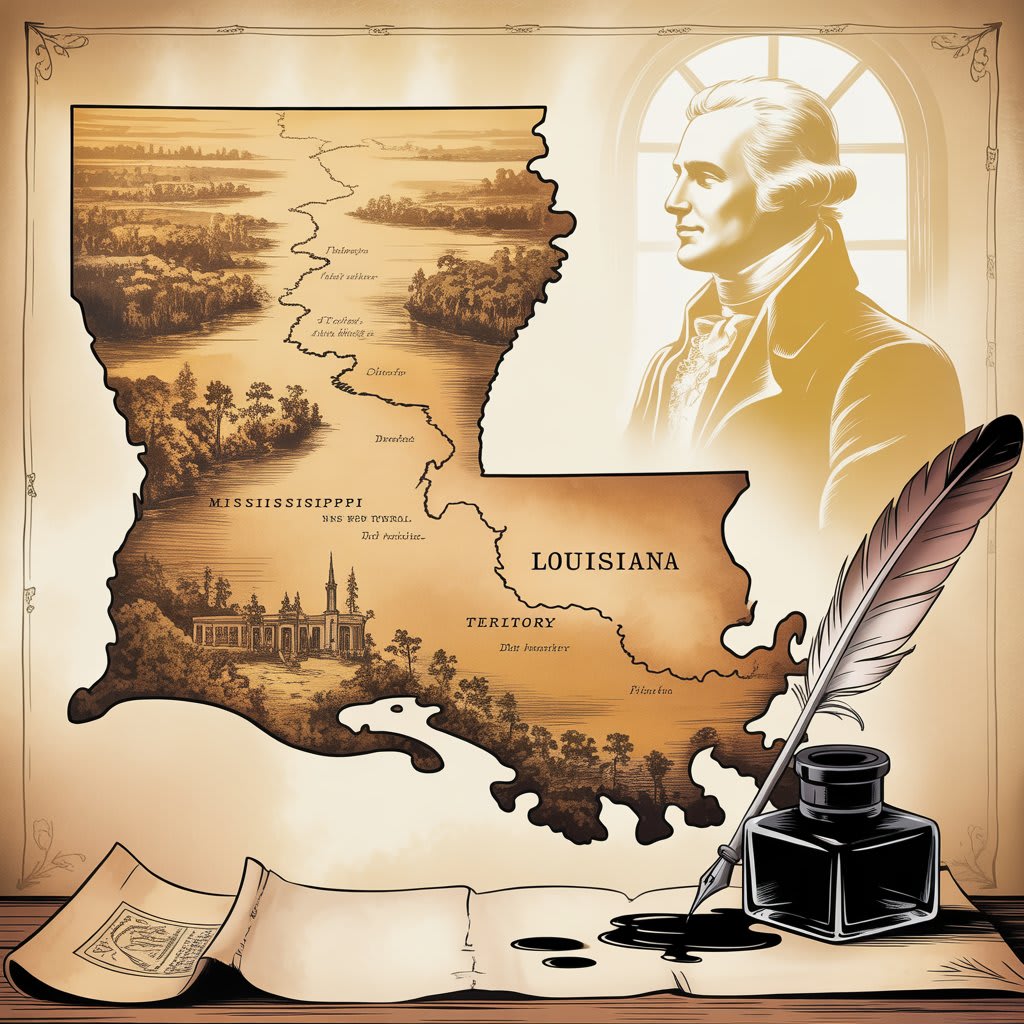
In the early 1800s, America was a young country. Dreams were big but power was limited. Land stretched westward beyond the thirteen colonial states, but it was largely unexplored and uncertain. In 1803, a single decision changed the face of America forever. It was the Louisiana Purchase—a land deal that nearly doubled the country’s land area for just $15 million.
Background
At the time, the vast territory of Louisiana was under French control. It covered 828,000 square miles, stretching from the Mississippi River to the Rocky Mountains and from the Gulf of Mexico to the Canadian border. Many of the present-day U.S. states, such as Arkansas, Missouri, Iowa, Kansas, Oklahoma, Nebraska, and Louisiana, were part of this territory.
French ruler Napoleon Bonaparte dreamed of building a vast empire in America. But the constant wars in Europe and the Haitian rebellion had drained France’s resources. Napoleon soon realized that Louisiana was untenable. It was better to sell it than lose it to Britain or the United States.
Jefferson’s Decision
The real problem for America was the port of New Orleans. It was located on the mouth of the Mississippi River and was the backbone of trade for western farmers. President Thomas Jefferson sent envoys to France to try to buy just New Orleans.
But surprisingly, Napoleon offered to sell not just New Orleans but the entire Louisiana Territory. He wanted quick cash to pay for the wars in Europe.
The Greatest Deal of the Century
The deal was finalized in April 1803. The United States purchased the land for $15 million—about four cents per acre. Jefferson was skeptical about the constitutional complexities of whether a president had the authority to purchase land, but he seized the opportunity. The decision became the foundation for America’s future.
The purchase instantly doubled the size of the United States, providing fertile land and countless opportunities, and paving the way for the country to expand westward.
Mapping the Unknown
Even after the purchase, most Americans still did not know what lay beyond the Mississippi. To that end, Jefferson sent the Lewis and Clark Expedition. The expedition provided maps, exploration, and observations that provided practical knowledge of the new region. The Louisiana Purchase was not just a trade agreement but the beginning of America’s western adventure and the dream of “Manifest Destiny.”
Lasting Effects
This treaty laid the foundation for America's transformation into a continental power. It gained control of the Mississippi River, opened up millions of acres of fertile land for farming, and paved the way for many future states. What seemed like a gamble at the time turned out to be the most successful deal in American history.
Napoleon spent the money on European wars, but America gained a treasure that would guarantee its prosperity for centuries to come.
Conclusion
For just $15 million, America doubled its land area. The Louisiana Purchase was not just a cheap deal, it was a decision that changed the destiny of the nation. The treaty gave America the strength to expand, to be confident, and to fulfill its dreams for the future.
About the Creator
Echoes of Life
I’m a storyteller and lifelong learner who writes about history, human experiences, animals, and motivational lessons that spark change. Through true stories, thoughtful advice, and reflections on life.
Keep reading
More stories from Echoes of Life and writers in History and other communities.
Lewis and Clark: Mapping the Unknown West
The year 1803 brought a new turn in American history. That year, the United States purchased a vast territory from France called the "Louisiana Purchase." This land covered almost half of the United States, but no one knew much about it. It was at this point that President Thomas Jefferson selected two brave explorers and adventurers to write a new chapter in the history of the fledgling nation. These two men were Merriweather Lewis and William Clark. Their goal was to map the unknown West, establish contact with the native tribes, and find out if there was a waterway that led to the Pacific Ocean.
By Echoes of Life4 months ago in History
Pablo Escobar: The Man Who Declared War on Colombia
Pablo Emilio Escobar Gaviria was born on December 1, 1949, in Rionegro, Colombia, and raised in the nearby city of Medellín. He grew up in a modest household, the son of a farmer and a schoolteacher. From an early age, Escobar showed ambition and defiance. He dreamed of power, wealth, and influence—dreams far larger than his surroundings. In a country struggling with inequality and limited opportunity, Escobar believed the rules were written to keep people like him down. Instead of trying to change the system, he chose to dominate it.
By The best writer 2 days ago in History
How Early Aircraft Failures Created Modern Flight Safety
When we look at modern aviation today with its redundant systems, strict regulations, and impressive safety record it’s easy to forget how fragile flight once was. Early aviation wasn’t built on confidence or certainty. It was built on risk. Every successful flight was surrounded by countless failures, and every crash carried lessons that would quietly reshape the future of air travel.
By Beckett Dowhan4 days ago in History



Comments
There are no comments for this story
Be the first to respond and start the conversation.