
The Lost Treasure of Alexander the Great: History’s Greatest Unsolved Mystery
Alexander the Great, the legendary Macedonian king who conquered much of the known world by the age of thirty, is remembered not only for his military genius but also for the unimaginable wealth he amassed during his campaigns. From Greece and Egypt to Persia and India, Alexander’s empire stretched across continents, absorbing the riches of ancient civilizations.

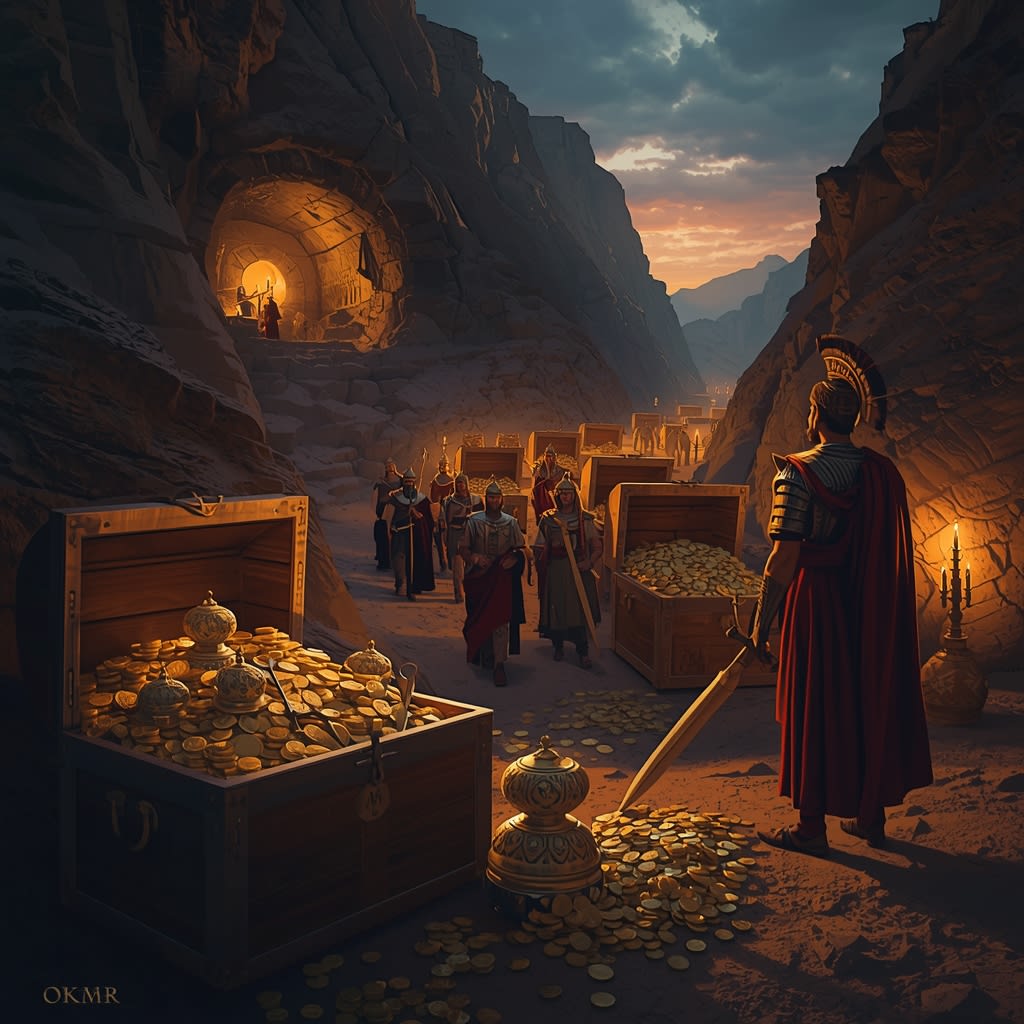
Yet, despite detailed historical records of his conquests, one question continues to fascinate historians, archaeologists, and treasure hunters alike: what happened to Alexander the Great’s vast treasure?
The mystery of Alexander’s lost treasure is one of history’s most enduring enigmas, blending documented fact with speculation, legend, and unanswered questions.
The Source of Alexander’s Immense Wealth
When Alexander began his campaign against the Persian Empire in 334 BCE, he inherited a relatively modest treasury from his father, Philip II of Macedon. However, everything changed once he defeated the Persians. The Achaemenid Empire was the wealthiest power of the ancient world, having accumulated gold, silver, and precious goods over centuries through taxation and tribute.
The capture of Persian capitals such as Sardis, Susa, Persepolis, and Babylon brought Alexander extraordinary riches. Ancient historians like Arrian and Diodorus Siculus describe how Alexander seized thousands of tons of gold and silver, stored in royal treasuries. The treasure of Susa alone was said to contain over 50,000 talents of silver, while Persepolis held even more. To transport this wealth, Alexander reportedly used thousands of mules and camels, forming massive treasure caravans.
Beyond gold and silver, Alexander also acquired jewels, ceremonial weapons, royal garments, rare artifacts, and priceless works of art. By the time he reached India, Alexander controlled what was likely the largest accumulation of wealth ever held by a single individual in the ancient world.
The Disappearance After Alexander’s Death
Alexander’s sudden death in Babylon in 323 BCE marked the beginning of chaos. He left behind no clear successor, only the vague statement that his empire should go “to the strongest.” This triggered decades of brutal conflict among his generals, known as the Wars of the Diadochi.
During this turmoil, Alexander’s treasure became a critical source of power. Whoever controlled it could pay soldiers, hire mercenaries, and legitimize their claim to rule. Large portions of the treasure were distributed to Alexander’s generals, while some were melted down to mint coins. However, historical accounts strongly suggest that not all of the treasure was accounted for.
Some records mention hidden vaults, secret transports, and emergency relocations of wealth to prevent it from falling into enemy hands. As power shifted rapidly, parts of the treasure may have been deliberately concealed—and never recovered.
The Tomb of Alexander: A Key to the Treasure?
One of the greatest mysteries tied to Alexander’s lost treasure is the location of his tomb. After his death, his body was placed in a magnificent golden sarcophagus and was being transported to Macedonia. However, Ptolemy I diverted the funeral procession to Egypt, eventually placing Alexander’s body in Alexandria.
Ancient writers describe Alexander’s tomb as a place of immense splendor, visited by Roman emperors such as Julius Caesar and Augustus. Over time, however, the tomb vanished from historical records. Earthquakes, religious shifts, and urban development may have buried or destroyed it.

Many historians believe that valuable grave goods and royal offerings were buried alongside Alexander. If the tomb were ever discovered intact, it could reveal not only his remains but also priceless artifacts and treasure beyond imagination.
Legends of Hidden Treasure Across Continents
Over the centuries, legends have emerged claiming that Alexander’s treasure was hidden in various locations. Some traditions suggest it lies buried in Afghanistan, along ancient supply routes through the Hindu Kush. Others place it in Iran, near Persepolis, sealed in underground chambers.
In Central Asia, local folklore speaks of “the gold of Iskandar” hidden in remote mountains and deserts. In India, stories persist that Alexander concealed wealth before retreating from the subcontinent. Even in Egypt, theories suggest that secret vaults beneath Alexandria still hold fragments of his fortune.
While many of these claims lack archaeological evidence, they reflect the widespread belief that Alexander’s treasure was never fully recovered.
Modern Searches and Archaeological Hints
Modern archaeology has uncovered some remnants connected to Alexander’s empire, including coin hoards and military artifacts. However, no discovery has conclusively solved the mystery of his lost treasure. Political instability, urban expansion, and restricted access to key regions have made systematic exploration difficult.
Technological advances such as satellite imaging, ground-penetrating radar, and underwater archaeology have renewed hope. Some scholars believe that future discoveries—especially in Egypt or Central Asia—could finally shed light on Alexander’s missing wealth.
Why the Mystery Endures
The legend of Alexander’s lost treasure persists not just because of its monetary value, but because it symbolizes the fleeting nature of power. Alexander conquered the world, yet died young, leaving behind chaos and unanswered questions. His treasure, like his empire, was vast—but ultimately fragmented and lost.
The idea that a portion of the greatest fortune in ancient history may still lie hidden captures the imagination of every generation. Whether buried beneath deserts, submerged under cities, or lost to time forever, the treasure of Alexander the Great remains history’s most tantalizing secret.
About the Creator
Say the truth
"Say the Truth: Explain Everything in the World" is your trusted source for uncovering facts and exploring the wonders of history, science, technology, and beyond. We simplify complex ideas and reveal truths to inspire curiosity .
Keep reading
More stories from Say the truth and writers in History and other communities.
The Net Worth of Kumari Kandam: A Theoretical Wealth of a Lost Civilization
When people ask about the “net worth” of Kumari Kandam, they are not referring to bank accounts or modern currency, but to the total material, cultural, intellectual, and natural wealth of a civilization believed to have existed thousands of years ago.
By Say the truth about 21 hours ago in History
Between Rich Dad and Real Life
I was twenty-two when the book found me, or when I found it—depending on how destiny prefers to be credited. It was wedged between used exam guides at a railway bookstall, its purple cover creased like it had already survived disappointment. Rich Dad Poor Dad. I bought it with my last spare cash before rent was due, convinced that if a book could change my thinking, it could change my life.
By Maavia tahir6 days ago in History




Comments
There are no comments for this story
Be the first to respond and start the conversation.