
The Lost Golden City of Luxor: Egypt’s Greatest Ancient Treasure
Unearthed beneath the sands of Luxor in 2021, the 3,400-year-old “Lost Golden City” of Egypt is the largest ancient metropolis ever discovered in the country. Dating back to the reign of Pharaoh Amenhotep III, this vast, well-preserved city flourished during Egypt’s golden age. Complete with homes, workshops, gold artifacts, and evidence of bustling urban life, the city sheds new light on one of the most prosperous periods in human history. This article explores its discovery, significance, and the secrets it still holds.

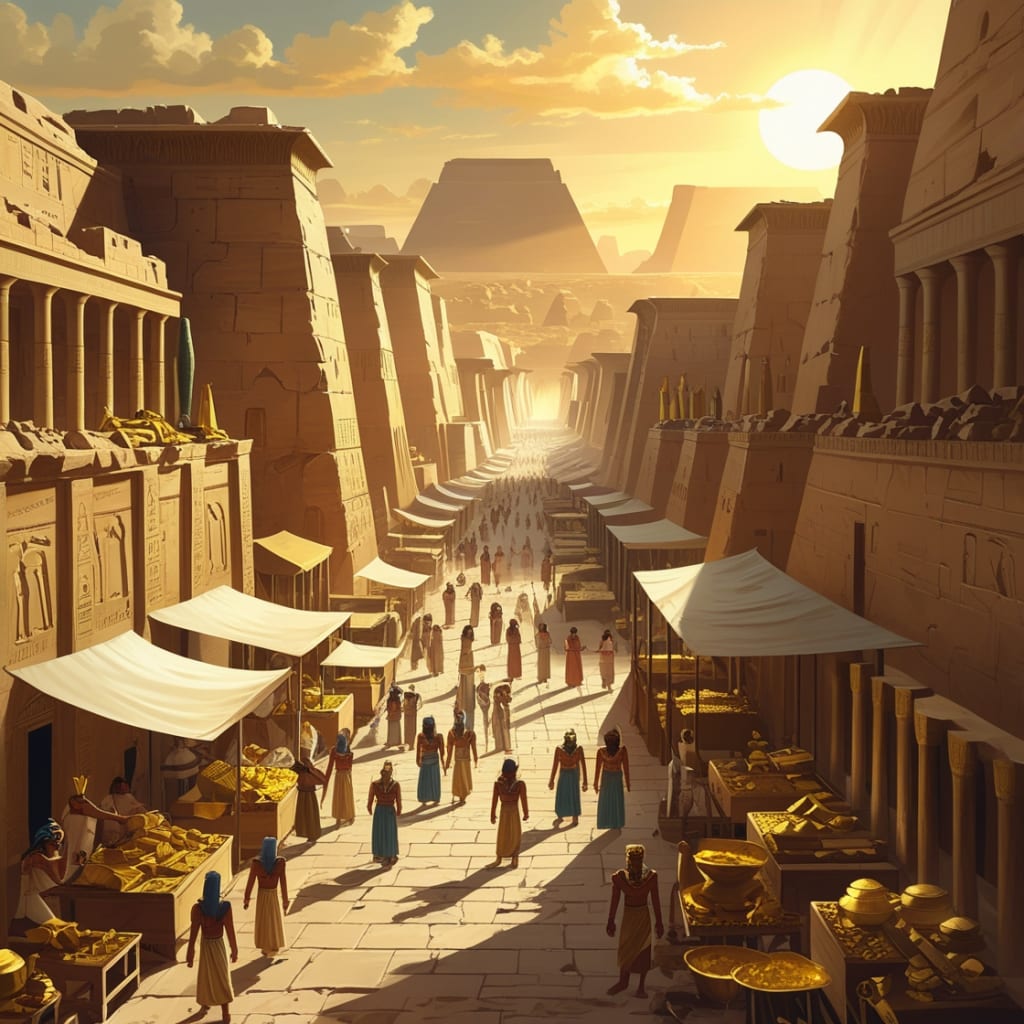
City of Gold: The Myth and Revelation of the Largest Golden City in History
Throughout the annals of history, the concept of a "Golden City" has enthralled the imaginations of adventurers, sovereigns, and historians. From the legendary El Dorado in South America to the resplendent cities of ancient India, myriad narratives existbut only a select few have been substantiated by reality. Among these, the recent unveiling of an extensive ancient metropolis near Luxor, Egypttermed the "Lost Golden City" by archaeologistshas been regarded as the most crucial discovery since the tomb of Tutankhamun. This article explores the history, folklore, and archaeological evidence surrounding the largest golden city ever revealed.
Introduction: The Appeal of Hidden Wealth
For centuries, explorers and monarchs have sought mythical cities purportedly adorned with gold and brimming with riches. Accounts of El Dorado, Paititi, and Shambhala filled the annals of European explorers’ records. While numerous such cities remained myths, the concept of a golden citya prosperous urban center of considerable affluencewas not entirely fictional.
In 2021, Egyptian archaeologists made a remarkable proclamation: they had unearthed a 3,000-year-old city beneath the sands of Luxor. Named the “Rise of Aten,” this lost metropolis, also referred to as the Golden City of Luxor, is deemed the largest ancient settlement ever discovered in Egypt. Its significance parallels that of Machu Picchu or Pompeii concerning preservation and historical relevance.
The Golden City of Luxor: Discovery and Importance
The city was revealed during an excavation initiated by the team of esteemed archaeologist Dr. Zahi Hawass. Initially, the objective was to locate the mortuary temple of Tutankhamun, but what surfaced was something entirely unexpecteda colossal, well-preserved urban center dating back to the reign of Amenhotep III (c. 1391–1353 BCE).
What renders this site so significant?
It originates from over 3,400 years ago during Egypt’s golden era.
Structures are predominantly intact, with walls erect and rooms containing tools, pottery, and jewelry.
The city exhibits evidence of prolonged utilization during the reigns of Amenhotep III, Akhenaten, Tutankhamun, and Ay.
The city is believed to have functioned as an administrative and industrial nucleus, complete with bakeries, workshops, storage facilities, and residential zones. Inscriptions and seals bearing the name of Amenhotep III corroborate its age and function.
A Metropolis of Actual Gold?
Was the city constructed of gold? Not literallybut symbolically and economically, it epitomized a golden city in every aspect.
Egypt’s Golden Age: Amenhotep III governed during a time of unparalleled prosperity. Commerce with Nubia, Mesopotamia, and the Mediterranean introduced a deluge of gold, ivory, and luxury commodities into Egypt.
Temples and Artifacts: Items uncovered at the site include gold jewelry, scarabs, amulets, and toolsindicative of the city’s opulence.
Goldsmiths’ Workshops: Evidence of metalworking facilities and molds implies that artisans resided and operated here, fabricating decorations for royalty and temples.
Religious and Political Influence: This city likely supported the temple complexes at Karnak and Luxor, rendering it vital to Egypt's religious and political elite.
Although the city's walls were not constructed of solid gold, its significance in the processing and distribution of wealth during Egypt's zenith garnered it the moniker "The Golden City. "
Life in the Golden City
Archaeologists unearthed neighborhoods, thoroughfares, and residences arranged in grid layoutsa distinctive characteristic in ancient Egyptian cities. Among the discoveries:
Clay seals of wine vessels and meat parcels
Furnaces and kilns for glass and metal fabrication
Bracelets, rings, and pottery exemplifying artistic refinement
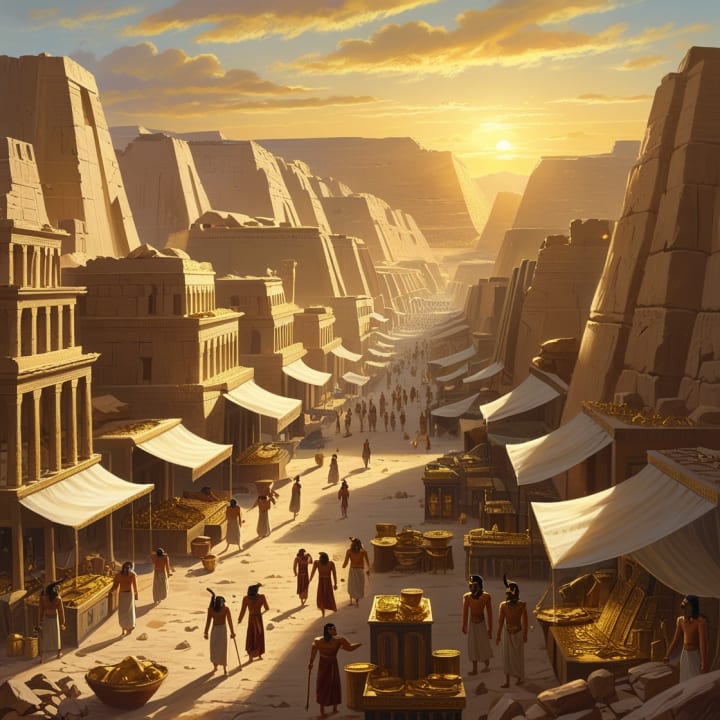
The city also comprised cemeteries with pristine tombs, indicating elite burial practices. Certain chambers contained human remains, providing insights into daily existence, social stratification, and potentially causes of death.
Myths vs. Reality: El Dorado and Beyond
While South American folklore, such as that of El Dorado, recounts tales of cities enveloped in gold, the majority have yet to be discovered. European conquerors misinterpreted tribal ceremonies and indigenous narratives, perpetuating centuries of unfruitful quests. The Golden City of Luxor, however, is a factual entityand its riches are assessed not merely in gold, but in archaeological wealth and historical significance.
In contrast to El Dorado, the Egyptian city presents tangible evidence of urban existence, wealth generation, and international commerce during the apex of the New Kingdom.
The Future of the Golden City
Excavation efforts are underway, and only a small portion of the city has been revealed. As work proceeds, researchers aspire to uncover more about:
The contributions of women and artisans to the economy
Everyday life during the reigns of Amenhotep III and Akhenaten
The transition from polytheism to monotheism under Akhenaten's rule
With its vast expanse, preservation, and cultural importance, the Golden City of Luxor may potentially redefine aspects of ancient Egyptian history.
Conclusion: The Real City of Gold
While humanity has long fantasized about discovering a city constructed of gold, the genuine treasures often reside in history, culture, and exploration. The Golden City of Luxor stands as perhaps the most compelling real-world answer to the age-old mytha city abundant in magnificence, preserved through time, and radiating with the legacy of ancient monarchs
About the Creator
Say the truth
"Say the Truth: Explain Everything in the World" is your trusted source for uncovering facts and exploring the wonders of history, science, technology, and beyond. We simplify complex ideas and reveal truths to inspire curiosity .
Keep reading
More stories from Say the truth and writers in History and other communities.
The Mongol War Machine: The Largest Imperial Army in History
The Power of the Mongols: The Largest Military Force of an Empire in History The Mongol Empire, established by the renowned Genghis Khan in the 13th century, formed the largest uninterrupted land empire in recorded history. At its zenith, the empire commanded a military force exceeding one million soldiers recruited from various regions throughout Eurasia. This article delves into the formation, organization, and operational excellence of the Mongol military, which facilitated conquests spanning from China to Europe. We analyze the origins, tactics, and enduring impact of the largest imperial army ever witnessed.
By Say the truth 9 months ago in History
Frames Through Time: Exploring a Love for Classic and Contemporary Film in Modern Culture
Movies hold a powerful place in everyday life. They entertain, teach, and inspire people across generations. Some viewers are drawn to old black-and-white films, while others prefer fast-paced modern movies. Many enjoy both. Classic and contemporary film exploration allows people to experience cinema as a living art form that grows without ever forgetting its roots. Exploring a love for classic and modern film helps viewers see how stories, emotions, and creativity connect across time. Film is a shared language. It crosses age, culture, and borders. When people watch movies from different eras, they discover that human feelings remain the same, even when styles change. This balance between tradition and innovation is what keeps cinema meaningful today.
By Matthew Carluccioa day ago in History
Seven Dials
Introduction Seven Dials is a famous and historic area located in London, England. It is found near Covent Garden, one of the busiest and most popular parts of the city. Seven Dials is known for its unique road design, rich history, old buildings, shops, cafés, and lively atmosphere. Today, it is a popular place for tourists and local people who enjoy culture, shopping, and history.
By Farhan Sayed4 days ago in History




Comments
There are no comments for this story
Be the first to respond and start the conversation.