
The Lost City of Atlantis
One of the most mysterious and bizarre ancient stories in the world
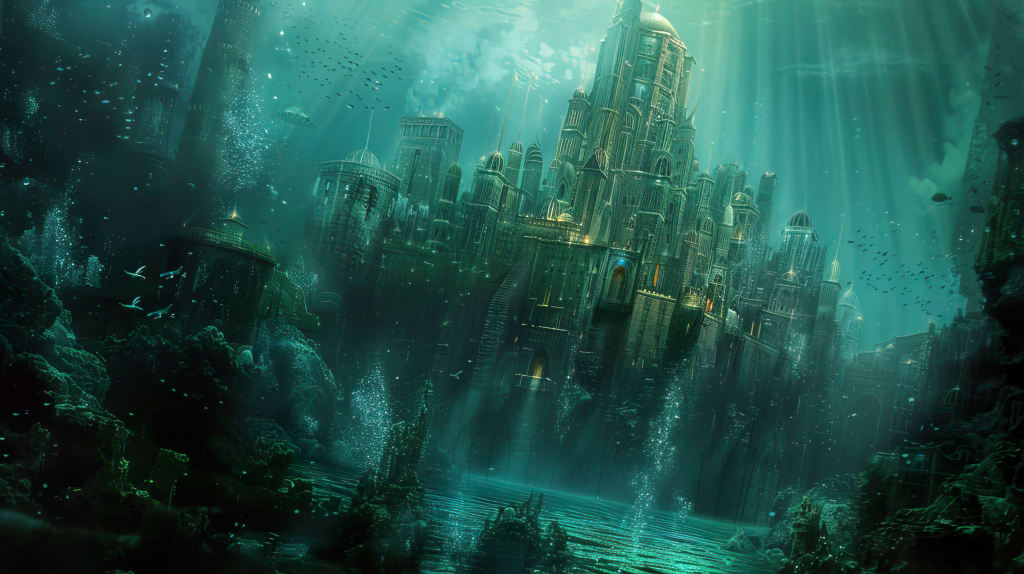
The story of Atlantis, often called The Lost City of Atlantis, is one of the most fascinating and long-lasting myths in human history. Here’s a simple explanation of where it came from, what it means, and the ideas people have about it:
Where the Atlantis Story Began
Plato’s Writings:
The main source of the Atlantis tale comes from the ancient Greek philosopher Plato (who lived around 427-347 BCE).
Atlantis is mentioned in two of his works, Timaeus and Critias, which were written around 360 BCE.
Plato described Atlantis as a highly advanced and powerful civilization that existed about 9,000 years before his time.
He said Atlantis was located beyond the Pillars of Hercules (believed to be the Strait of Gibraltar today) and was bigger than Libya and Asia combined.
How Atlantis Was Destroyed:
According to the story, Atlantis was wiped out by a huge disaster, sinking into the ocean "in one day and night of tragedy." This was said to be a punishment from the gods for the people’s pride and bad behaviour.
Description of Atlantis
Atlantis was a beautiful island with highly developed technology, impressive buildings, and a vibrant society.
Its main city was designed with rings of land and water, showing incredible skill in city planning.
The people of Atlantis were very wealthy, had plenty of natural resources (including a legendary metal called Orichalcum), and were strong in military power.
Possible Locations of Atlantis
There are many ideas about where Atlantis might have been, but no one knows for sure. Some of the most talked-about possibilities are:
*Mediterranean:
The island of Santorini (also called Thera) in the Aegean Sea is a top guess. A volcano erupted there around 1600 BCE, destroying the Minoan civilization, which some think could have inspired the Atlantis legend.
*Atlantic Ocean:
Others suggest Atlantis could be near the Azores or Canary Islands, which might be parts of a land that sank underwater.
*Caribbean:
Some people think Atlantis could be located in the Bahamas or the Bimini Road, a group of underwater rocks near Bimini Island.
*Antarctica:
There’s a theory that Atlantis might be connected to Antarctica. It suggests that Antarctica was once a warm place but moved south over time because of the movement of Earth’s plates.
Mythical Interpretations:
Some believe Atlantis isn’t a real place but a story or symbol. It’s seen as a warning about the dangers of being too proud or the downfall of societies.
Modern Interpretations and Pop Culture:
Atlantis has inspired many writers, historians, and filmmakers. It appears in books, movies, and video games.
It’s often shown as a perfect society or a highly advanced civilization, sometimes even linked to aliens.
Scientific Investigations:
**Archaeology:
Even after many underwater searches, no solid proof of Atlantis has been found.
Most scientists think Atlantis is more of a moral story than a real historical event.
**Geology:
Some people think Atlantis could be a real place that disappeared because of rising oceans or earthquakes.
Symbolism
*Philosophical Lesson:
Plato probably used Atlantis as a story to warn against pride and moral decline, mirroring the political chaos of his time.
*Cultural Appeal:
The tale captures our interest in ancient, lost civilizations and the secrets of the past.
Criticism of the Atlantis Story
Many experts believe Atlantis is just a made-up story because there is no solid proof to back it up.
Plato’s description of Atlantis includes details that seem more like myths or storytelling techniques rather than real historical facts.
Conclusion
Was Atlantis real or just a myth?
Even though the story is fascinating, no clear archaeological or geological evidence proves Atlantis existed.
Could real events have inspired Atlantis?
Disasters like Thera's eruption or the Black Sea's flooding might have influenced the tale.
Atlantis remains one of the biggest mysteries, representing both the greatness and vulnerability of human civilizations. Whether it was real or not, it still sparks curiosity and creativity in people today.
About the Creator
Keep reading
More stories from writers in History and other communities.
The Penguin Who Walked Away: Not a Tragedy, but a Choice.
Every once in a while, the internet turns a moment from nature into a metaphor for human pain. Recently, a video of a penguin walking away from its colony went viral, framed as a heartbreaking image of abandonment, lost love, or emotional defeat. Millions watched it through a romantic lens, calling it tragic and cruel.
By Voxwrite ✍️ 5 days ago in History
Hannibal Barca: Tactical Genius Beyond Politics
History often favors the victors, but strategy remembers the exceptional. Few commanders embody this truth more clearly than Hannibal Barca. Though he ultimately lost the Second Punic War, Hannibal remains one of the most studied military minds of all time. His genius did not lie in ruling empires or shaping laws, but in something purer and rarer—battlefield intelligence unchained by politics. Hannibal was not a builder of states. He was a master of movement, deception, and human psychology.
By Fred Bradford5 days ago in History
Time to change your life.
Is it even possible for you to change your life? A lot of people, more than there should be, are unhappy with their lives. But what are they doing about it? Usually nothing. People talk about how shitty their lives are and want change, but are they not taking the actions to change?
By Jen Phillips3 days ago in Humans
Not Just For Clean Up: A History Of The MCU's Department of Damage Control
Initially an organisation that seemed to exist to help the heroes of the Marvel Cinematic Universe, from Phase Four onwards, the Department of Damage Control has shifted into a more antagonistic role. Most recently seen in the Wonder Man series, the current incarnation of Damage Control seems to target superpowered individuals, regardless of whether that person poses an active or intentional threat.
By Kristy Anderson2 days ago in Geeks



Comments