
The Lion’s Awakening
How Hazrat Umar Farooq (RA) Found the Light of Islam and Changed the Course of

In the early days of Islam, when the believers were few and oppressed, the Muslims in Makkah lived in fear of the Quraysh. Among the most feared men in Makkah was Umar ibn al-Khattab — tall, strong, and fierce in both intellect and combat. Known for his pride in the traditions of his forefathers, Umar was one of the staunchest enemies of the Prophet Muhammad (peace be upon him).
Islam, to him, was not just a new religion — it was an insult to the way of the ancestors, a danger to the unity of the Quraysh, and a rebellion that needed to be crushed.
One day, Umar (RA), in a storm of rage and determination, took up his sword and set out with a firm resolve — to kill Muhammad (PBUH) and end this "fitnah" once and for all.
As he walked through the streets of Makkah, his face grim and his steps determined, a man from his tribe named Nu'aym ibn Abdullah noticed him. Alarmed by Umar's expression and the sword in his hand, Nu'aym asked, "Where are you going, Umar?"
"I am going to kill Muhammad!" Umar replied, his eyes burning with fury.
Nu'aym, fearing for the life of the Prophet (PBUH), cleverly diverted Umar’s anger. He said, “Why don’t you first take care of your own family? Don’t you know your sister Fatimah and her husband Sa'id have accepted Islam?”
Umar paused. His pride wounded, his fury redirected. Without another word, he turned and made his way to his sister’s house.
As he approached, he heard voices inside — the recitation of the Qur'an. His heart burned with anger. He knocked forcefully. Fatimah and her husband quickly tried to hide the scrolls they were reading from.
When Umar entered, his suspicion confirmed, he confronted them. “Have you accepted Muhammad’s religion?” he bellowed.
They stood their ground. “Yes, we have believed in Allah and His Messenger,” they declared with courage.
In a burst of rage, Umar struck his brother-in-law Sa’id and turned toward Fatimah. When she tried to protect her husband, he slapped her so hard that she bled.
But something strange happened.
As he looked at the blood on her face, he felt a deep pang in his heart. The sight of his wounded sister, who stood firm in her belief despite the pain, began to soften him. Regret filled him. He asked, “What was that you were reading?”
She refused to let him touch the scroll in his state of impurity. “You are not pure. Go wash yourself,” she said.
Surprised by her courage, Umar obeyed. He went, washed, returned, and began reading the verses from Surah Taha.
> “Taha.
We have not sent down to you the Qur'an that you be distressed,
But only as a reminder for those who fear [Allah]...”
(Surah Taha: 1-3)
As he read on, his heart trembled. The verses spoke directly to him — to his strength, his pride, and his soul, calling him to something greater, something purer. Tears welled up in his eyes. The sword in his hand, once raised in hatred, now felt heavy with shame.
He asked, “Where is Muhammad?”
Fatimah, seeing the change in her brother, told him that the Prophet (PBUH) was in the house of Al-Arqam, near Safa.
Without delay, Umar rushed there. Inside, the small group of Muslims sat with the Prophet (PBUH), unaware of the coming miracle. As Umar knocked, they feared the worst.
Hamzah ibn Abdul Muttalib, the brave uncle of the Prophet, stood ready. “If he has come for trouble, by Allah, I will strike him with his own sword,” he said.
But the Prophet (PBUH) stopped them. “Let him in,” he said calmly.
Umar entered.
The Prophet (PBUH) moved toward him and grabbed him by the collar. “O Ibn al-Khattab! Will you not stop until Allah sends down calamity upon you as He did upon Walid ibn Mughirah? When will you submit, O Umar?”
Umar, shaken to his core, whispered, “O Messenger of Allah, I have come to believe in Allah and His Messenger and in what he has brought.”
A wave of takbir erupted from the house — “Allahu Akbar!” The Muslims rejoiced. The lion of Quraysh had embraced Islam.
The news spread like wildfire.
Umar’s conversion was not just a victory of belief; it was a turning point in Islamic history. With his strength and courage now in the service of truth, Islam rose from the shadows. The believers, who once prayed in secret, now walked to the Kaaba behind Umar. No longer in fear, but in power.
From that day onward, Umar became one of the closest companions of the Prophet (PBUH). His wisdom, justice, and deep love for Islam would later lead him to become the second rightly-guided Caliph — Al-Farooq, the one who distinguishes truth from falsehood.
His story is not just about a man who changed sides. It is about the transformation of a heart — from hatred to love, from darkness to light, from being the enemy of Islam to its fearless protector.
About the Creator
Keep reading
More stories from Khalid khan and writers in History and other communities.
The Birth of a Gentleman's Game
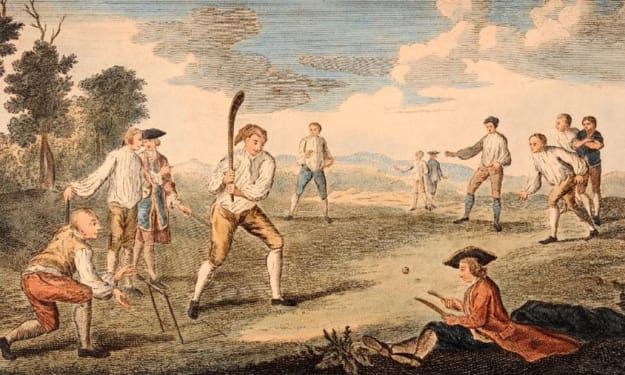
Long before roaring stadiums, million-dollar contracts, and international rivalries, cricket began as a humble children’s game played in the quiet countryside of southern England. The story of cricket’s invention is not one of grand design, but rather of a game that slowly shaped itself through time, guided by the people who loved it.
By Khalid khan7 months ago in History
Savoy Hotel – Mussoorie: The Colonial Luxury Hotel Where an Unsolved Murder Still Walks the Corridors
The First Night: Beauty Wrapped in Silence Mussoorie looks peaceful from a distance. Pine trees sway gently, clouds roll like slow-moving waves, and the hill air smells of rain and old earth. But as evening falls, the silence becomes heavier—almost watchful.
By Gaurav Guptaa day ago in History
Is NATO Facing Its Biggest Crisis Yet?
Is NATO Facing Its Biggest Crisis Yet? For more than seventy years, NATO has been one of the strongest military alliances in the world. Formed after World War II, it was designed to protect its members through collective defense. An attack on one was considered an attack on all. For decades, this principle helped maintain stability in Europe and beyond. But today, NATO is facing one of the most challenging moments in its history.
By Wings of Time 5 days ago in History
Silver Screen Magic with Mae West
American actress and singer Mae West became a popular film actress during the Great Depression. She started entertaining in vaudeville, then performed on Broadway, and finally went to Hollywood. She signed up with Paramount Pictures and made her debut in the 1932 film “Night After Night.” She also starred in musicals, comedies, and crime dramas. The American Film Institute named her one of the best classic Hollywood actresses.
By Rasma Raisters3 days ago in Geeks


Comments
There are no comments for this story
Be the first to respond and start the conversation.