
The Lion of Lahore: The Imran Khan Story
How one man challenged the system, inspired millions, and changed the face of Pakistan.

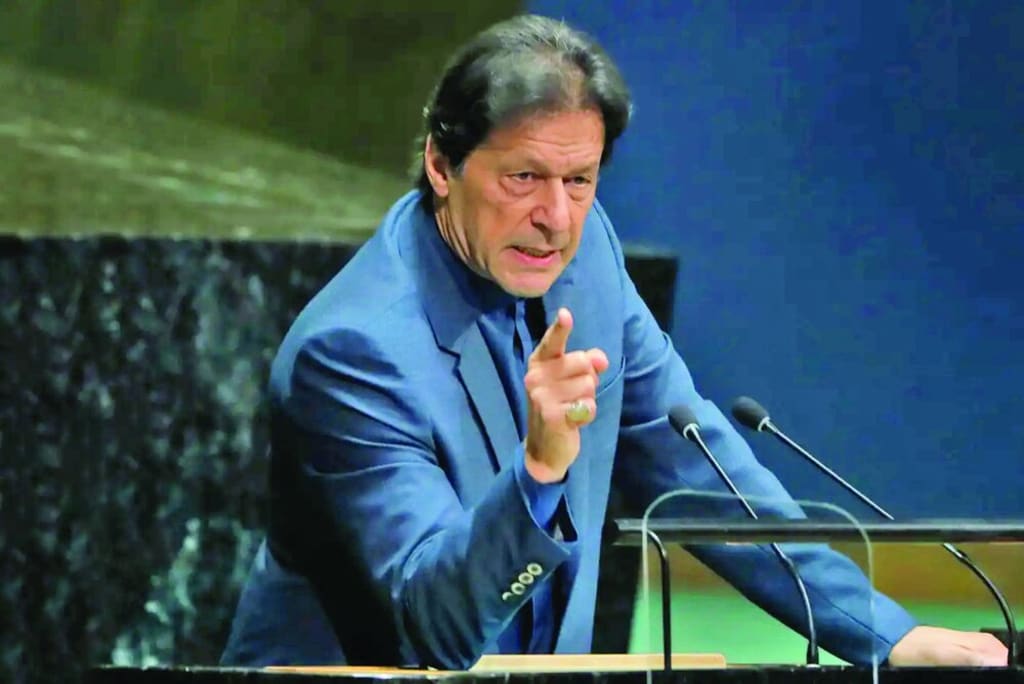
Cricket built him. Politics tested him. Pakistan defined him.
From the thunderous roar of cricket stadiums to the charged air of political rallies, Imran Khan’s life has been anything but ordinary. A man molded by victory, controversy, and conviction, he rose from the cricket pitch to the political battlefield, driven not by ambition alone, but by a profound sense of purpose.
Born in Lahore in 1952, Imran Khan grew up in an upper-middle-class Pashtun family. Reserved and introspective as a boy, he found early escape in sport — especially cricket. His raw talent, honed at Aitchison College and later at Oxford University, set the stage for a career that would make him a national icon. By the mid-1970s, Khan was already making headlines as one of Pakistan’s most promising fast bowlers.
But his defining moment came in 1992. As captain, he led Pakistan to its first-ever Cricket World Cup victory. It wasn’t just a win — it was a resurrection. Against all odds, with a team many had written off, Khan brought home the trophy, uniting a divided nation with one unforgettable triumph. Overnight, he became more than a sportsman — he became a symbol of possibility.
Yet, as the celebrations faded, Khan’s mind turned to deeper issues. While he had achieved everything on the field, Pakistan off the field remained plagued by corruption, inequality, and instability. In the wake of his mother’s death from cancer, he built the Shaukat Khanum Memorial Cancer Hospital — Pakistan’s first of its kind — showing the world that his vision extended beyond the boundary line.
Still, it wasn’t enough. The man who once conquered cricket now set his sights on reforming an entire nation. In 1996, he founded the Pakistan Tehreek-e-Insaf (PTI), a political party built on ideals of justice, transparency, and dignity for all. But politics is a long game, harsher and dirtier than cricket could ever be.
For years, Khan was a political outsider. Mocked, underestimated, even ridiculed — his rallies drew few, and his message was often dismissed as naive. But he refused to give up. With the same relentless spirit that fueled his cricket career, he pushed forward, slowly building a movement rooted in the frustrations of everyday Pakistanis. His persistence struck a chord, especially among the youth who saw in him a leader untainted by dynastic politics.
By 2013, PTI had become a formidable political force. And in 2018, the impossible happened: Imran Khan became the Prime Minister of Pakistan.
His rise to power was celebrated with fanfare, hope, and soaring expectations. But governing a nation is far more complex than leading a cricket team. As Prime Minister, he faced an economic crisis, foreign policy challenges, and a deeply entrenched bureaucratic system resistant to change. Some reforms were made, some promises delayed. Critics accused him of falling short, while supporters insisted he was fighting a system designed to resist transformation.
Yet even his political rivals admitted one thing — Imran Khan’s sincerity was rarely in doubt. He didn’t enter politics to enrich himself. He entered it to challenge the status quo, to shake the foundations of privilege and corruption that had long dominated the country’s elite.
Beyond politics and cricket, Khan’s personal life remained under constant public scrutiny — his marriages, his spirituality, his contradictions. He was often a man of paradoxes: Oxford-educated, yet deeply traditional; charismatic, yet solitary; idealistic, yet pragmatic. But perhaps it was this very complexity that made him so compelling — a mirror of the nation he led.
In 2022, he faced one of his most difficult chapters. Removed from office in a dramatic no-confidence vote, he returned to the streets — not as a defeated politician, but as a defiant challenger. In rallies that drew thousands, he once again became the captain of resistance, invoking hope, nationalism, and faith in Pakistan’s youth.
His journey is far from over.
Imran Khan’s story is not just one of personal transformation — it's the story of a man who dared to dream beyond himself. A sportsman turned statesman. A hero turned reformer. A leader shaped not by privilege, but by struggle. In the eyes of some, he remains a flawed idealist. In the hearts of many, he is still their best hope.
Whatever history may decide, one thing is certain: Imran Khan never played it safe. On the field or in the halls of power, he took risks, stood his ground, and fought — not for perfection, but for progress.
And for that, he will always be remembered — as the lion who roared for a nation.
About the Creator
Keep reading
More stories from Majeed Afridi and writers in History and other communities.
Clash of Titans: The History and Impact of the Pakistan-India Wars
A Deep Dive into the Battles, Tensions, and Lasting Legacy of a Historic Rivalry The story of the Pakistan-India wars is not just about military clashes; it is a tale of two nations born from a single land, whose destinies became locked in a fierce rivalry. Since their independence from British rule in 1947, Pakistan and India have engaged in multiple conflicts, each shaping their national identities and their future relations.
By Majeed Afridi9 months ago in History
Ashoka and the Three Kings of South India: Power, Diplomacy, and Moral Conquest
Unlike his northern campaigns, Ashoka did not wage a full-scale war against these southern powers. Instead, his interaction with them reveals a unique blend of political realism, military restraint, and ideological influence.
By Say the truth 2 days ago in History
📢 Raise Your Voice Thread: 01/22/2026
Our “Raise Your Voice Threads” are hosted most alternating Thursdays at 12PM ET to offer creators more avenues to uncover exceptional stories on Vocal. As we are continuously searching for fresh creators and inspiring stories, this thread provides an opportunity to exchange and discuss the stories that have moved and motivated us on Vocal.
By Raise Your Voice by Vocal6 days ago in Resources

Comments
There are no comments for this story
Be the first to respond and start the conversation.