
The Life of a Viking Warrior
The Life of a Viking Warrior

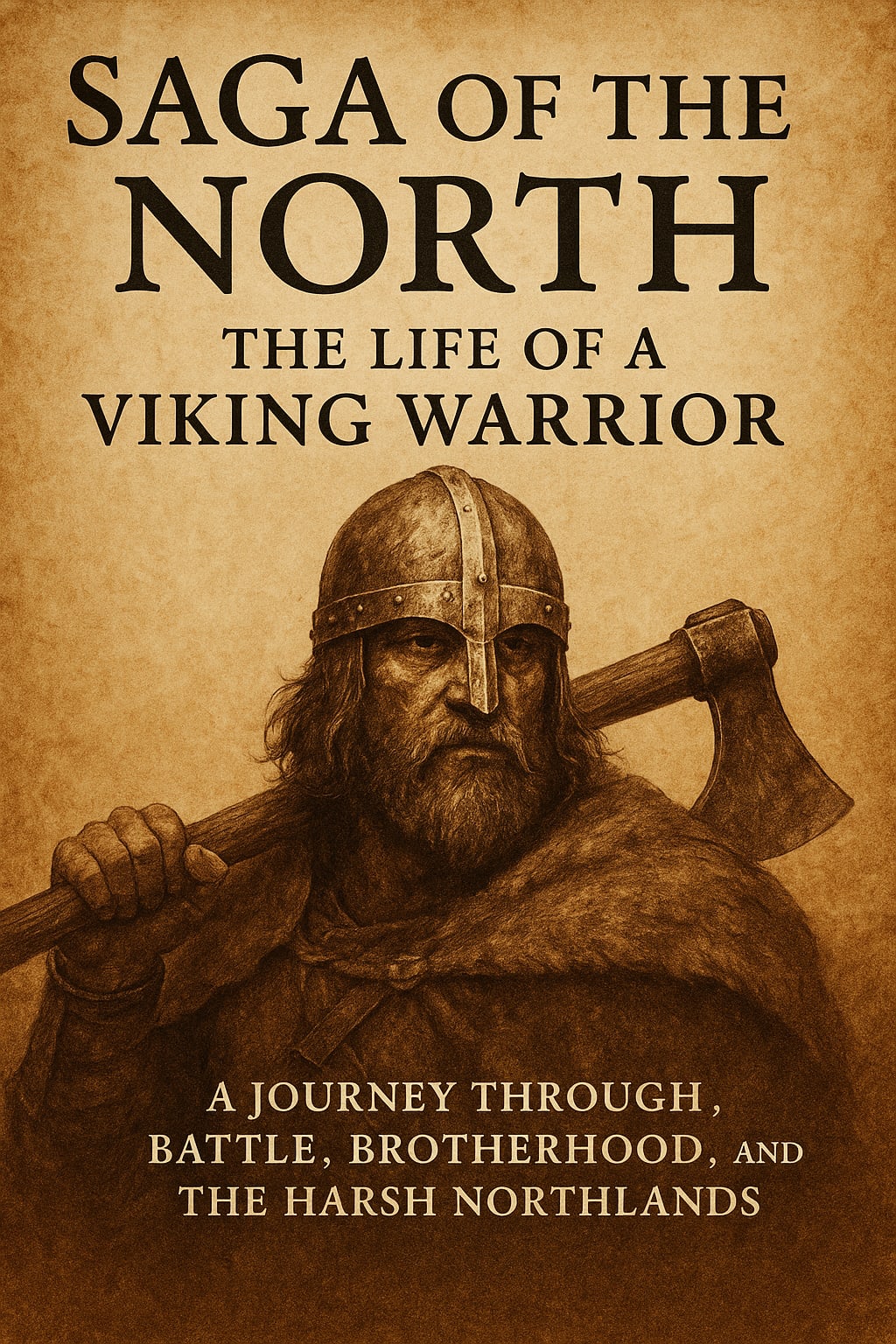
In the frozen heart of the North, where the wind howled through pine forests and waves thundered against rocky shores, a child was born into a world of iron, ice, and fire. His name was Erik Thorsson, and his life would become legend—not because of kingship or prophecy, but because he embodied the spirit of the Viking age: bold, brutal, loyal, and unyielding.
The Early Years
Erik was born in the winter of 812 AD, in a small village on the coast of what is now western Norway. His father, Thorvald, was a seasoned warrior and seafarer who had earned his wealth through raids on the Saxon coasts. Erik’s mother, Astrid, was descended from a long line of shieldmaidens and skalds—storytellers and keepers of memory.
From an early age, Erik learned that survival in the North meant strength, cunning, and honor. At six, he hunted his first fox. By ten, he could wield a wooden sword with surprising skill. By thirteen, he had survived his first winter alone in the forest as part of a rite of passage. The world was harsh, but it forged Erik into something equally unyielding.
The Warrior’s Path
At sixteen, Erik joined his first raiding voyage. The longships cut across the North Sea like sea serpents, their dragon-headed prows striking fear into the hearts of those who saw them. Erik’s first battle was in Northumbria. He remembered the roar of men, the clash of iron, and the thick stench of blood. He remembered fear—how it froze his limbs until his friend Bjorn fell beside him with a Saxon blade in his chest. That moment awakened something fierce in Erik, and from then on, he fought with the rage of a storm.
He earned his name in the warbands not just for his strength, but for his loyalty. Where other men might chase gold and glory, Erik sought honor among his comrades. He shared his spoils with the poor in his village, and always returned to his kin after the raids. His sense of duty made him beloved among his people and feared among his enemies.
Brotherhood and Loyalty
The North was not just a land of conquest—it was a land of kinship. Erik’s most enduring bond was with his blood-brother, Sten, a giant of a man who could wield a two-handed axe like a child’s toy. The two fought side by side in dozens of raids, saved each other’s lives more times than they could count, and swore oaths of loyalty by the sacred tree of Yggdrasil carved in the village temple.
Their fellowship was tested during the winter of 828, when a rival chieftain named Kjartan attacked their home while the warriors were away. Erik returned to find his village burned and his father slain. In his grief, he gathered the survivors, swore vengeance, and led a midnight assault on Kjartan’s stronghold. The battle was brutal and bloody, but Erik emerged victorious. He refused to take Kjartan’s lands, choosing instead to redistribute them among the survivors—a rare act of justice in an age of vengeance.
Love and Loss
In his thirties, Erik met Freydis, a woman as fierce as the fjords. She was a skilled shieldmaiden, the daughter of a jarl from the northern isles, and their bond was immediate. They married under the stars, with the gods as their witnesses and the sea as their altar.
Together, they raised two children, Leif and Ingrid, teaching them the values of strength and compassion. But peace in the Viking world was always fleeting. In 843, during a voyage to Ireland, Freydis was struck by an arrow in an ambush. She died in Erik’s arms, and the fire in his heart dimmed. Though he would continue to fight and lead, something within him broke that day—a scar deeper than any blade could leave.
The Elder Years and Legacy
By his fifties, Erik had become a respected elder and chieftain. His beard had grown long and silver, and his once-wild eyes had softened, but his presence still commanded fear and respect. He led no more raids but trained the next generation in the old ways: how to fight with honor, how to sail by the stars, how to respect the gods and the land.
He was invited to Althing, the great assembly of Norse leaders, where his counsel helped forge peace between rival clans. Though his axe had brought him fame, it was his wisdom that secured his place in history.
Erik Thorsson died in his sleep during the winter solstice of 867, at the age of 55. He was buried in a stone mound overlooking the sea, his weapons laid beside him, and a runestone raised in his honor. It bore the words: “Here lies Erik Thorsson, warrior of the North, friend of the people, and flame of the fjords.”
Myth, Memory, and the Viking Spirit
Centuries have passed since Erik walked the earth, but his story lives on—in sagas, in songs, and in the hearts of those who still hear the call of the North. He was no king, no god, no chosen one. He was a man who lived fiercely, loved deeply, and died with honor. And that, more than any crown, is what made him legendary.
His life was the saga of the North—a tale not just of swords and ships, but of brotherhood, love, loss, and resilience. Through battle and winter, through joy and sorrow, Erik stood as a symbol of the Viking warrior’s soul: brave, loyal, and ever seeking the next horizon.
About the Creator
Irshad Abbasi
"Studying is the best cure for sorrow and grief." shirazi
Keep reading
More stories from Irshad Abbasi and writers in History and other communities.
The Journey of a Thousand Roads
In an age before modern transportation, GPS, or even accurate maps, one man journeyed farther than perhaps anyone else in pre-modern history. That man was Abu Abdullah Muhammad ibn Battuta, better known simply as Ibn Battuta. Born in 1304 in the bustling city of Tangier, in present-day Morocco, Ibn Battuta’s life would become a testament to the spirit of exploration, the thirst for knowledge, and the unshakable strength of faith.
By Irshad Abbasi 7 months ago in History
A massive underwater stone wall that is almost 7,000 years old is found by divers.
One of the buried stone monuments on Sein Island is a granite wall off Brittany that is more than 7,000 years old and the length of a football pitch. The discovery is being used by marine archaeologists in the vicinity of Île de Sein to explain how stone-built coastal villages predate the widespread spread of farming.
By Francis Dami3 days ago in History
Statue of Liberty: America’s Timeless Symbol of Freedom
The Statue of Liberty is one of the most iconic landmarks in the United States and a powerful symbol of freedom, democracy, and hope. Located on Liberty Island in New York Harbor, the statue has welcomed millions of immigrants and visitors since the late nineteenth century. Officially titled Liberty Enlightening the World, it represents the ideals upon which the United States was founded and continues to inspire people across the globe.
By Mukhtiar Ahmad6 days ago in History


Comments (1)
The description of Erik's early life and his transformation into a fierce warrior is captivating. It makes me think of the harsh realities of that time and how one's environment shapes their character. I can imagine the challenges he faced during his first raid and how his friend's death changed him. His loyalty and sense of duty are truly inspiring.