
The Legend of Atlantis: Fact or Fiction?
The Legend of Atlantis: Fact or Fiction?

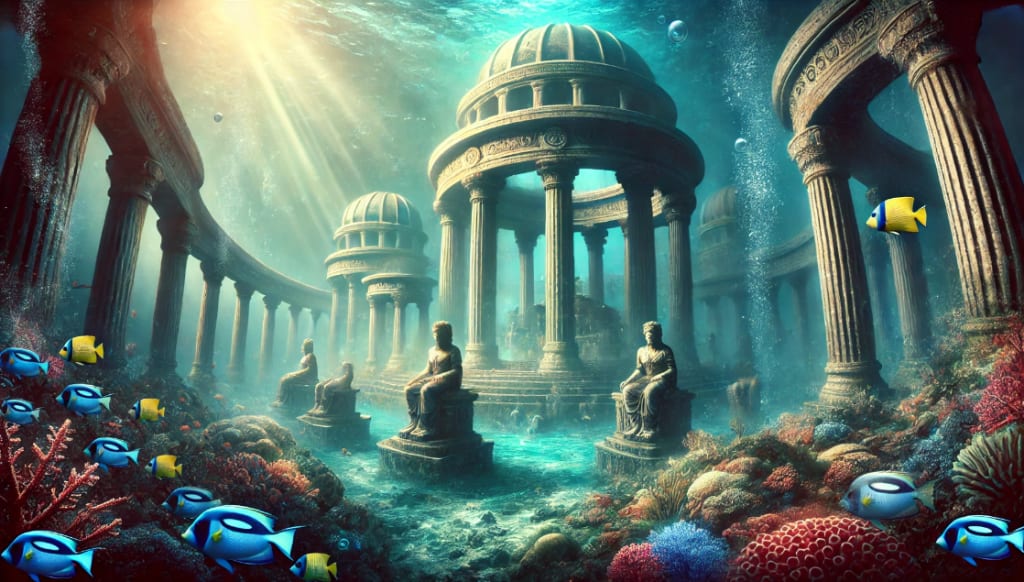
The story of Atlantis has fascinated historians, philosophers, and the public for centuries. This mythical island, often described as an advanced and utopian civilization, is said to have disappeared beneath the waves in a catastrophic event. While many consider it a cautionary tale or a symbolic myth, others argue that it may be rooted in historical reality. This article explores the legend of Atlantis, its origins, and the ongoing debate over whether it is fact or fiction.
Origins of the Atlantis Legend
The legend of Atlantis originates from the works of the ancient Greek philosopher Plato. In his dialogues Timaeus and Critias, written around 360 BCE, Plato described Atlantis as a powerful and technologically advanced civilization that existed approximately 9,000 years before his time. According to Plato, Atlantis was located "beyond the Pillars of Hercules," which many believe refers to the modern-day Strait of Gibraltar.
Plato portrayed Atlantis as a utopia with vast wealth, advanced architecture, and a strong naval force. However, the Atlanteans became morally corrupt and power-hungry, leading to their downfall. As divine punishment, the gods sent earthquakes and floods to sink the island into the ocean, erasing it from history.
Symbolism in Plato’s Story
Most scholars believe Plato intended Atlantis as an allegory rather than a historical account. The story serves as a moral and political lesson about the dangers of hubris and greed. By juxtaposing the virtuous city of Athens with the decadent Atlantis, Plato aimed to highlight the values of his ideal society.
Some experts also view Atlantis as a metaphor for natural disasters, such as volcanic eruptions or tsunamis, which were not uncommon in the ancient Mediterranean world.
Searching for Atlantis: Historical Theories
Despite its likely allegorical roots, many explorers and researchers have tried to find evidence of Atlantis. Over the centuries, theories about its possible location have ranged from plausible to fantastical.
- Mediterranean Theories
Some believe Atlantis might be a distorted memory of the Minoan civilization, which flourished on the island of Crete around 3000–1100 BCE. The Minoans were advanced in art, trade, and architecture but were devastated by the eruption of the Thera volcano around 1600 BCE. The resulting tsunamis and earthquakes may have inspired the tale of Atlantis.
- Atlantic Ocean Hypotheses
Others argue that Atlantis lies beneath the Atlantic Ocean, as suggested by Plato’s description of it being "beyond the Pillars of Hercules." However, modern underwater exploration has yet to uncover evidence of a sunken island or civilization in the region.
- Alternative Locations
Proposed locations for Atlantis include the Caribbean, Antarctica, and even the Sahara Desert. One theory, known as the "Richat Structure" or "Eye of the Sahara," suggests that this geological formation in Mauritania matches Plato’s description of a circular city with concentric rings.
- Pseudoarchaeological Claims
Some fringe theories suggest extraterrestrial involvement or advanced ancient technologies in the rise and fall of Atlantis. While these ideas capture the imagination, they lack scientific evidence.
Atlantis in Popular Culture
The allure of Atlantis has permeated literature, films, and television. From Jules Verne’s Twenty Thousand Leagues Under the Sea to Disney’s Atlantis: The Lost Empire, the myth continues to inspire stories of exploration and mystery. Atlantis is also a popular subject in conspiracy theories and pseudoscientific works, which often blend myth with speculative fiction.
Scientific Perspectives on Atlantis
Modern science offers little support for the existence of Atlantis as described by Plato. Archaeological evidence for a highly advanced civilization that sank into the sea around 11,000 years ago is absent. Additionally, geological studies of the ocean floor have not revealed any sunken landmass that matches the description.
However, some researchers argue that Plato’s story may have been inspired by real historical events, such as the aforementioned eruption of Thera or the flooding of coastal regions during the last Ice Age. These events, though not directly linked to Atlantis, demonstrate how natural disasters could fuel enduring myths.
Why the Debate Endures
The debate over Atlantis endures for several reasons:
- Human Fascination with the Unknown
The idea of a lost civilization appeals to our sense of wonder and curiosity. Could there be a forgotten chapter of human history waiting to be rediscovered?
- Ambiguity in Plato’s Account
Plato’s description of Atlantis is detailed enough to spark speculation but vague enough to defy definitive proof. This ambiguity keeps the legend alive.
- Interdisciplinary Interest
Atlantis attracts attention from various fields, including history, archaeology, geology, and even psychology. Each discipline offers a unique perspective on the myth.
Conclusion: Fact or Fiction?
While the story of Atlantis is likely a fictional allegory created by Plato, it may contain echoes of historical events or natural disasters. The absence of concrete evidence suggests that Atlantis, as described in the ancient texts, is a myth. However, the legend continues to captivate us, reflecting humanity’s enduring fascination with the mysteries of the past.
Whether viewed as a cautionary tale, a historical puzzle, or a cultural touchstone, Atlantis remains a symbol of our quest for knowledge and the enduring power of storytelling. Until definitive evidence surfaces, the legend of Atlantis will straddle the line between fact and fiction, fueling both scholarly debate and popular imagination.
About the Creator
Keep reading
More stories from mariam elghazaly and writers in History and other communities.
The Most Dangerous Islands in the World
Islands often evoke images of pristine beaches, turquoise waters, and tranquil getaways. However, not all islands fit this idyllic description. Some are fraught with danger, whether due to natural hazards, deadly inhabitants, or extreme isolation. This article explores the most dangerous islands in the world, highlighting the unique risks that make them perilous destinations.
By mariam elghazalyabout a year ago in History




Comments
There are no comments for this story
Be the first to respond and start the conversation.