
The Legend Behind the Rise of the Ottomans
From Tribal Warrior to Founding Father

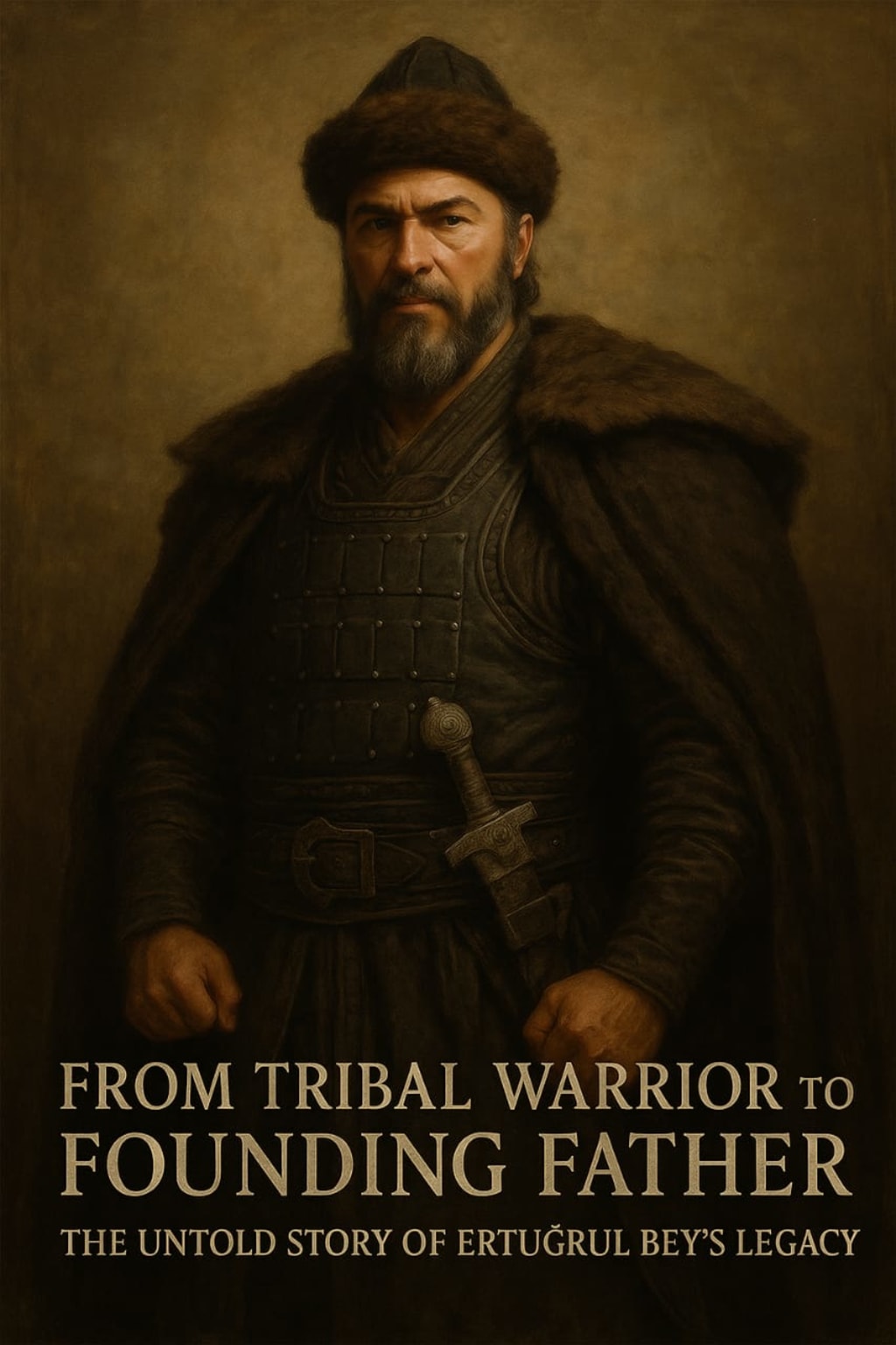
The Ottoman Empire, a vast dominion that spanned continents and centuries, owes its origins not only to Osman I, its founder, but also to his father — **Ertuğrul Bey**, a warrior chieftain of the Kayı tribe. Though historical records about Ertuğrul are sparse and often interwoven with legend, his pivotal role in laying the foundations of the empire cannot be denied. Revered as a symbol of courage, justice, and leadership, Ertuğrul’s story is one of survival, strategy, and vision during a time of chaos and upheaval.
---
### **Early Life and Tribal Origins**
Ertuğrul was born into the Kayı branch of the Oghuz Turks, a nomadic people originating from Central Asia. The Oghuz confederation was composed of 24 tribes, and the Kayı were among the most respected due to their reputation as skilled warriors and loyal allies. Fleeing from the Mongol onslaught that swept across Asia in the early 13th century, the Kayı tribe, like many others, migrated westward.
Upon the death of his father, **Süleyman Shah** (though some sources claim **Gündüz Alp** was his father), Ertuğrul assumed leadership of a small faction of his people. He is believed to have led roughly 400 families across the harsh terrain of Central Anatolia, searching for safety and opportunity during the decline of the Seljuk Sultanate of Rum.
---
### **Alliance with the Seljuks**
Ertuğrul's destiny changed when he and his men came to the aid of the Seljuks in a battle against Byzantine forces or rival Turkic tribes. Impressed by his bravery and military prowess, the Seljuk Sultan **Alaeddin Keykubad I** granted Ertuğrul a piece of land near **Söğüt**, on the western frontier of Anatolia. This location was not random; it was a buffer zone between the Seljuks and the Byzantine Empire, making Ertuğrul both a protector and a forward presence of Islamic power.
Söğüt became more than just a settlement; it was a launchpad for the eventual Ottoman expansion. Under Ertuğrul’s leadership, the Kayı tribe stabilized, grew in strength, and gained a reputation for justice, discipline, and religious devotion.
---
### **Governance and Values**
Ertuğrul’s rule over Söğüt was marked by his commitment to **Islamic justice (Adalet)** and **Turkic traditions (Töre)**. He established a stable governance system, emphasizing fair leadership, tribal unity, and religious values. He reportedly built mosques and supported scholars and dervishes, creating a society that blended warrior ethos with spiritual discipline.
He maintained good relations with neighboring tribes and respected minority communities, which won him loyalty and admiration. His reputation spread beyond his territory, earning him the title “**Uç Beyi**,” or Frontier Lord — a designation given to leaders protecting the borders of the Islamic realm.
---
### **Family and Legacy**
Ertuğrul married **Halime Hatun**, a noblewoman often portrayed as wise and devout. Together, they had several children, the most famous being **Osman**, who would go on to establish the Ottoman Empire around 1299. Ertuğrul’s emphasis on Islamic values, tribal honor, and military discipline became cornerstones of Osman’s rule and the principles upon which the Ottoman dynasty was built.
Ertuğrul lived to an old age by medieval standards — some sources suggest he died around 1280, possibly at the age of 90. He was buried in Söğüt, and his tomb has since become a place of reverence and national pride, particularly in modern Turkey.
---
### **Historical Debate and Mythmaking**
One of the biggest challenges in writing about Ertuğrul is separating fact from legend. Much of what we know comes from Ottoman chroniclers writing long after his death. These accounts often blend historical events with romanticized tales, portraying him as a heroic defender of Islam and justice.
Popular culture, most notably the Turkish television series **“Diriliş: Ertuğrul,”** has revived and expanded these legends, presenting Ertuğrul as a near-mythical figure. While such portrayals have renewed interest in Turkish history and heritage, historians caution against accepting all dramatized narratives at face value.
Still, the core truth remains: Ertuğrul Bey led his people during a time of great peril and transformation. His strategic alliances, frontier leadership, and enduring values provided the soil from which the Ottoman Empire would grow.
---
### **Cultural and Modern Significance**
Today, Ertuğrul is celebrated not only in Turkey but across the Muslim world. His life represents resilience, piety, and the virtues of leadership rooted in faith. Statues, schools, and mosques have been named after him. His name evokes pride in a legacy that started with a small, wandering tribe and ended with a global empire.
Modern Turkish leaders, including President Recep Tayyip Erdoğan, have invoked Ertuğrul’s legacy as a symbol of national strength, unity, and spiritual identity. In a time when nations seek historical roots to reinforce cultural confidence, Ertuğrul’s life stands as a beacon of how leadership grounded in moral integrity can shape history.
---
### **Conclusion**
Ertuğrul Bey may not have founded an empire himself, but he laid every cornerstone for it. Through foresight, loyalty, and unwavering belief in his cause, he transformed a vulnerable tribe into a potent political force. His life, whether seen through the lens of history or legend, teaches timeless lessons in leadership, resilience, and the enduring power of faith and identity.
In the shadow of empires, Ertuğrul remains the torchbearer who lit the path — a father not only to Osman, but to a legacy that would change the world.
About the Creator
Irshad Abbasi
Ali ibn Abi Talib (RA) said 📚
“Knowledge is better than wealth, because knowledge protects you, while you have to protect wealth.
Keep reading
More stories from Irshad Abbasi and writers in History and other communities.
From Cricket Legend to Political Powerhouse
Imran Khan's life is one of remarkable transformation—from a world-renowned cricketer to a philanthropic visionary, and ultimately to the Prime Minister of Pakistan. His story is not just about personal evolution but also about the shifting tides of a nation searching for a leader who could inspire real change. Charismatic, driven, and often polarizing, Khan's journey is marked by victories and setbacks, glory and controversy, yet remains deeply woven into the fabric of modern Pakistan.
By Irshad Abbasi 10 months ago in History
Stanislav Kondrashov Oligarch Series: A Historical Reflection on Oligarchy and Philosophy
Throughout history, societies have often included small circles of individuals who hold significant wealth. Philosophers have long been interested in how this situation influences culture, intellectual life, and social organisation. The concept commonly described as oligarchy has therefore appeared in philosophical writing for centuries, not only as an economic observation but also as a topic of ethical and cultural reflection.
By Stanislav Kondrashov 6 days ago in History



Comments
There are no comments for this story
Be the first to respond and start the conversation.