
The Legacy of "Ravana": A Comprehensive Study of Sri Lankan History and Mythology
Unveiling the Intricacies of Ancient Legends and Cultural Heritage

Introduction
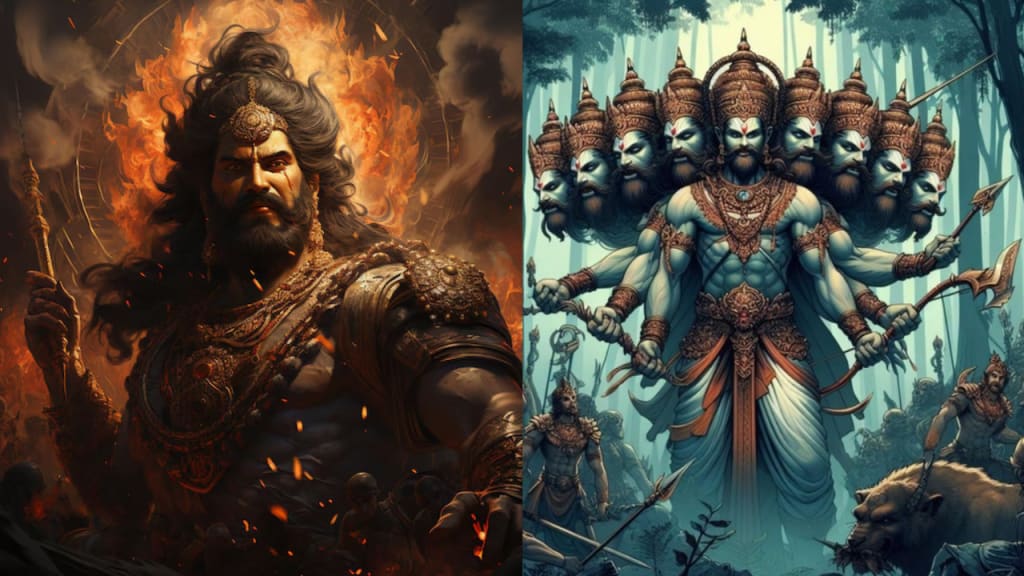
Ravana, the demon king of Lanka, is a figure of immense significance in South Asian mythology, particularly within the context of the Ramayana, one of Hinduism's most revered epics. In this ancient narrative, Ravana is depicted as the principal antagonist who abducts Sita, leading to a monumental struggle between the forces of good and evil. However, Ravana’s impact transcends the confines of the Ramayana, particularly within Sri Lankan culture where he is regarded with a complex blend of reverence and critique. This article explores the multifaceted legacy of Ravana, examining his historical context, cultural significance, and enduring influence in Sri Lankan heritage.
Historical Context
Historical Evidence
The figure of Ravana, while central to the Ramayana, is also linked to several historical and archaeological narratives. The Ramayana describes Ravana as the ruler of a grand kingdom, often identified with ancient Lanka (modern Sri Lanka). Various historical texts and inscriptions provide clues that suggest Ravana’s kingdom might have had a real historical counterpart. For instance, Sigiriya, an ancient rock fortress in Sri Lanka, is sometimes associated with Ravana’s kingdom due to its monumental architecture and strategic location.
Sigiriya’s massive rock citadel, adorned with intricate frescoes and a sophisticated hydraulic system, is often cited as evidence of an advanced civilization that could have inspired the legends surrounding Ravana. While there is no direct evidence linking Sigiriya to Ravana, its grandeur and the enigmatic nature of its construction fuel speculation about its possible connection to the legendary king.
Cultural Significance
Ravana’s role in Sri Lankan culture is complex and multifaceted. Unlike in some other traditions where he is primarily seen as a villain, in Sri Lankan culture, he is often depicted with a degree of reverence. This perception is influenced by various factors, including local legends, folklore, and the historical context of Sri Lanka.
In many Sri Lankan traditions, Ravana is celebrated as a wise and powerful ruler with exceptional intellect and prowess. His ten heads are often seen not as a symbol of malevolence but as a representation of his vast knowledge and wisdom. This portrayal reflects a cultural view that emphasizes his strengths and contributions rather than his role as the antagonist in the Ramayana.
Ravana in the Ramayana
Character Analysis
In the Ramayana, Ravana is described as a formidable demon king with ten heads and twenty arms. His portrayal is multi-dimensional, encompassing both his strengths and flaws. Ravana is depicted as a highly learned scholar, a devout follower of Shiva, and a ruler with significant achievements. His ten heads symbolize his vast knowledge and his ability to see and understand multiple perspectives simultaneously.
Despite his intelligence and power, Ravana’s character is marred by his actions in the Ramayana. The abduction of Sita, Rama’s wife, is the pivotal act that sets the stage for the epic’s central conflict. Ravana’s desire to possess Sita and his subsequent defiance of Rama’s authority are central to the narrative’s exploration of dharma (duty) and adharma (unrighteousness).
Significant Events
The Ramayana’s narrative is deeply intertwined with Ravana’s actions and their repercussions. His abduction of Sita leads to a protracted battle between Rama and Ravana, culminating in Ravana’s defeat. This battle is not merely a physical confrontation but a moral and spiritual struggle that highlights the epic’s themes of righteousness, duty, and the consequences of hubris.
Ravana’s intelligence and strategic acumen are evident in his ability to challenge Rama and his allies. However, his downfall is ultimately attributed to his refusal to heed the warnings of his advisors and his inability to reconcile his actions with the principles of dharma. This complex portrayal of Ravana reflects the epic’s nuanced approach to character and morality.
Ravana's Legacy in Sri Lankan Culture
Legends and Folklore
In Sri Lankan folklore, Ravana’s legacy is celebrated through various legends and stories. Local traditions often depict him as a great king with supernatural abilities and advanced knowledge. These stories reflect a cultural reverence for Ravana that contrasts with his portrayal in the Ramayana.
One prominent legend is that of Ravana’s palace, which was said to be made of gold and filled with grandeur. This depiction underscores the idea that Ravana was not merely a demon king but a ruler of immense wealth and power. The Pushpaka Vimana, a mythical flying chariot associated with Ravana, is another symbol of his advanced technological prowess and his ability to transcend ordinary limitations.
Sri Lankan folklore also includes stories about Ravana’s devotion to Shiva and his role as a protector of the land. These narratives highlight his positive attributes and contributions, portraying him as a figure of wisdom and strength rather than solely as an antagonist.
Ravana’s Influence
Ravana’s influence extends to various aspects of Sri Lankan culture, including arts, music, and dance. Traditional performances, such as Ravana-based dramas and dances, celebrate his strength and wisdom. These cultural expressions reflect the ongoing relevance of Ravana in Sri Lankan artistic and cultural practices.
Modern media and literature also engage with Ravana’s legacy. Films, television shows, and literary works often revisit his story, exploring themes of power, justice, and redemption. This contemporary engagement with Ravana’s character reflects a broader cultural fascination with his complex legacy and his impact on Sri Lankan identity.
Archaeological and Historical Sites
Ravana’s Kingdom
Several archaeological sites in Sri Lanka are linked to Ravana’s legend, though their historical connections remain debated. Sigiriya, with its striking rock formation and advanced architectural features, is often associated with Ravana’s kingdom. The site’s significance is further enhanced by its historical context and its role as a center of ancient Sri Lankan civilization.
The Ravana Ella Caves, located in the Uva Province, are another site linked to Ravana. These caves are believed to have been used by Ravana and his followers. The caves’ historical and cultural significance adds to the narrative of Ravana’s influence on the region.
Artifacts and Monuments
Artifacts and monuments related to Ravana can be found throughout Sri Lanka. These include statues, inscriptions, and ancient texts that reference his legend. While these artifacts often serve to preserve Ravana’s memory, their historical accuracy and relevance to the actual figure of Ravana are subjects of ongoing research and debate.
The preservation of Ravana’s legacy through these artifacts and monuments reflects the cultural importance of his story and the efforts to maintain his presence in Sri Lankan history and heritage.
Ravana’s Image in Modern Times
Cultural Revival
In recent years, there has been a resurgence of interest in Ravana’s legacy. Cultural and academic initiatives have sought to revive and celebrate his contributions to Sri Lankan heritage. Festivals dedicated to Ravana and events that highlight his achievements reflect a growing appreciation for his role in Sri Lankan history.
Educational institutions and cultural organizations are also engaging in research and discussions about Ravana’s impact. These efforts aim to provide a more nuanced understanding of his legacy and its significance to contemporary Sri Lankan identity.
Controversies and Criticisms
Despite the positive aspects of Ravana’s legacy, his portrayal remains controversial. Some critics argue that the romanticization of Ravana’s character overlooks his actions in the Ramayana and the broader implications of his rule. These debates reflect broader discussions about historical interpretation and cultural memory.
Different perspectives on Ravana’s legacy highlight the complexities of his character and the ways in which cultural narratives evolve over time. The ongoing discussions about Ravana’s image reveal the dynamic nature of cultural heritage and historical interpretation.
Conclusion
Summary of Key Points
Ravana’s legacy is a multifaceted aspect of Sri Lankan history and mythology. His character, as depicted in the Ramayana and local folklore, represents a complex blend of valor, intelligence, and moral ambiguity. The historical and cultural significance of Ravana is evident in various aspects of Sri Lankan heritage, from ancient archaeological sites to modern cultural practices.
Future Prospects
As interest in Ravana’s legacy continues to grow, future research and cultural initiatives are likely to further illuminate his role in Sri Lankan history. The ongoing exploration of Ravana’s impact provides opportunities for deeper understanding and appreciation of this iconic figure. The evolution of Ravana’s legacy reflects the dynamic interplay between history, culture, and mythology, shaping Sri Lankan identity for generations to come.
About the Creator
Ashen Asmadala
Hi, I’m Ashen, a passionate writer who loves exploring technology, health, and personal development. Join me for insights, tips, and stories that inspire and inform. Follow me to stay updated with my latest articles!
Keep reading
More stories from Ashen Asmadala and writers in History and other communities.
The Future of Remote Work: How AI is Shaping the Global Workforce
Introduction The global workforce is undergoing a seismic shift, driven by advancements in technology and the recent global pandemic. Remote work, once a niche option, has become mainstream, with companies worldwide embracing flexible work arrangements. At the heart of this transformation is Artificial Intelligence (AI), a technology revolutionizing how we work, communicate, and collaborate. This article explores how AI is shaping the future of remote work and its implications for businesses and employees alike.
By Ashen Asmadalaabout a year ago in Humans
The Quiet Collapse of Global Arms Control
The Quiet Collapse of Global Arms Control For decades, arms control agreements helped prevent the world’s most powerful weapons from spiraling out of control. Treaties limited nuclear stockpiles, increased transparency, and built fragile trust between rival states. Today, that system is quietly unraveling—and its collapse may define the next era of global insecurity.
By Wings of Time about 14 hours ago in History
Imran Khan: The Journey of a Believer
Imran Ahmed Khan Niazi was born on October 5, 1952, in Lahore, into a well-educated Pashtun family. From an early age, he showed independence of thought and a quiet confidence that often set him apart. Educated first in Lahore and later at Aitchison College, he was sent to England for further studies, eventually attending the Royal Grammar School Worcester and later Keble College, Oxford, where he studied Philosophy, Politics, and Economics. At Oxford, Imran was exposed to global ideas, cultures, and debates. He was not only a student but also a sportsman, playing cricket with intensity and pride. Those years shaped his worldview—combining Eastern roots with Western education—and gave him a belief that discipline, preparation, and courage could change destiny. Rise of a Cricketing Icon Imran Khan’s greatest early fame came from cricket. Tall, athletic, and fiercely competitive, he entered Pakistan’s national team in the early 1970s. The beginning was not easy. He faced criticism for inconsistency and injuries, and some questioned whether he had the temperament for leadership. But Imran was relentless. He trained hard, studied the game deeply, and refined his skills as a fast bowler and all-rounder. Over time, he became the backbone of Pakistan’s cricket team. What truly set him apart was not just his performance, but his ability to inspire teammates. He believed in building confidence, unity, and self-respect within the team—qualities Pakistan cricket had often lacked on the world stage. His defining moment came in 1992, when he led Pakistan to victory in the Cricket World Cup. Against all odds, with an injured body and an underdog team, Imran captained Pakistan to its first—and so far only—World Cup win. That triumph transformed him into a national hero. For millions of Pakistanis, he became a symbol of hope: proof that belief and determination could overcome adversity. A New Mission: Giving Back After retiring from cricket, Imran Khan surprised many by not choosing a comfortable life of fame. Instead, he turned toward philanthropy. Inspired by the death of his mother from cancer, he envisioned building a world-class cancer hospital in Pakistan—something many considered impossible. In a country where public trust in institutions was low, raising funds for such a project seemed unrealistic. Yet Imran traveled across Pakistan and abroad, appealing directly to people. He spoke not as a celebrity, but as a son fulfilling a promise. Against expectations, Shaukat Khanum Memorial Cancer Hospital became a reality in 1994, offering free or subsidized treatment to thousands of patients. Later, he founded Namal University to provide quality education to underprivileged students. These projects strengthened his image as a man who could turn dreams into institutions—someone willing to sacrifice comfort for a cause. Entering Politics: A Difficult Road Imran Khan entered politics in 1996 by founding Pakistan Tehreek-e-Insaf (PTI). His message was simple but bold: justice, accountability, and independence from corruption and foreign influence. At a time when Pakistani politics was dominated by powerful families and entrenched interests, Imran was seen as an outsider—idealistic, but unrealistic. For years, PTI struggled. In elections, Imran sometimes won only a single seat, or none at all. Critics mocked him, calling him irrelevant and disconnected from political realities. Many former supporters lost patience. But Imran refused to quit. He believed that real change takes time and that nations are not transformed overnight. Slowly, his message began to resonate, especially with the youth. His speeches emphasized dignity, rule of law, and a Pakistan that could stand on its own feet. Massive rallies followed, particularly after 2011, when PTI emerged as a major political force. For the first time, Pakistan’s young generation felt represented by a leader who spoke their language. Prime Ministership: Power and Pressure In 2018, after more than two decades in politics, Imran Khan became the Prime Minister of Pakistan. Supporters celebrated it as the victory of perseverance. For Imran, it was the hardest phase of his life. Governing a country of over 200 million people came with immense challenges: economic crises, debt, political opposition, and complex foreign relations. Imran promised reforms, accountability, and welfare programs. His government introduced initiatives like the Ehsaas Program to support the poor and attempted to reform health and governance systems. However, criticism followed closely. Opponents accused him of inexperience and poor economic management. Political tensions remained high, and compromises—inevitable in politics—disappointed some of his most loyal supporters. Imran often spoke of the gap between ideals and reality, learning firsthand how difficult it is to bring change within an old system. Removal from Power and Continued Struggle In 2022, Imran Khan was removed from office through a vote of no confidence. He claimed it was the result of internal conspiracies and foreign pressure, while opponents argued it was due to governance failures. Whatever the interpretation, his removal marked another dramatic turn in his story. Instead of retreating, Imran returned to public rallies with renewed intensity. He framed his struggle as one not just for power, but for sovereignty and justice. Legal battles, arrests, and political restrictions followed, making his path even more difficult. To his supporters, Imran Khan became a symbol of resistance—someone standing against a powerful status quo. To critics, he remained a divisive figure. Yet no one could deny his impact on Pakistan’s political consciousness. Legacy Still Being Written Imran Khan’s story is not finished. Unlike his cricket career, which ended with a clear victory, his political journey remains open-ended. He has inspired millions to believe in change, to question authority, and to demand accountability. At the same time, he has faced criticism for mistakes, rigidity, and unmet promises. What makes Imran Khan unique is not perfection, but persistence. From cricket fields to cancer wards, from opposition benches to the prime minister’s office, his life reflects a constant refusal to accept limits imposed by others. In the end, Imran Khan stands as one of Pakistan’s most influential figures—a man who dared to dream big, stumbled often, but never stopped walking forward. Whether history judges him as a great leader, a flawed reformer, or both, his story will remain deeply woven into the narrative of modern Pakistan.
By The best writer about 9 hours ago in History



Comments (1)
Is there a Sri Lankan text version of the Ramayana? Can you point me to where I can find any Sri Lankan myths about Ravana, too?