
The Last Supper portrait might be in error
Davinvi's interpretation does not line-up with customs of the day.


A beloved painting draws controversy
Almost everyone at one time or another has seen Leonardo Divinci’s depiction of The Last Supper, which the Bible says is the final meal Christ ate with his followers before being crucified. This famous painting can be found on the walls of many Christian homes and also inside churches.
The Last Supper, portrayed at the 2024 Olympics, has drawn criticism. Initially, it was claimed that this was not a depiction of Christ and his disciples, but later, an apology was given. Most Christians believe it was done on purpose, but there is no evidence. There is also a belief that the blackout was God's response. The Divinci painting is beloved, and people will continue to cherish it in high esteem.
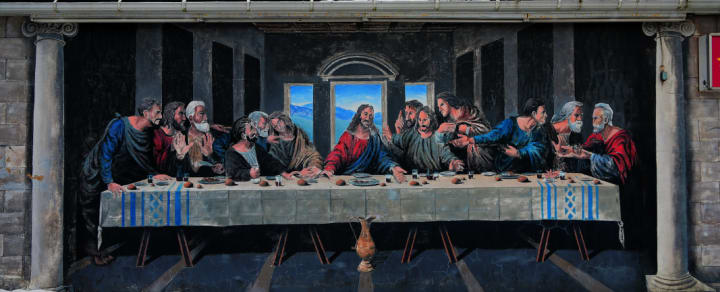
Jesus may not have been seated at a traditional table
If you have a copy of this portrait in your home, you may be surprised to find out that it may be in grave error. The book and movie entitled The Davinci Code have made millions, and people around the world have searched the artist's picture for clues that are supposedly hidden within. It may all be for naught when you consider the facts.
First of all the portrait was done between 1495-1498, which was close to 1500 years after Jesus ate the famous meal with his followers. It’s not clear what Davinci based his image on, but scripture reveals Christ and his disciples were not seated upright at a table. Some believe there were more than the twelve and that women were included.
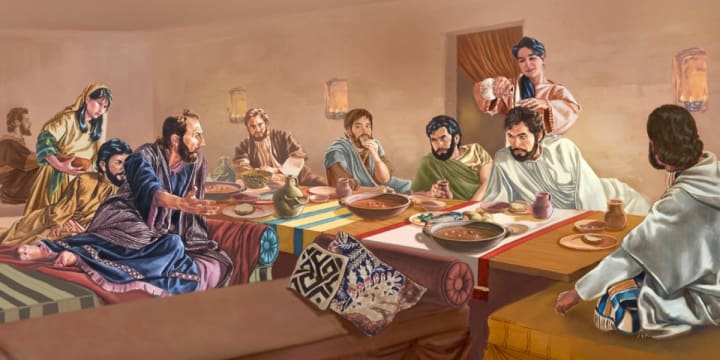
Please consider the following scripture verses.
Matthew 26:20 NIV: When evening came, Jesus was reclining at the table with the Twelve.
Luke 22:14 Amplified version. When the hour [for the meal] had come, Jesus reclined at the table, and the apostles with Him.
To recline is to lean or lie back in a relaxed position.
Roman dining tables
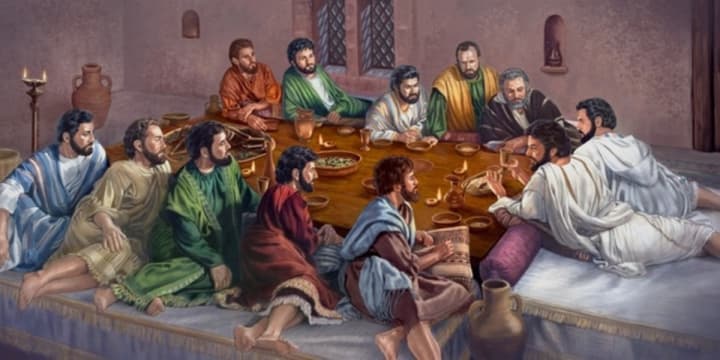
According to Julian Sprigg, MA, a Roman dining table was called a triclinium because it contained three couches, which were set around a central table. This table was a low block with couches around it on three sides. There would be a single couch located in the middle, where the host would sit. One couch was to the left of the host, and one to his right, opposite of each other.
The side opposite the host was left open so that food could be brought to the table. The couches were covered by a cushion, or a cushion would be provided so that the guest could lean on it. The guests approached the table from behind the couches, then they reclined on their left side. They would support their head on their left elbow. This left their right hand free to take the food
A traditional Roman triclinium seated nine people, with three on each couch. For the last supper, there were alleged to be thirteen individuals in attendance. This would indicate that they used larger couches or were lying on cushions on the floor. They might also have been seated closely together, considering they were a group of friends. While they were eating, their feet would be stretched out behind them and away from the table. This would have made it easy for Jesus to wash his disciples' feet.
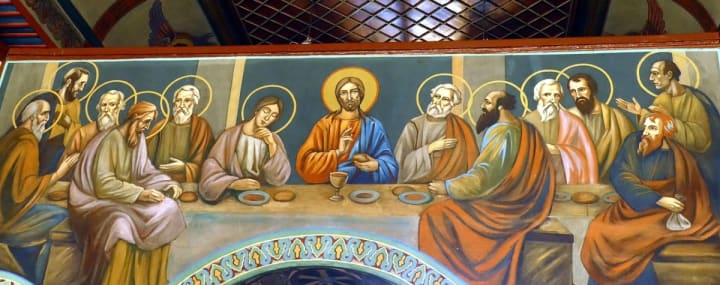
Seating arrangement in Jesus's day
Generoso Urciuoli is an archaeologist at Italy's Petrie Center. He is also the author of the Archeoricette blog on ancient food. He writes that history reveals that it was customary during Jesus' time in Palestine to take the attitude of when in Rome, do as the Romans do. These were not anything like Davinci's depiction. Urciuoli says that a team of researchers put together clues and historical data from artworks such as catacomb paintings from the third century A.D. The researchers were able to reconstruct eating habits and food choices in Palestine 2,000 years ago.
The picture that emerges is completely different from what is depicted in the traditional renderings of Christ's final meal. The dinner, which took place in the upper room of a house in Jerusalem, was not a gathering where everyone was sitting at a rectangular table. The people of that day ate seated on cushions or pillows around a table low enough for them to reach from their seats on the floor.
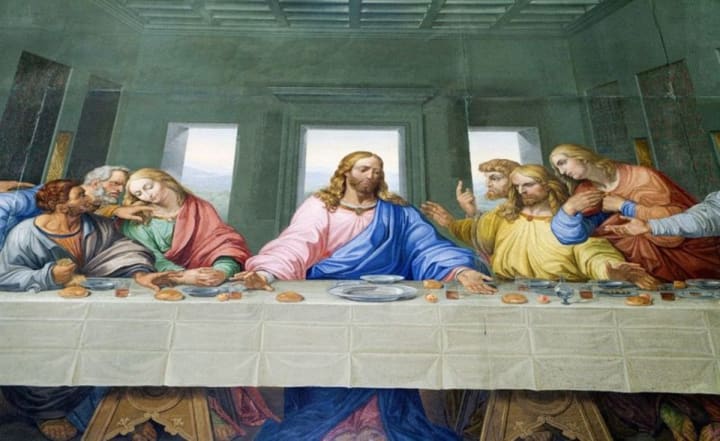
Could Divinci have been off base?
Divinci's image does not allow for a comfortable manner in which Jesus could have washed his disciples' feet, as they are sitting at a large table. Jesus would have had to go underneath the table, or the disciples would have had to move away from it to have their feet washed.
If they were seated in the manner that history suggests, then a man’s head would be lined up with the chest of the person who was reclining to his left. This would make it easy to lean back and talk to the person on the left without anyone else being able to hear the conversation.
Interpretation
People have dissected Diivinci's painting for decades, trying to prove whether the person leaning on Christ from his left was John, the beloved disciple, or Mary Magdalene. Now, however, taking a closer look at scripture and understanding the history of the day, Divinci's famous "Last Supper" is more than likely a fraud.
There is also an issue being brought up in recent years about the men in the painting looking like Anglo-Saxons. Jesus and his followers were Jewish and from Palestine, so their features would have differed slightly. At the end of the day, this was Diinci's interpretation and not based on fact.
About the Creator
Cheryl E Preston
Cheryl enjoys writing about current events, soap spoilers and baby boomer nostalgia. Tips are greatly appreciated.
Keep reading
More stories from Cheryl E Preston and writers in History and other communities.
Salome suffered the same fate she bestowed upon John the Baptist
A queen pimps her own daughter Truth, as they say, is stranger than fiction indeed. The story of the woman known as Salome is an indication this adage is accurate. The Bible tells us in Matthew chapter 14:3-12 that Herod the tetrarch was married to his brother Phillip's wife, Herodias. John the Baptist boldly told the ruler he was sinning and his marriage was adultery and wrong.
By Cheryl E Preston5 months ago in History
When the Pyramids Learned to Breathe
The desert was silent in the way only ancient places can be—not empty, but listening. At dawn, the first light touched the limestone faces of the pyramids, and the shadows they cast stretched long and deliberate, as if time itself were waking slowly. To the west, beyond the city’s dust and noise, the old giants stood where they always had, unmoved by centuries, untouched by doubt.
By LUNA EDITHabout 16 hours ago in History
World War I
The morning fog lay thick over the trenches of northern France, clinging to the earth as if it too feared what was about to happen. Private Thomas Hale pulled his coat tighter around himself, though it did little to stop the cold from seeping into his bones. He had been in the trenches for six months, yet the damp smell of mud, smoke, and fear still felt unfamiliar, like a nightmare he could not wake from.
By Maavia tahir7 days ago in History



Comments (1)
Hi, I’m new to Vocal and would really appreciate any tips you could share on how to build engagement. Thanks so much for your time, and I look forward to hearing from you!