
"The Landlord's Game". Kiowa Indians invented it. A woman patented it...Men became Billionaires.
They renamed it, "Monopoly".

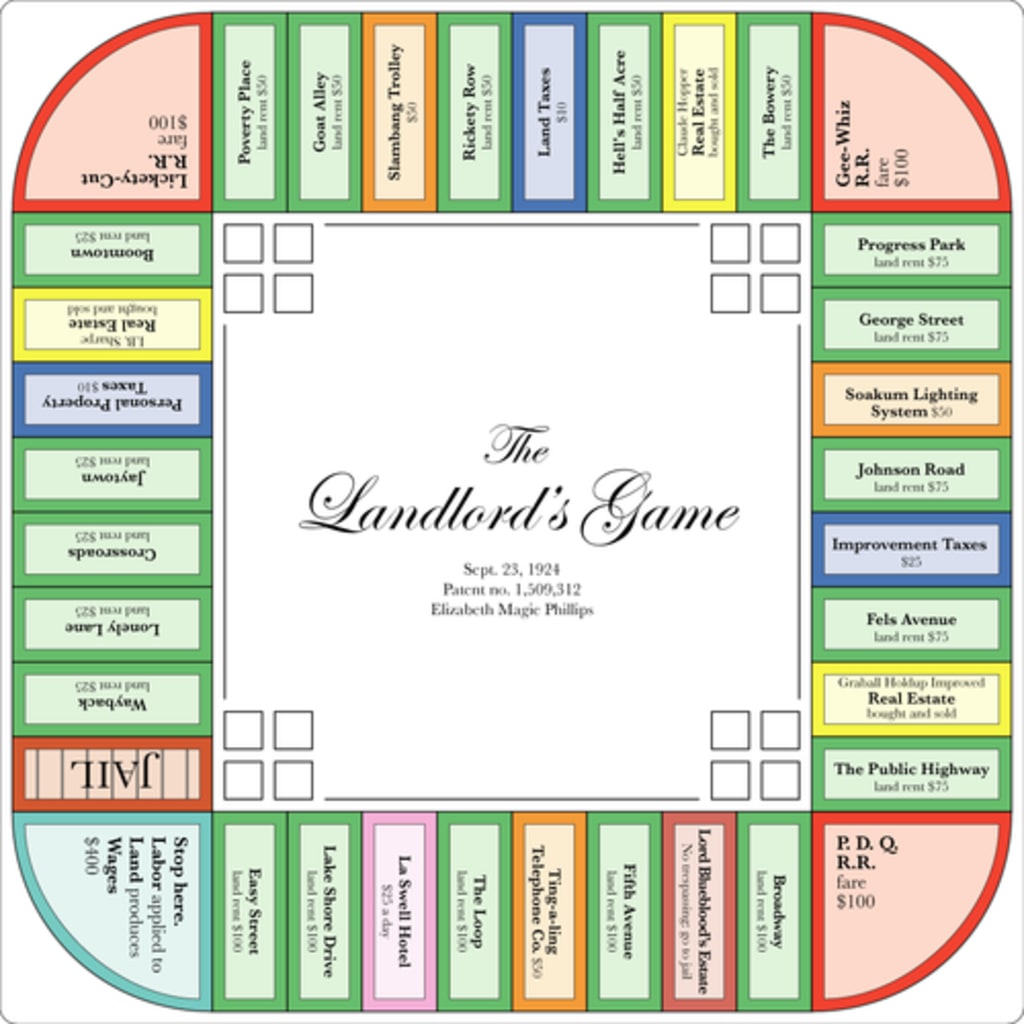
I found this tidbit of information in the movie "Heretic', which I just started watching on the Prime Network. The controversy surrounds a game first attributed to the Kiowa Indians, said invented by Elizabeth Magi...then reinvented by Charles Darrow.
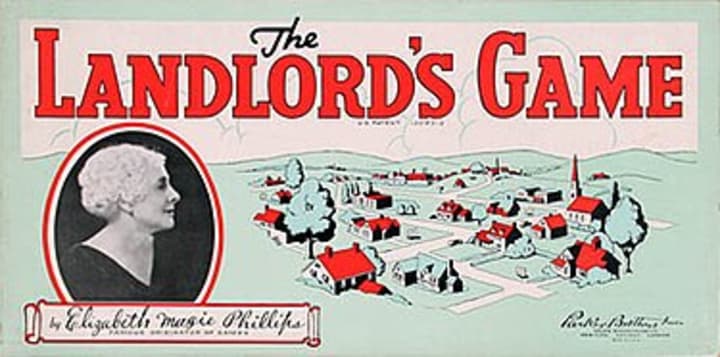
But first, a bit about the Kiowa Indians.
As I write for this challenge, I find new and fascinating stories which have rich histories and are not made easily accessible in avenues of learning.
I don't recall learning of the the Kiowa Indians before. But maybe it is just me. Let's dive into this thrilling saga of confusion.
The Kiowa are a Native American tribe originally from the Great Plains of the United States. They migrated southward from western Montana into Colorado's Rocky Mountains in the 17th and 18th centuries before settling in the Southern Plains by the early 19th century.
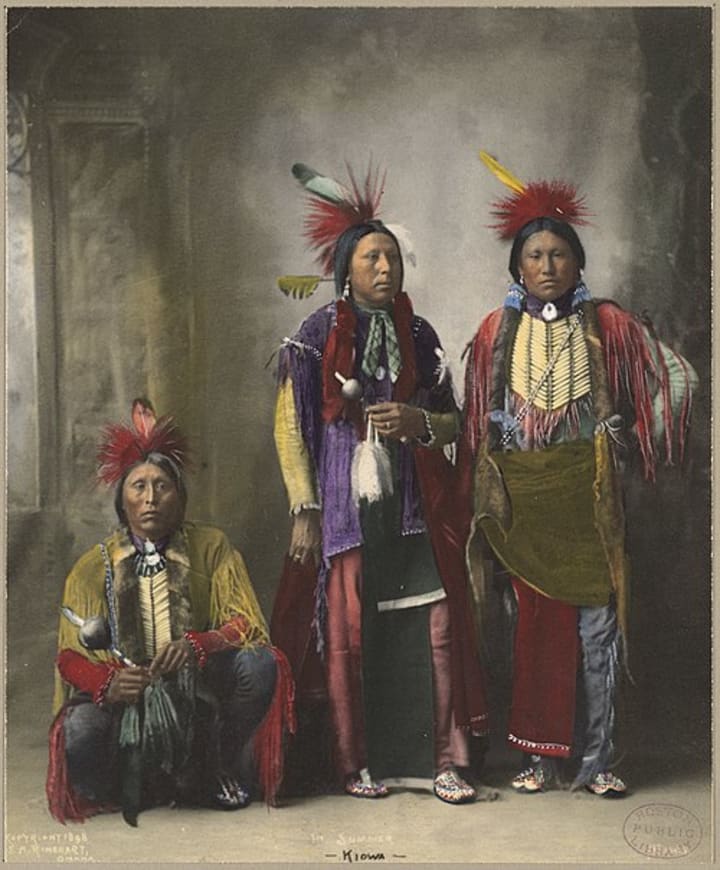
Historically, the Kiowa were nomadic, relying heavily on bison hunting after acquiring horses from the Spanish. They lived in large tepees and moved frequently in pursuit of game. Their warriors gained status through acts of bravery in battle, such as killing an enemy or touching his body during combat.
The Kiowa had a rich spiritual tradition, believing that dreams and visions granted supernatural power in war, hunting, and healing. They practiced the Sun Dance, and their medicine bundles were considered sacred and protective. They also played a key role in spreading Peyotism (a syncretic Native American religion that combines traditional beliefs with elements of Christianity), which later became part of the Native American Church.
They too, were displaced by Europeans, and forced to live on reservations.
In 1867, the Kiowa were moved to a reservation in southwestern Oklahoma, where they remain today as the Kiowa Indian Tribe of Oklahoma, headquartered in Carnegie, Oklahoma. As of 2011, there were approximately 12,000 Kiowa citizens. Their language, Cáuijògà, is endangered, but efforts are being made to preserve it through educational programs.
++++++++++++++++++
The Landlord's Game
A board game patented in 1904 in the U.S. by Elizabeth Magie. This was a realty and taxation game intended to educate. The game, however was not as popular as it should have been until Charles Darrow pilfered it as inspiration for the 1935 board game Monopoly.

It is only fair to note that...Interestingly, the game shares some similarities with the Kiowa Indian board game Zohn Ahl, and there are hints that Magie may have drawn inspiration from it.
At risk of repeating myself - I am unsure of who stole what from whom in this riveting tale of the birth of Landlord's, Monopoly and the whole host of conundrum-infused banter about original ownership of this game.
The Landlord's Game has some similarities to the basic rules of the board game Zohn Ahl, played by the Kiowa Indians of North America. There are hints that suggest Elizabeth Magie might have known Zohn Ahl and incorporated some of the game's ideas.
Yet drawing inspiration and actually earning a patent for someone else's idea (as Darrow did) seems to differ slightly. It is up to the reader to decide if an injustice was done to the Kiowa Indians, to Elizabeth, or if she too was on the wrong side of this game.
Elizabeth's game "The Landlord's Game", was designed to illustrate the economic principles of Georgism, a system proposed by Henry George, which critiques land monopolies and emphasizes the idea that land should be owned collectively rather than privately.
Magie created the game as a practical demonstration of how rents enrich property owners while impoverishing tenants. She hoped that playing the game would help people understand these economic dynamics and inspire them to seek fairer systems.
Elizabeth knew that some people could find it hard to understand why this happened and what might be done about it, and she thought that if Georgist ideas were put into the concrete form of a game, they might be easier to demonstrate. Magie also hoped that when played by children the game would provoke their natural suspicion of unfairness, and that they might carry this awareness into adulthood.
+
The game was first published in 1906 by the Economic Game Company, a business formed by Magie and fellow Georgists. It was later introduced in the United Kingdom in 1913 under the name Brer Fox an' Brer Rabbit, though it was not as successful there.
The Landlord's Game is widely recognized as the precursor to Monopoly, which was later popularized by Charles Darrow---though his version of the game was based on homemade copies of Magie's original design.
Various versions of the game popped up over the following years under a variety of names, Monopoly, Finance, and Auction being among them. Among the Atlantic City and Philadelphia communities of Quakers, the game was particularly popular with college students and economics professors.
Over time, Parker Brothers acquired the rights to Monopoly, and Magie's contributions were largely overshadowed by Darrow's commercial success.
+
How Monopoly evolved from this game? It’s quite a fascinating story!
The evolution of Monopoly from The Landlord's Game is a fascinating tale of innovation, adaptation, and, well... a bit of unfair practice muddled into some corporate maneuvering.
Elizabeth Magie originally designed The Landlord's Game in 1904 to demonstrate and highlight the economic dangers of land monopolies. Over the years, various homemade versions of the game circulated, with players tweaking the rules to make it more competitive and engaging.
By the 1930s, a man named Charles Darrow encountered a version of the game and began producing his own version, which he called Monopoly. He eventually sold it to Parker Brothers, who marketed it as his invention.
The truth about Magie's original creation was largely forgotten until the 1970s, when researcher Ralph Anspach uncovered its origins during a legal battle over his own game, Anti-Monopoly.
+
Diving deeper into the legal battles and the different versions of Monopoly over the years?
The history of Monopoly is packed with legal drama and fascinating variations.
Legal Battles
One of the most significant legal disputes involved Ralph Anspach, an economics professor who created Anti-Monopoly in the 1970s. Parker Brothers sued him for trademark infringement, but during his research, Anspach uncovered the forgotten origins of Monopoly---tracing it back to Elizabeth Magie’s The Landlord’s Game. After a lengthy legal battle, Anspach won the right to continue selling Anti-Monopoly and even wrote a book, The Billion Dollar Monopoly Swindle, detailing the controversy.
Another major legal fight revolved around Hasbro, which aggressively defended its Monopoly trademarks. Over the years, various lawsuits have challenged the company’s monopoly over Monopoly,(egad!) including disputes over the use of the suffix "-opoly" in other board games.
Different Versions of Monopoly
Monopoly has evolved into hundreds of editions, ranging from classic city-themed versions to pop culture adaptations. Some notable ones include:
- Monopoly: Here & Now – A modernized version featuring contemporary landmarks.
- Monopoly: Electronic Banking – Replacing paper money with credit cards.
- Monopoly: Cheaters Edition – Encouraging players to bend the rules.
- Monopoly: Fortnite Edition – Inspired by the popular video game.
- Monopoly: Mega Edition – Featuring larger boards and faster gameplay.
Beyond these, Monopoly has been adapted into regional editions, luxury sets, and even digital versions, ensuring its continued popularity across generations.
Despite its controversial history, Monopoly became one of the most successful board games of all time, with countless editions, spin-offs, and digital adaptations.
Alas!
Magie, unfortunately, never received the recognition she deserved for her pioneering work.
I wonder if the Kiowa Indians of North America, will ever enter into the battle for the rights to the original idea to the game of Monopoly?
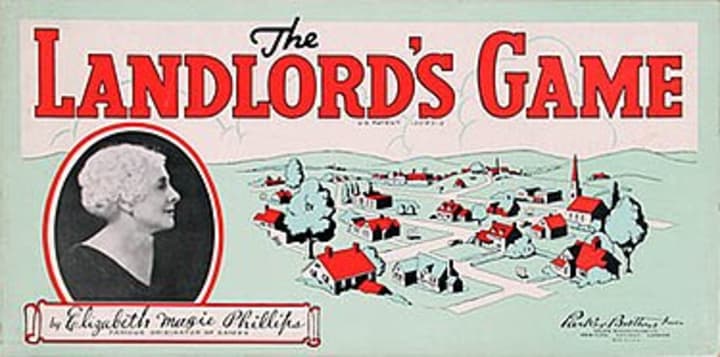
It is quite an asset knowing these facts before actually playing the game of Monopoly. The original intention of it being a tool for learning the dynamics of taxation, economics and finance, etc., for the underserved of society...As well as for teaching the young to "provoke their natural suspicion of unfair practices", is a credit to Elizabeth's good nature.
It is such a pity that the good intentions got lost along the road to education.

This last bit from Wikipedia confuses and confounds the issue even further:
Robert Baron had Parker Brothers design its own version, called Fortune, before they began negotiating to purchase Magie's patents, in case the discussion fell apart or she sold to another potential buyer, Dave Knapp, publisher of Finance.
Magie held her 1923 patent until 1935, when she sold it to Parker Brothers for $500, equivalent to $11,467 in 2024. The company had recently started distributing Monopoly, which it had purchased from Charles Darrow who claimed to have invented it. Parker Brothers only printed a very small run of The Landlord's Game to secure their claim to the rights. Surviving copies of The Landlord's Game manufactured by Parker Brothers are considered by many the rarest of all 20th century board games. Parker Brothers pushed her game aside for Darrow's by 1936. Magie then did two interviews showcasing copies of the original board, with The Washington Post and The Evening Star, to show that Darrow was not the inventor of the game.
In a 2004 episode of PBS' History Detectives (title: "Monopoly; Japanese Internment Camp Artwork; The Lewis and Clark Cane"), the show investigated a game board belonging to a Delaware man, having an intermediate version of a game combining elements of The Landlord's Game and Monopoly. The investigators concluded that this game board was the missing link that proves that Monopoly was derived from The Landlord's Game.
AH, what a muddled conundrum we weave when first we practice to deceive.
About the Creator
Antoni De'Leon
Everything has its wonders, even darkness and silence, and I learn, whatever state I may be in, therein to be content. (Helen Keller).
Tiffany, Dhar, JBaz, Rommie, Grz, Paul, Mike, Sid, NA, Michelle L, Caitlin, Sarah P. List unfinished.
Keep reading
More stories from Antoni De'Leon and writers in History and other communities.
The Kingdom of Benin
The historical Kingdom of Benin was established in the forested region of West Africa in the 1200's CE. It was a powerful and sophisticated dynasty, located in what is now southern Nigeria. It flourished from around the 11th century until it was annexed by the British Empire in 1897.
By Antoni De'Leon8 months ago in History
3 Harmless Habits That Once Caused Absolute Chaos
Most habits are comfortingly dull. You chew gum. You clap at events. You check your phone. You assume—reasonably—that these actions will not destabilize governments, bankrupt industries, or end lives. Society depends on this assumption. If every small habit carried catastrophic potential, we would never leave the house.
By Enoch Sagini4 days ago in History
Brosley Punch — The Strike That Shook Fate
Brosley was never taught how to throw a punch. He learned it the hard way—through hunger, through survival, through a childhood spent on a world that showed no mercy. Long before the universe would whisper his name in fear, Brosley was just a boy standing on cracked red stone, staring at a sky that never answered his questions.
By The best writer 2 days ago in History


Comments (8)
Never trust a Monopolist.
I guess all is fair when dealing with business as said Business is business. Good job.
The next time I play Monopoly, I'll remember its roots! Good one, Antoni, and thoroughly researched.
That is a fascinating story, confusing...but Kiowa? nope, that is new. Always great to learn something new.
Honestly, I had never heard of the Kiowa Indians until reading your story, so thank you for that information. I find it funny how often "new" ideas can be traced back to a preferred unknown source. It makes me really wonder about the Kiowans' game and how much likeness to monopoly there may be that no one will ever know about. I really enjoyed this, Antoni. Thanks for sharing!
Well-wrought! Attempts at using monetary practices to make the collective more amenable to cooperation rather than competition always seem to end badly, and by the design of a comparative few. Could there be something in the very notion fo currency itself that defeats its own presupposed purpose? This has not just been a problem in capitalist societies either. The very idea of using something essentially worthless as a placeholder for things of real value seems to me to be the real issue.
This was so shocking to me. Like who would have thought there was this much of history behind the game. I've never heard of Kiowa Indians, Elizabeth Magie, Anti-Monopoly, or Ralph Anspach
Excellent history of the game and white patriarchal exploitation