
🐊 Ancient Egyptian Crocodile Discovery Astonishes Experts
New research reveals incredible insights into crocodile history and ancient Egyptian culture

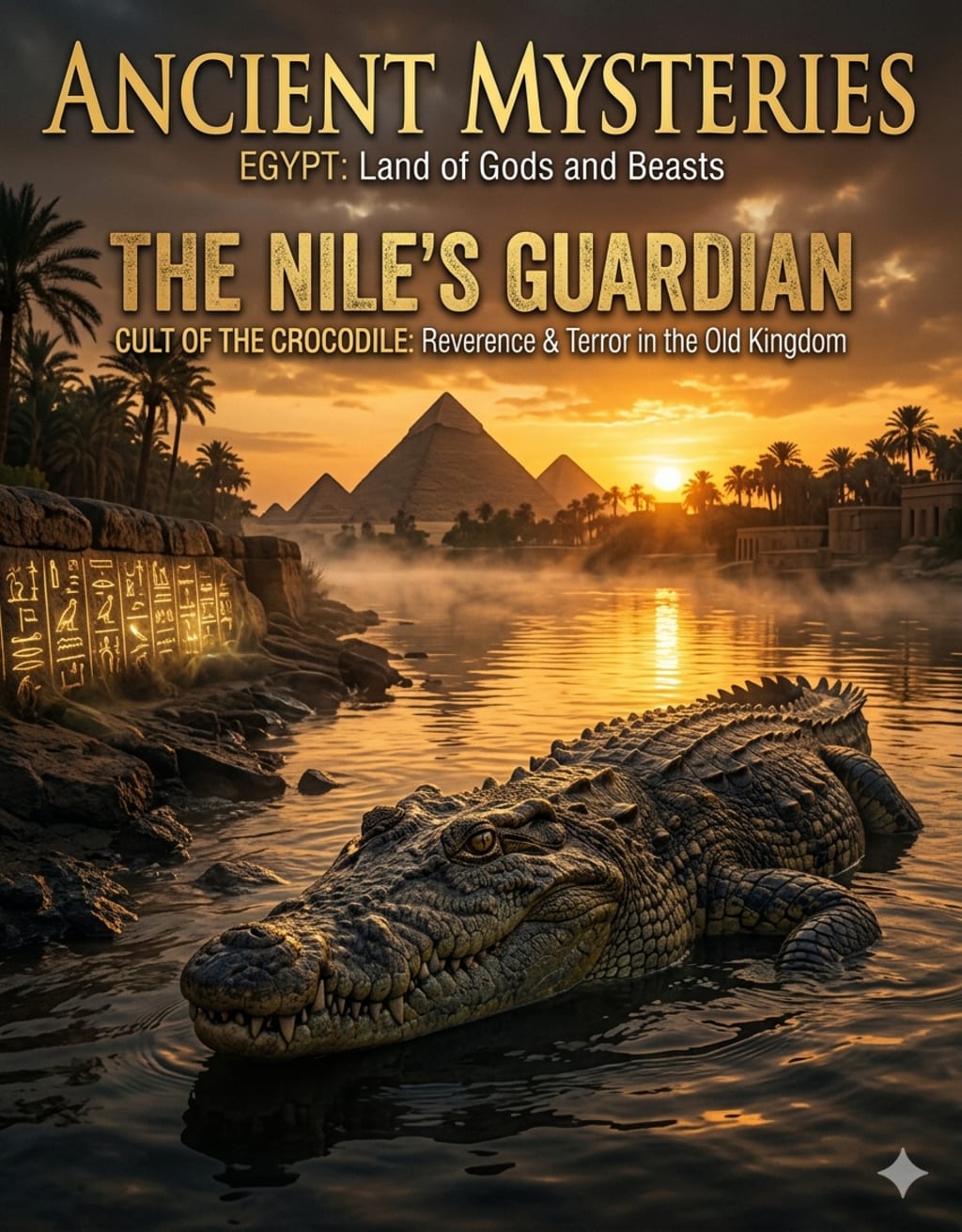
In a remarkable scientific and archaeological breakthrough, researchers studying fossils and ancient remains in Egypt have uncovered new evidence that is rewriting parts of reptile evolutionary history and providing fresh insights into how ancient Egyptians interacted with and revered crocodiles. This remarkable finding, which links cutting‑edge paleontology with ancient cultural practices, has captured the attention and curiosity of experts around the world.
For centuries, crocodiles have been iconic creatures closely associated with the Nile River—both feared and admired by the civilizations that flourished along its banks. But recent discoveries in Egypt have deepened our understanding of these ancient reptiles and the societies that lived alongside them, revealing connections between biology, history, and religious belief that experts never fully expected.
🔍 A Paleontological Surprise
In late 2025, a team of Egyptian scientists announced the discovery of a previously unknown species of ancient crocodile that once inhabited the region’s prehistoric marine environments. Unearthed deep in the Western Desert near Mansoura, the fossils belong to a crocodilian ancestor named Wadisuchus kassabi, which lived around 80 million years ago—during the age of dinosaurs. Fossil evidence suggests this species was part of a unique lineage of marine‑adapted crocodiles that survived the mass extinction event that wiped out the non‑avian dinosaurs. 
“This discovery is historic,” said Professor Sherif Khater, head of the Vertebrate Paleontology Center at Mansoura University. “Not only does Wadisuchus kassabi help fill gaps in our understanding of how crocodilians evolved, but it also shows the complexity of reptile life in ancient Egypt’s prehistoric ecosystems.” 
The excitement around this find is not just scientific—it highlights how much of the prehistoric world is still waiting to be uncovered beneath the sands of North Africa. Paleontologists now believe that the diversity of ancient crocodilians was far greater than previously assumed, with some species adapted to deep marine life and others inhabiting rivers and freshwater swamps.
📜 Mummies and Mysteries: Crocodiles in Ancient Egyptian Culture
But the scientific revelations don’t end with fossils. Decades ago, researchers discovered a 2,500‑year‑old crocodile mummy held in a European museum—thought to be the remains of two juvenile crocodiles wrapped together. Recent non‑invasive scanning technology has since revealed a stunning secret: inside the mummy are nearly 47 mummified baby crocodiles, all bound within the wrappings of the larger specimen. 
Curators and Egyptologists were taken by surprise when high‑resolution scans exposed the hidden contents. “You can’t see them on older scans unless you know they’re there,” commented Dr. Lara Weiss, a museum curator involved in the research. “We truly did not expect to find such an extraordinary number of young crocodiles inside the mummy.” 
Such discoveries shed light on the symbolic role crocodiles played in ancient Egyptian religion. The Nile was both the lifeblood of Egyptian civilization and a place of danger. Crocodiles—powerful, unpredictable, and omnipresent—were linked to life, death, and fertility. Ancient Egyptians worshiped a crocodile deity known as Sobek, a god associated with strength, protection, and the life‑giving waters of the Nile. Images and inscriptions depict Sobek with the body of a man and the head of a crocodile, highlighting the reverence and fear this creature inspired. 
🧠 Bridging Science and History
These intertwined discoveries—ancient fossils and intricately prepared mummies—give scientists a unique opportunity to connect biological evolution with cultural history. The link between crocodile remains and ancient religious practice suggests that these animals were more than just wildlife; they were central figures in Egyptian spirituality and society.
Researchers believe that crocodile mummification was a form of offering or tribute to Sobek, seeking protection or favor from the powerful deity. The presence of juvenile crocodiles inside adult mummies may indicate rituals meant to honor life cycles or emphasize continuity and rebirth. This practice was rare but significant—and the discovery of 47 baby crocodiles represents one of the most extraordinary examples yet found. 
🐊 What This Means for Future Research
The implications of these findings are far‑reaching. From expanding knowledge of prehistoric crocodilian evolution to illuminating complex cultural practices in ancient Egypt, the research highlights the interconnectedness of nature and human belief systems.
Archaeologists now plan to re‑examine other animal mummies and artifacts with new scanning technologies, anticipating that more hidden surprises could reshape our understanding of ancient life and culture. Similarly, paleontologists are combing through sedimentary rock formations in Egypt and neighboring regions to uncover additional specimens of ancient crocodilians that lived millions of years ago.
As research continues, crocodiles—once feared inhabitants of the Nile—are emerging as key players in unlocking the mysteries of Egypt’s past—both its natural history and its spiritual legacy.
About the Creator
Irshad Abbasi
Ali ibn Abi Talib (RA) said 📚
“Knowledge is better than wealth, because knowledge protects you, while you have to protect wealth.
Keep reading
More stories from Irshad Abbasi and writers in History and other communities.
Ancient Statue Found in Egypt May Not Belong to Ramses II
Egypt has long been a land of fascinating discoveries, where the sands of time continue to reveal secrets of one of the world’s oldest civilizations. Recently, archaeologists made an exciting discovery when they uncovered a large ancient statue in Egypt that was initially believed to represent the powerful pharaoh Ramses II. However, new research and closer examination have now suggested that the statue may not belong to him after all.
By Irshad Abbasi a day ago in History
GDP After War: How Conflicts Reshape National Economies
GDP After War: How Conflicts Reshape National Economies War is not only fought on battlefields; it also leaves deep scars on a country's economy. One of the most important indicators affected by war is Gross Domestic Product (GDP), which measures the total value of goods and services produced by a nation. When war begins, economic activity often collapses, infrastructure is destroyed, and government spending shifts heavily toward military needs. But the economic story does not end when the war stops. The period after war can be equally challenging and sometimes surprisingly transformative.
By Wings of Time 2 days ago in History


Comments
There are no comments for this story
Be the first to respond and start the conversation.