
The Arawak Indian
Meeting Columbus for the first time.

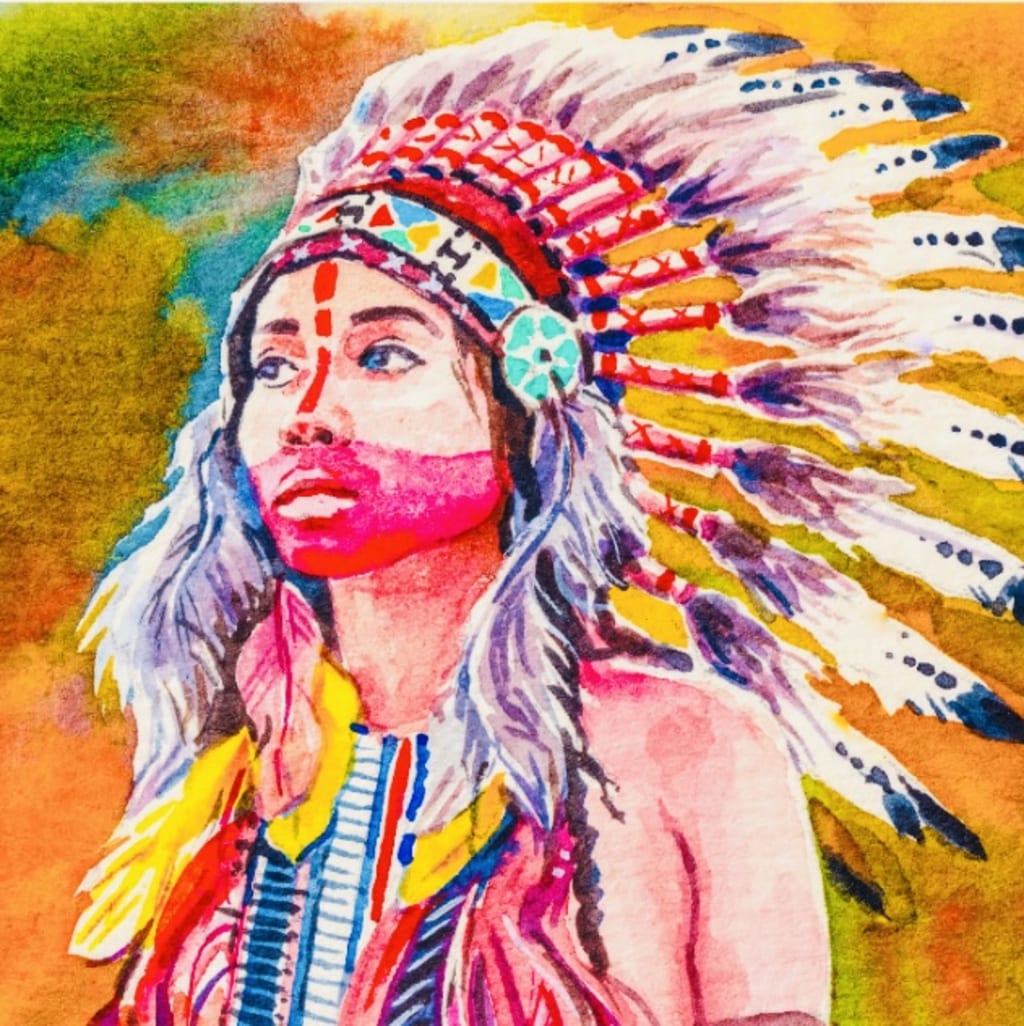
John Collings squire...A Poem
There was an Indian, who had known no change
Who strayed...content, along a sunlit beach, gathering shells
He heard a sudden strange commingled noise---looked up...
And gasped for speech.
For in the Bay, where nothing was before...moved on the sea...by magic
Huge canoes, with billowing cloths for sails...and not one oar
With fluttering colored signs and clamouring crew...
And he in fear, this naked man...alone...
His fallen hands forgetting all their shells, his lips gone pale
Knelt low behind a stone...and stared...and saw---
And did not understand....
Columbus's doom-burdened caravels..........
Slant to the shore............
And all their seamen...Land!!!
This Arawak Indian man, scantily clad, his head bare of his colorful, feathered covering, lingered for just a few moments more. Who were these strange beings, he wondered. Their skin was much lighter than his, their dress extravagantly plenteous and exaggerated.
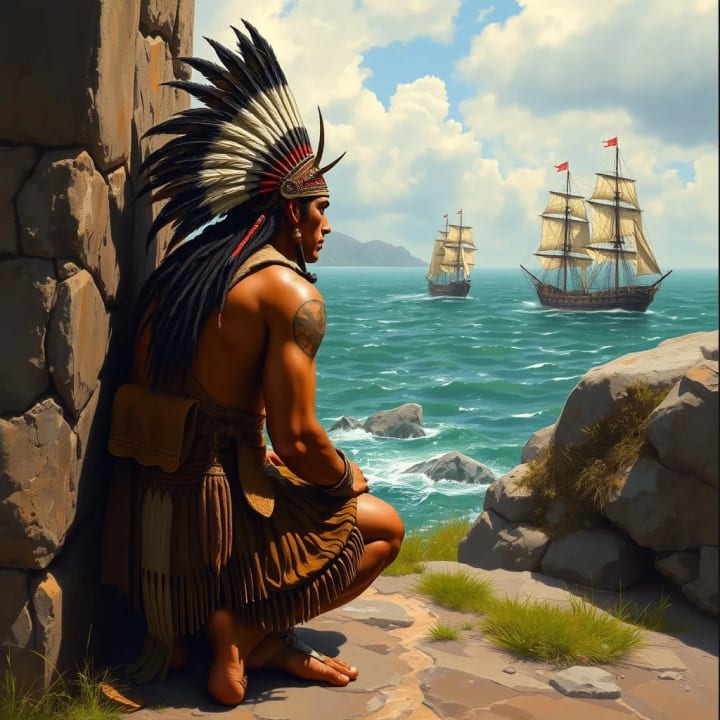
Kneeling behind the stone Akando was gripped by fear and dread, he was completely overpowered by a flood of emotions---fear, curiosity, unease, and perhaps a flicker of hope. The great ships, towering above the waves, were unlike anything he had ever seen before, their sails billowing like specters.
A sense of foreboding started his heart beating unusually fast in his chest---a primal warning that change, irrevocable and immense, was about to wash over his and his people's world. Were these men gods, spirits, or simply other beings from a distant land? The stories passed down by elders, the knowledge of the sea and sky, would offer no precedent for such an arrival.
Yet, Akando, the young Arawak, also felt the pull of curiosity, the instinct to understand these strange visitors. He held tight, clutched the stone for stability, grounding himself in the soil that had always been his home, as the waves of uncertainty crashed against his mind.
In that poignant, ill-omened moment, the air became thick with salt and destiny. A once thriving people, whose history would hang in the balance, teetered on the edge---and the last fleeting breath before their lives and everything they once knew, would change forever.
Crouching low, so they would not see him leave. Akando moved through the trees, like a tiger stalking its prey. A fair distance off, he stood tall and ran. He must warn his people of the devils...not gods...who had encroached upon their peace and kindness.
Little did he know of the devastation which these unwelcome strangers would rain down upon their lives.
+++
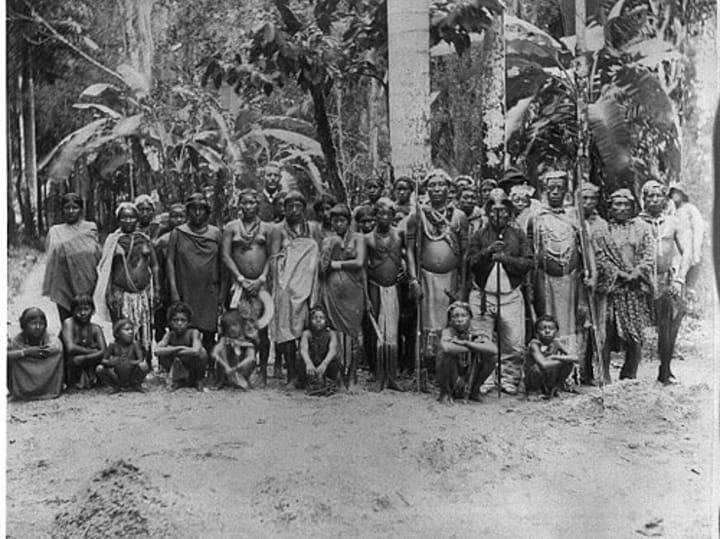
Before Columbus's arrival, the Arawak people, particularly the Taíno, lived in a structured and thriving society across the Caribbean islands. They were skilled agriculturalists, cultivating cassava, maize, beans, and other crops using slash-and-burn techniques. Their villages, some housing up to 3,000 inhabitants, were organized under the leadership of caciques (chiefs), who held both political and spiritual authority.
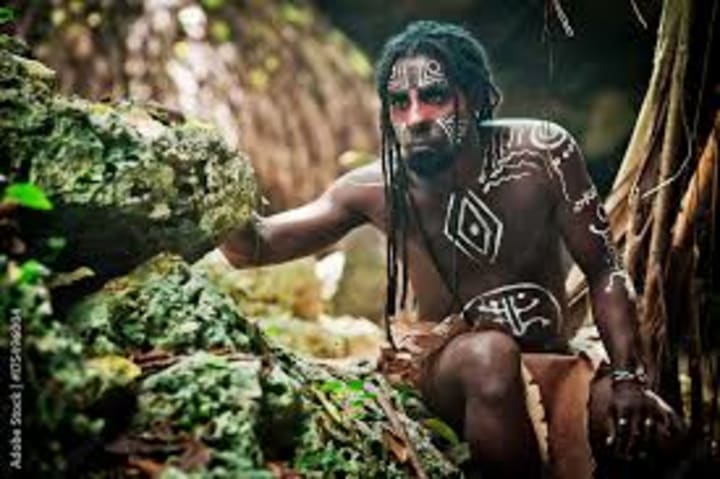
The Arawak, a diverse group of indigenous peoples, were known for their distinct cultural practices and appearances, which varied depending on the specific tribe or region. They typically had minimal clothing, with men often going shirtless and women wearing loincloths or aprons made of cotton or palm fibers. Both men and women adorned themselves with painted designs and jewelry, often made of gold, copper, or other materials.
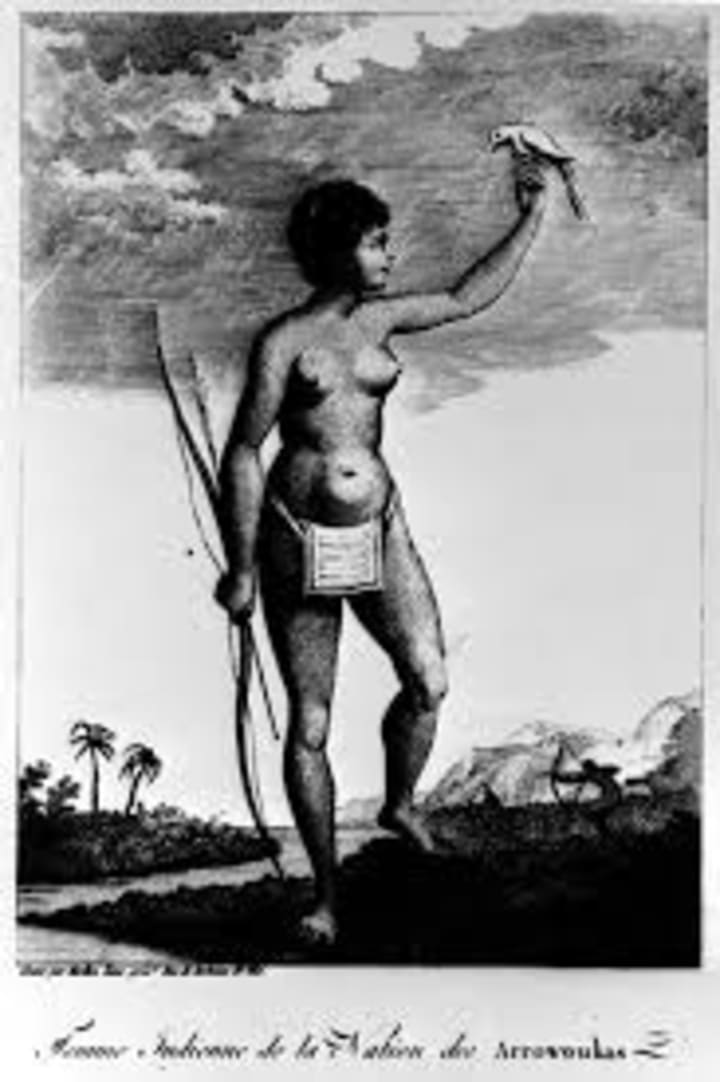
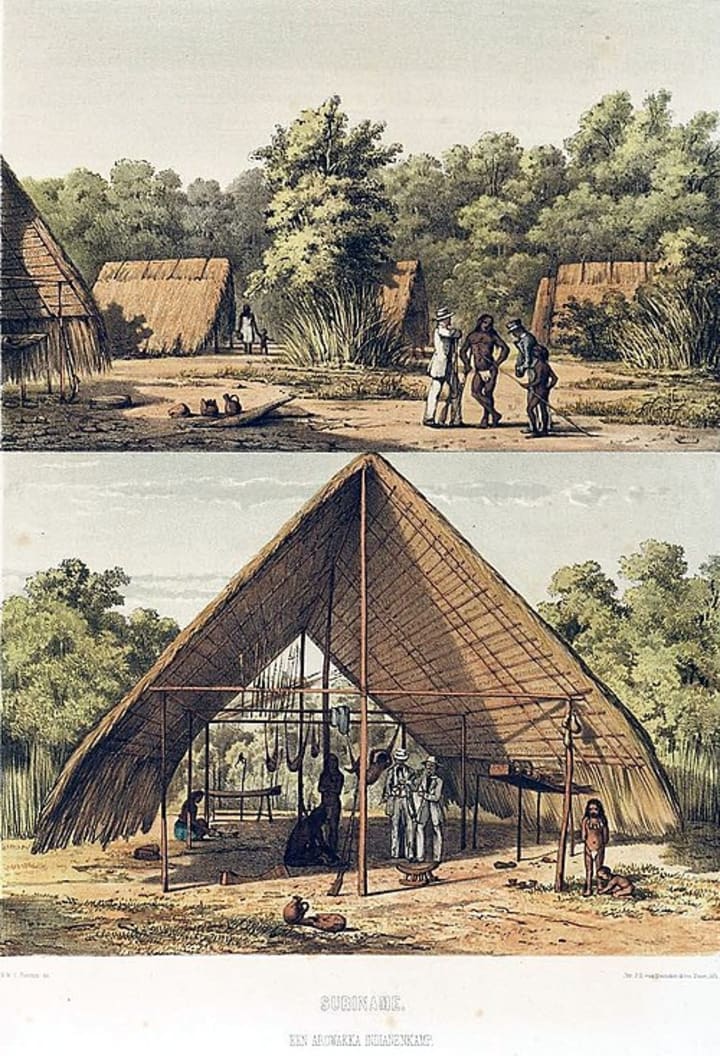
They were known for their peaceful nature, engaging in trade with neighboring tribes rather than warfare. They crafted pottery, wove hammocks, and built thatched-roof homes suited to the tropical climate. Their religious beliefs centered on nature spirits and ancestor worship, reflecting a deep connection to their environment.
Religion beliefs
The Arawak, particularly the Taíno, practiced a polytheistic (the worship of multiple gods) religion centered around zemi, which were spiritual beings or deities believed to control various aspects of the universe. Their religious practices included:
- Worship and offerings to the zemi, often through carved figures.
- Ceremonial dances held in village courts during festivals of thanksgiving or petition.
- Shamanic rituals, where medicine men or priests consulted the zemi for guidance and healing.
They believed in an afterlife, where the good would be reunited with ancestors and friends. Rituals often involved purging the body of impurities, symbolizing spiritual renewal. Some myths explained natural phenomena, such as the origins of the sun and moon from caves. Their religious traditions reflected a deep connection to nature and the spiritual world.
++
Columbus's arrival had devastating consequences for the indigenous peoples of the Caribbean. His expeditions introduced European diseases like smallpox, measles, and influenza, which the native populations had no immunity against, leading to catastrophic epidemics.
Beyond disease, Columbus and his men enslaved many indigenous people, forcing them into brutal labor conditions, particularly in gold mining. The arrival of Europeans also led to cultural disruption, as indigenous traditions, governance, and ways of life were significantly altered or eradicated.
Over time, the indigenous population suffered massive declines, with some estimates suggesting up to 90% of certain communities perished due to disease, war, and forced labor. The loss of land and resources further displaced native tribes, confining them to smaller territories.
Despite these hardships, indigenous communities resisted colonization through warfare, diplomacy, and cultural preservation. Their legacy endures in Caribbean traditions, language, and genetic heritage.
+
European explorers had a profound and lasting impact on the Americas, shaping its history in ways both transformative and devastating. Their arrival led to the Columbian Exchange, a massive transfer of plants, animals, people, and diseases between the Old and New Worlds. While this introduced new crops like wheat and potatoes, it also brought deadly diseases such as smallpox, which decimated indigenous populations.
Explorers like Hernán Cortés and Francisco Pizarro led conquests that toppled powerful civilizations like the Aztecs and Incas, reshaping the political landscape. The Spanish, Portuguese, French, and British established colonies, often exploiting native peoples through forced labor and land dispossession.
The Age of Exploration also fueled the transatlantic slave trade, as European powers sought labor for their plantations. Over time, European colonization led to the creation of new nations, languages, and cultural blends, but at the cost of indigenous autonomy and widespread suffering
+++
Still, Taíno influence has survived even until today, as can be seen in the religions, languages, and music of Caribbean cultures. The Lokono and other South American groups resisted colonization for a longer period, and the Spanish remained unable to subdue them throughout the 16th century. In the early 17th century, they allied with the Spanish against the neighbouring Kalina (Caribs), who allied with the English and Dutch. The Lokono benefited from trade with European powers into the early 19th century, but suffered thereafter from economic and social changes in their region, including the end of the plantation economy. Their population declined until the 20th century, when it began to increase again.
Most of the Arawak of the Antilles died out or intermarried after the Spanish conquest. In South America, Arawakan-speaking groups are widespread, from southwest Brazil to the Guianas in the north, representing a wide range of cultures. They are found mostly in the tropical forest areas north of the Amazon. As with all Amazonian native peoples, contact with European settlement has led to culture change and depopulation among these groups
+++
Why does it seem that everywhere that native people settle peacefully, there is always someone invading, disrupting lives with death and destruction.
Throughout history, indigenous communities have often faced invasions and disruptions due to larger patterns of expansion, resource competition, and power struggles. Colonization, territorial conquest, and economic exploitation have driven outsiders to encroach on native lands, reshaping societies through forced displacement, war, and cultural suppression.
Is it the pursuit of resources---whether land, gold, minerals, or agricultural potential. Many colonial powers viewed indigenous territories as untapped wealth and seized them through violent means. Another factor is ideology...the belief in superiority, whether religious, racial, or cultural, led to justifications for conquest. Many indigenous peoples resisted these incursions, but overwhelming military force, disease, and systematic oppression made survival difficult.
Despite the hardships, indigenous communities have persevered, adapting and fighting to preserve their cultures and reclaim their rights. Their hardiness and adaptability is evident in modern movements advocating for land sovereignty, cultural preservation, and political recognition. It’s a painful reality, but their stories are ones of strength as much as struggle.
About the Creator
Antoni De'Leon
Everything has its wonders, even darkness and silence, and I learn, whatever state I may be in, therein to be content. (Helen Keller).
Tiffany, Dhar, JBaz, Rommie, Grz, Paul, Mike, Sid, NA, Michelle L, Caitlin, Sarah P. List unfinished.
Keep reading
More stories from Antoni De'Leon and writers in History and other communities.
Venezuela’s President Under Pressure: Arrest Calls, Indictments, and a Nation at a Crossroads
How the Arrest Narrative Began The idea of arresting Venezuela’s president did not appear out of nowhere. It stems from years of accusations that range from human-rights abuses to corruption and drug-related activities. U.S. authorities have filed formal charges against Nicolás Maduro, linking him to cocaine trafficking networks and large-scale financial misconduct. These cases place him among the few sitting leaders facing active international legal pressure.
By Muhammad Islam khan swati3 days ago in History
Seven Dials
Introduction Seven Dials is a famous and historic area located in London, England. It is found near Covent Garden, one of the busiest and most popular parts of the city. Seven Dials is known for its unique road design, rich history, old buildings, shops, cafés, and lively atmosphere. Today, it is a popular place for tourists and local people who enjoy culture, shopping, and history.
By Farhan Sayedabout 6 hours ago in History


Comments (6)
As far as I am concerned, the pages are still being burned...sometimes only in a more subtle manner. A great depiction of the young Indian's reaction to first encounter. Atrocity indeed Dhar,
Yes, I have no idea why they always do shit like this to native people. It's atrocious!
My family is from Dominica, and I have read about many of the native groups that lived on the islands. Thank you for this one.
This description of the Arawak's encounter with Columbus's ships is vivid. It makes you feel the mix of fear and curiosity. Reminds me of first seeing new, advanced tech as a kid.
Tragically inspiring. Nicely pieced together, Antoni.
You have another historical masterpiece on your hands Antoni! What an inspiring legacy! Thx for sharing!