
The King of Pop
A Journey Through the Music, Fame, and Mystery of a Global Icon

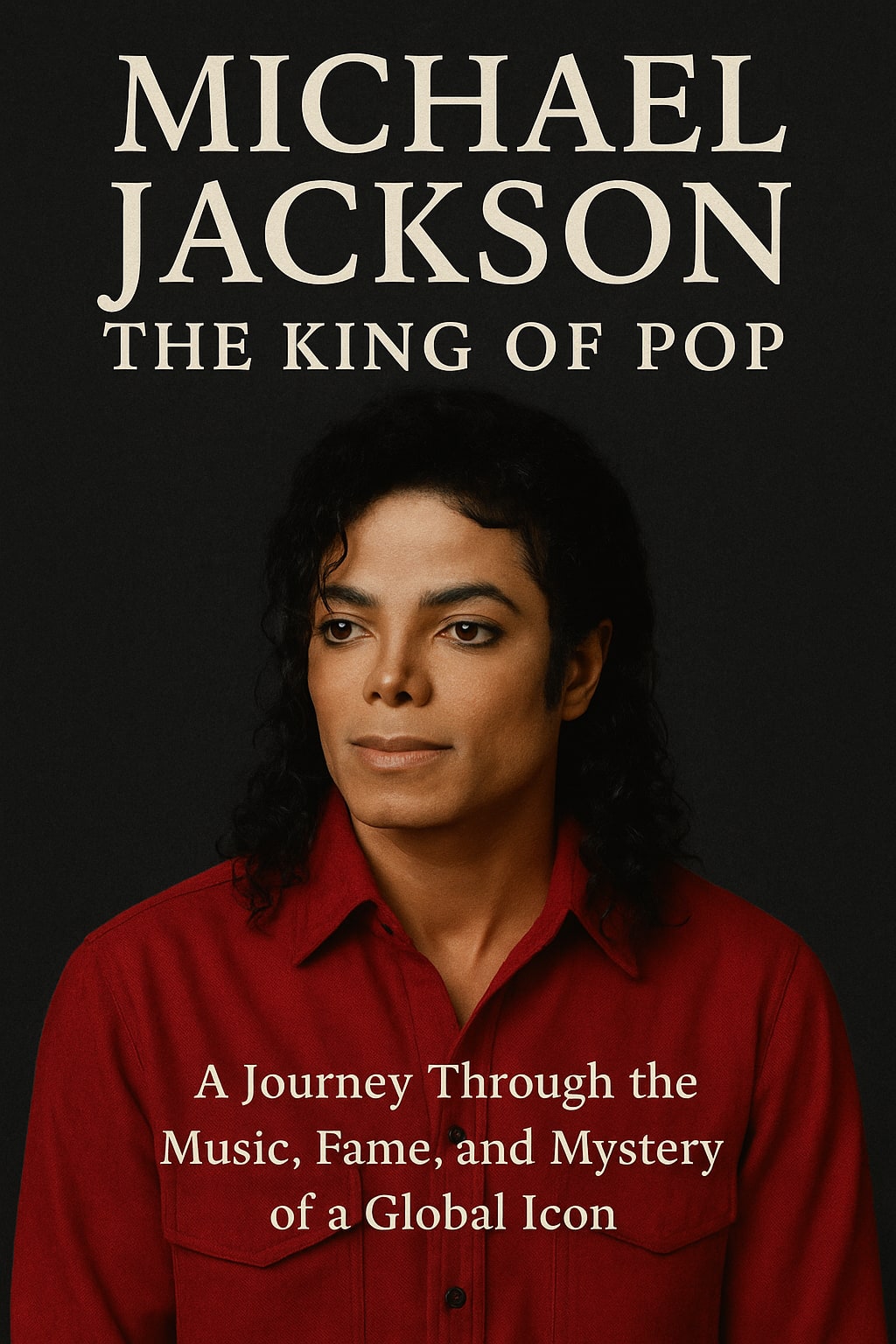
Michael Joseph Jackson, born on August 29, 1958, in Gary, Indiana, was the seventh of nine children in the Jackson family. His father, Joseph Jackson, a strict disciplinarian, recognized early on the immense talent his children possessed and molded them into a performing group known as The Jackson 5. It was within this familial band that young Michael first emerged as a star, mesmerizing audiences with his charisma, powerful vocals, and natural dance talent.
By age 10, Michael was already a sensation, leading The Jackson 5 to the top of the charts with hits like “I Want You Back”, “ABC”, and “I’ll Be There”. Under the Motown label, the group’s success was meteoric, and Michael became the face of youthful soul and pop. However, he yearned for more creative freedom than Motown allowed, and by the mid-1970s, the Jacksons moved to Epic Records, beginning Michael’s evolution into a solo artist with aspirations beyond his already impressive fame.
In 1979, Jackson released Off the Wall, a dazzling mix of disco, funk, and soul. Produced by Quincy Jones, the album marked his first true step toward superstardom as an individual. Songs like “Don’t Stop ’Til You Get Enough” and “Rock with You” earned critical and commercial acclaim, setting a new bar for pop albums. But it was just the beginning.
In 1982, Michael Jackson changed music history with Thriller, an album that became the best-selling record of all time. Its blend of pop, rock, R&B, and funk resonated across every demographic. With hits like “Billie Jean,” “Beat It,” and “Thriller,” Jackson broke racial barriers on MTV, redefining music videos as art forms and promotional tools. The “Thriller” video, a 14-minute cinematic masterpiece, cemented Jackson’s status as a cultural force.
Beyond his vocals and songwriting, Michael was an unparalleled performer. His signature moves—the moonwalk, the spin, the toe-stand—captivated audiences. He turned live shows into spectacles, blending music, dance, and special effects in a way the world had never seen. His 1983 performance of “Billie Jean” at the Motown 25 TV special introduced the moonwalk to the world and became an iconic moment in pop culture.
Jackson’s next albums, Bad (1987) and Dangerous (1991), continued his dominance. Bad produced five No. 1 singles in the U.S., including “Man in the Mirror” and “Smooth Criminal.” Dangerous pushed the boundaries of pop and featured global anthems like “Black or White” and “Heal the World,” expressing his evolving concern with racial unity, environmental issues, and global harmony.
His humanitarian efforts matched his artistic ambitions. Michael donated millions to charities, supported children’s hospitals, and used his platform to promote peace and healing. His 1985 collaboration with Lionel Richie and Quincy Jones on “We Are the World” raised over $60 million for famine relief in Africa, showcasing his commitment to global causes.
However, the intense fame took its toll. Jackson’s appearance began to change noticeably—his skin lightened due to vitiligo, and multiple surgeries altered his facial features. The public, fascinated and often judgmental, scrutinized every aspect of his transformation. Despite his efforts to explain his medical condition and desire for privacy, rumors and tabloid stories continued to dominate headlines.
In 1993, Jackson’s world was shaken by allegations of child molestation. Though he denied the claims and no charges were filed after a civil settlement, the incident deeply affected his career and public image. Further allegations in 2005 led to a highly publicized trial, where he was ultimately acquitted of all charges. The emotional and physical toll of the investigations marked a significant downturn in his public life, even as his fanbase remained fiercely loyal.
Despite the controversies, Jackson’s influence endured. In 2001, he released Invincible, his last studio album, and was inducted into the Rock and Roll Hall of Fame for a second time. Yet behind the scenes, he grappled with financial difficulties, declining health, and an increasing withdrawal from the public eye.
In 2009, after years away from the stage, Michael announced a comeback with a concert series titled This Is It. The shows, planned for London’s O2 Arena, sold out within hours. Fans around the world were ecstatic to witness the return of the King of Pop. Tragically, Michael Jackson died on June 25, 2009, from acute propofol intoxication, administered by his personal physician, Conrad Murray, who was later convicted of involuntary manslaughter.
Jackson’s death was a global shock. Mourning erupted worldwide, and tributes poured in from fans, musicians, and world leaders. His memorial service at the Staples Center in Los Angeles was watched by over a billion people. In death, as in life, Michael united the world.
Michael Jackson’s legacy is monumental. He transformed the music industry with his innovation, creativity, and relentless pursuit of excellence. His artistry influenced generations of musicians—from Beyoncé and Justin Timberlake to The Weeknd and Bruno Mars. He set records that remain unbroken and delivered performances that remain unmatched.
Yet, Michael was more than just a musician. He was a global icon, a humanitarian, and a mystery—both powerful and vulnerable, brilliant and misunderstood. His story is one of phenomenal achievement and profound complexity.
In remembering Michael Jackson, we remember not just the moonwalk, the glove, or the legendary music, but a man who broke barriers, gave voice to the voiceless, and redefined what it means to be a superstar. His life, filled with triumphs and trials, reflects the paradoxes of fame and the burden of genius.
Michael Jackson truly earned the title: The King of Pop.
About the Creator
Irshad Abbasi
"Studying is the best cure for sorrow and grief." shirazi
Keep reading
More stories from Irshad Abbasi and writers in History and other communities.
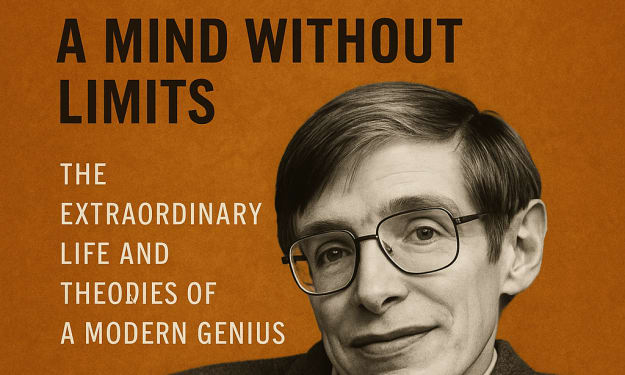
A Mind Without Limits
Stephen William Hawking, born on January 8, 1942, in Oxford, England, was a theoretical physicist whose intellect and perseverance redefined our understanding of the universe. Despite being diagnosed with a motor neuron disease at the age of 21, which left him almost completely paralyzed, Hawking’s work in cosmology and quantum gravity—especially in the context of black holes—earned him a place among the greatest scientific minds in history. His life is a testament to the power of human determination and intellect.
By Irshad Abbasi 7 months ago in History
3 Everyday Rules That Exist Because Someone Once Did Something Very Stupid
Everywhere you go, you are surrounded by rules that feel oddly specific. Do not touch. No running. Contents hot. Do not insert body parts. These warnings aren’t theoretical. They weren’t written by pessimists or lawyers with too much free time. They exist because at some point in history, a real human being looked at a situation and thought, “This will probably be fine.”
By Enoch Sagini2 days ago in History


Comments
There are no comments for this story
Be the first to respond and start the conversation.