
The Just Caliph of Islam
A Life of Justice, Leadership, and Devotion in the Golden Age of Islam


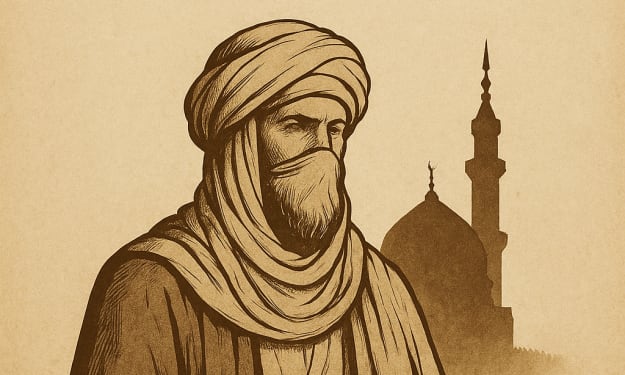
Among the most influential and revered personalities in Islamic history stands Umar ibn al-Khattab, known widely as Umar Farooq (RA) — the second Caliph of Islam and a symbol of justice, strength, and piety. His era as caliph marked a golden period in the development of the Islamic state. Known for his unwavering dedication to justice and equality, Umar’s rule laid the foundations for governance that inspired both Muslim and non-Muslim civilizations.
⸻
Early Life
Umar ibn al-Khattab was born around 584 CE in Mecca into the powerful Adī clan of the Quraysh tribe, well before the advent of Islam. Initially, he was a strong opponent of Islam. Known for his physical strength, eloquence, and firm character, Umar was a fierce and bold figure in Meccan society. Like many others of his time, he was deeply rooted in the tribal and polytheistic traditions of Arabia.
However, his transformation began when he secretly listened to the recitation of the Qur’an — specifically Surah Taha — which deeply moved him. His heart opened to the truth of Islam, and he embraced the faith in approximately the 6th year of Prophethood. His conversion was a turning point in Islamic history. With Umar’s support, Muslims gained the confidence to worship openly in Mecca.
⸻
Close Companion of the Prophet Muhammad (PBUH)
After embracing Islam, Umar became one of the closest companions of the Prophet Muhammad (PBUH). He stood firmly beside the Prophet during moments of hardship and played a key role in important events like the Hijrah (migration to Medina), the Battle of Badr, Uhud, and Khandaq, and participated in various diplomatic missions.
Umar was a member of the Shura (council) and was often consulted by the Prophet due to his wisdom, insight, and boldness. Several verses of the Qur’an were revealed confirming Umar’s opinions, earning him the title: Al-Farooq, meaning “the one who distinguishes between right and wrong.”
⸻
Becoming the Second Caliph
After the passing of the Prophet (PBUH) in 632 CE, Abu Bakr as-Siddiq (RA) became the first caliph. Recognizing Umar’s leadership skills, he appointed him as his successor in 634 CE, shortly before his death.
Umar’s caliphate would last ten years, during which the Islamic empire expanded rapidly, and his administrative reforms became a model for Islamic governance.
⸻
Justice and Governance
Umar Farooq (RA) is remembered most for his deep commitment to justice. He established a governance system based on the principles of accountability, equality, and welfare. He treated the poor and the rich equally, punished corrupt officials without hesitation, and ensured that his governors lived modest lives in service of the people.
He introduced many pioneering reforms, including:
• Establishment of the Islamic calendar (Hijri calendar)
• Creation of the Bayt al-Mal (public treasury)
• Founding of a welfare system, providing stipends for widows, orphans, and the poor
• Development of a police force and judicial system
• Organizing a census and standardizing weights and measures
Umar also ensured that non-Muslims under Islamic rule — such as Jews and Christians — were protected and had religious freedom under the dhimmi system, provided they paid a nominal tax (jizya). This created peaceful coexistence in an ever-expanding empire.
⸻
Military Expansion and Victories
Under Umar’s leadership, the Islamic empire expanded beyond the Arabian Peninsula into Persia, Syria, Egypt, and parts of Byzantium. Key victories during his caliphate included:
• The Battle of Yarmouk (636 CE) against the Byzantines
• The Battle of Qadisiyyah and Nahawand (636–642 CE) against the Sassanid Empire
• The capture of Jerusalem, where Umar personally accepted the surrender from the Patriarch Sophronius with humility and fairness
These conquests were not motivated by greed or imperialism but by a sincere intention to spread justice and Islamic values. Umar insisted that conquered people be treated with respect and their rights preserved.
⸻
Personal Character and Humility
Umar Farooq (RA) lived a life of simplicity despite ruling a vast empire. He wore coarse clothing, patched his garments, and often walked through the streets at night to check on his people. He refused to build a palace or accept luxury, living in a modest house instead.
He once said, “If a mule stumbles in Iraq, I fear Allah will ask me, ‘Why did you not level the road for it, O Umar?’” This reflects his immense sense of responsibility.
He was known to cry often during prayer, deeply aware of his accountability before Allah. He maintained a strict standard of personal discipline and expected the same from his officials.
⸻
Death and Legacy
In 644 CE, Umar Farooq (RA) was assassinated while leading the Fajr (dawn) prayer in Madinah by a Persian slave named Abu Lu’lu’ah (Firoz). He died a few days later due to his wounds. Before his death, he formed a council of six companions to choose the next caliph, which ultimately led to the selection of Uthman ibn Affan (RA).
Umar is buried beside the Prophet Muhammad (PBUH) and Abu Bakr (RA) in Masjid an-Nabawi in Madinah.
His death marked the end of one of the most just and powerful reigns in Islamic history.
⸻
Conclusion
Umar Farooq (RA) was not only a political leader but also a visionary reformer and a spiritual giant. His governance laid down the ethical and administrative foundations that shaped Islamic civilization for centuries.
To this day, Muslims and non-Muslims alike study his leadership model for its remarkable combination of justice, humility, and discipline. His legacy as “The Just Caliph” continues to inspire anyone who seeks to lead with integrity and faith.
In the words of the Prophet Muhammad (PBUH):
“If there were to be a Prophet after me, it would be Umar.”
— (Tirmidhi)
About the Creator
Irshad Abbasi
"Studying is the best cure for sorrow and grief." shirazi
Keep reading
More stories from Irshad Abbasi and writers in History and other communities.
The First Caliph and Closest Companion of the Prophet
Hazrat Abu Bakr Siddiq (R.A.) stands as one of the most revered and influential figures in Islamic history. As the closest companion of Prophet Muhammad (ﷺ) and the first Caliph of Islam, his unwavering faith, humility, and sense of justice set a standard for Muslim leadership and character. His life story is one of devotion, sacrifice, and dedication to the truth, making him a towering figure in the early years of Islam.
By Irshad Abbasi 6 months ago in History
3 Historical Events That Were Ruined by One Incredibly Small Detail
History is shaped by big ideas, brave leaders, and sweeping movements—but sometimes, the tiniest, most overlooked detail changes everything. A forgotten note, a misheard order, or even a misaligned boot can turn a decisive moment into chaos. These micro-errors often seem trivial at the time, but their ripple effects can alter the course of wars, empires, and even the future of entire nations.
By Enoch Saginiabout 12 hours ago in History
"Game of Thrones: A Tale of Power, Betrayal, and Destiny"
In the vast and divided land of Westeros, power was everything. Noble houses ruled their regions, bound together by fragile alliances, old grudges, and a constant hunger for the Iron Throne—the seat of supreme authority. Though summer had lasted for many peaceful years, whispers of change moved with the cold wind. Winter, long feared, was coming.
By The best writer about 21 hours ago in History
📢 Raise Your Voice Thread: 01/08/2026
Our “Raise Your Voice Threads” are hosted most alternating Thursdays at 12PM ET to offer creators more avenues to uncover exceptional stories on Vocal. As we are continuously searching for fresh creators and inspiring stories, this thread provides an opportunity to exchange and discuss the stories that have moved and motivated us on Vocal.
By Raise Your Voice by Vocal6 days ago in Resources


Comments (2)
sir please click in this article ,read and subscribe my chinal and comment
Great article!