
The First Caliph and Closest Companion of the Prophet
The Man Who Stood by the Prophet ﷺ When No One Else Did


Hazrat Abu Bakr Siddiq (R.A.) stands as one of the most revered and influential figures in Islamic history. As the closest companion of Prophet Muhammad (ﷺ) and the first Caliph of Islam, his unwavering faith, humility, and sense of justice set a standard for Muslim leadership and character. His life story is one of devotion, sacrifice, and dedication to the truth, making him a towering figure in the early years of Islam.
⸻
Early Life and Background
Hazrat Abu Bakr (R.A.), whose real name was Abdullah ibn Abi Quhafah, was born in 573 CE in Makkah, into the Banu Taym clan of the Quraysh tribe. Known for his honesty and gentle nature even before accepting Islam, he was a successful and respected merchant. He was among the few literate men of his time and had a deep sense of morality and fairness.
His title “As-Siddiq” (the Truthful) was later given by the Prophet Muhammad (ﷺ) due to his immediate and unquestioning acceptance of the Prophet’s claims during the miraculous event of Isra and Mi’raj.
⸻
Embracing Islam
Hazrat Abu Bakr (R.A.) was the first free adult male to embrace Islam after the Prophet’s first revelation. He played a pivotal role in the early spread of Islam, using his influence and wealth to support the new faith. Through his efforts, many prominent companions accepted Islam, including Hazrat Uthman ibn Affan (R.A.), Hazrat Talha ibn Ubaidullah (R.A.), and Hazrat Zubair ibn al-Awam (R.A.).
He freed several slaves who were being persecuted for accepting Islam, most notably Hazrat Bilal ibn Rabah (R.A.), who later became the first muezzin (caller to prayer) of Islam.
⸻
Companion in the Cave
One of the most emotional and symbolic moments in the life of Hazrat Abu Bakr (R.A.) is his journey with the Prophet (ﷺ) during the Hijrah (migration) from Makkah to Madinah. He was the sole companion of the Prophet in the Cave of Thawr, where they hid from the Quraysh pursuers. His deep love and concern for the Prophet was evident when he shielded him from snake holes and stayed awake to protect him during the night.
The Quran itself refers to this moment in Surah At-Tawbah (9:40):
”…When they were both in the cave, and he said to his companion, ‘Do not be sad, indeed Allah is with us.’”
⸻
Role in Madinah
After the migration to Madinah, Hazrat Abu Bakr (R.A.) remained one of the Prophet’s closest advisors. He participated in all major battles, including Badr, Uhud, and Khandaq. His wisdom was consistently sought in both military and political decisions.
His personal humility and generosity were unmatched. He once donated all of his wealth to the cause of Islam during the Battle of Tabuk. When asked by the Prophet what he left for his family, he replied, “I left for them Allah and His Messenger.”
⸻
The First Caliph
Following the death of Prophet Muhammad (ﷺ) in 632 CE, the Muslim community was in shock and confusion. Hazrat Abu Bakr (R.A.) stepped forward to calm the Ummah with his iconic words:
“Whoever worshipped Muhammad, know that Muhammad is dead. But whoever worships Allah, then know that Allah is Ever-Living and never dies.”
He was chosen by consensus as the first Khalifa (Caliph) of Islam. This moment marked the beginning of the Rashidun Caliphate.
⸻
Challenges During His Caliphate
His short but impactful caliphate (632–634 CE) was marked by major challenges. Several tribes rebelled after the Prophet’s death and refused to pay zakat. Hazrat Abu Bakr (R.A.) stood firm and declared that zakat was a pillar of Islam and must be enforced.
He launched the Ridda Wars (Wars of Apostasy) to bring back unity among Muslims and re-establish the authority of the Islamic state. His determination helped preserve the structure of the Muslim Ummah at a very fragile time.
⸻
Compilation of the Quran
Another major contribution of Hazrat Abu Bakr (R.A.) was the preservation of the Quran. After the Battle of Yamama, where many memorizers of the Quran were martyred, Hazrat Umar (R.A.) suggested compiling the Quran into one book. Hazrat Abu Bakr initially hesitated but eventually agreed, appointing Zaid ibn Thabit (R.A.) to lead the task. This effort ensured that the words of Allah would be preserved for all future generations in written form.
⸻
Legacy and Death
Hazrat Abu Bakr (R.A.) ruled for only two years but laid the strongest foundations for the Muslim Ummah. He appointed Hazrat Umar ibn al-Khattab (R.A.) as his successor before passing away in 634 CE at the age of 63 — the same age as the Prophet (ﷺ).
He was buried beside the Prophet Muhammad (ﷺ) in the chamber of Aisha (R.A.), fulfilling his lifelong desire to stay close to the Prophet in both life and death.
⸻
Personality and Character
Hazrat Abu Bakr (R.A.) was known for his humility, piety, patience, and deep emotional connection with Allah and His Messenger. He was soft-hearted but firm in his decisions. He lived simply and avoided extravagance, even as the leader of the Islamic world.
He often wept during prayer, moved by the verses of the Quran. His character was a reflection of sincerity (sidq), hence the title As-Siddiq.
⸻
Conclusion
Hazrat Abu Bakr (R.A.) was not just the first Caliph — he was a role model of leadership, truthfulness, and sacrifice. His life continues to inspire millions of Muslims around the world. From the darkness of the cave to the light of the caliphate, his legacy is a shining example of how unwavering faith, loyalty, and love for the Prophet (ﷺ) can leave a mark on history forever.
May Allah be pleased with Hazrat Abu Bakr (R.A.), the man who stood with the Prophet when the world stood against him.
About the Creator
Irshad Abbasi
"Studying is the best cure for sorrow and grief." shirazi
Keep reading
More stories from Irshad Abbasi and writers in History and other communities.
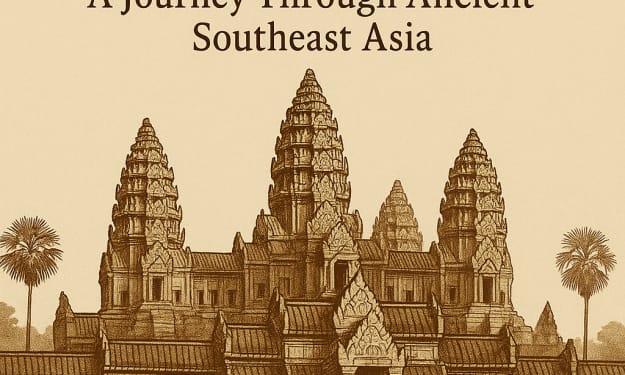
A Journey Through Ancient Southeast Asia
The Khmer Empire stands as one of Southeast Asia’s most powerful and enduring civilizations, a beacon of artistic brilliance, cultural sophistication, and imperial ambition. Flourishing from the 9th to the 15th centuries, the Khmer Empire left an indelible mark on history, centered in what is now Cambodia. It was during this era that Angkor — its magnificent capital — rose to become one of the largest and most technologically advanced cities in the pre-industrial world. At the heart of this legacy lies a story of kings, sacred temples, spiritual devotion, military strength, and deep-rooted cultural values that continue to influence Cambodian identity today.
By Irshad Abbasi 6 months ago in History
No ICE, No KKK, No Fascist USA
"I don't 'do' politics." Politics will do you, regardless. Watching from the sidelines for the last year I can see far too many similarities in the way Trump's ICE Gestapo is to Nazi Germany. Considering the United States just invaded Venezuela and kidnapped their President and his wife I would say we are there.
By Lyvia Jack4 days ago in History
3 Moments When Reality Accidentally Became a Horror Movie
Horror movies usually rely on a simple agreement with the audience: this could never really happen. Ghosts follow rules, monsters have weaknesses, and there’s always a clear point where reality hands the story over to fiction. Real life, unfortunately, does not care about narrative structure, logic, or closure.
By Enoch Sagini3 days ago in History



Comments
There are no comments for this story
Be the first to respond and start the conversation.