
The Journey of Love: Navigating the Complexities of a Love Life
The Challenges of Love Life


The Journey of Love: Navigating the Complexities of a Love Life
Love is one of the most profound and transformative human experiences. It weaves through the fabric of our lives, shaping our relationships, decisions, and even our sense of self. When we talk about a "love life," we’re referring to more than just romantic involvement—we’re exploring an evolving journey that encompasses affection, intimacy, companionship, vulnerability, and personal growth.
The Essence of Love
At its core, love is an emotional bond that connects individuals in meaningful ways. It can be passionate, as seen in romantic relationships, or unconditional, such as the love between parents and children. But when we focus specifically on one’s love life, we are usually referring to romantic love—a dynamic and sometimes unpredictable aspect of life that offers both incredible joy and, at times, deep sorrow.
Romantic love involves a mix of emotional, physical, and psychological components. It includes attraction, desire, companionship, and commitment. Over time, love matures, and the initial spark often transforms into a deeper, more stable connection marked by trust, mutual respect, and shared life experiences.
The Early Stages: Infatuation and Discovery
The beginning of a romantic relationship is often marked by excitement and infatuation. This is when people tend to idealize their partners, overlook flaws, and feel euphoric in their presence. Biologically, this stage is driven by a cocktail of chemicals such as dopamine, oxytocin, and serotonin, which create feelings of pleasure and attachment.
This period is essential because it fosters connection and sets the foundation for a potential long-term relationship. However, this is also a time when emotional awareness and clear communication are essential. A blossoming romance can be quickly derailed by misunderstandings, unmet expectations, or a hasty commitment. Maturity and Real Love
As the relationship progresses, the initial intensity often gives way to a calmer, more enduring love. This stage is about building a partnership. Real love is not just about passion—it’s about patience, compromise, and growing together through life’s challenges. It involves understanding that no one is perfect, that conflicts are natural, and that love requires consistent effort.
Couples who thrive in this phase typically exhibit strong emotional intelligence. They listen to one another, show empathy, and strive to maintain emotional intimacy. They’re not afraid to apologize or to evolve for the sake of their relationship.
The Challenges of Love Life
Maintaining a healthy love life is not always easy. Life’s pressures—career demands, financial stress, personal insecurities—can strain even the strongest relationships. Moreover, in today’s digital age, the ways people connect have changed drastically. Online dating, social media, and the illusion of endless options have created both opportunities and challenges in finding and sustaining love.
Communication breakdown, loss of trust, lack of intimacy, and differing life goals are some of the common issues that arise. It’s important to remember that these are not necessarily signs of a doomed relationship but signals that require attention and care. Couples counseling, open dialogue, and a willingness to work through problems can often restore a faltering relationship.
Self-Love: The Foundation of Romantic Love
No article about love life would be complete without mentioning the importance of self-love. A fulfilling romantic relationship often begins with a healthy relationship with oneself. Self-love involves self-respect, setting boundaries, knowing one’s worth, and not settling for less than one deserves. When individuals enter a relationship from a place of wholeness rather than neediness, they are more likely to attract and maintain healthier, more satisfying partnerships.
Love Over a Lifetime
Love changes form as we age. Young love may be fueled by passion and discovery, while love in later years may center around companionship and shared memories. Long-term relationships may experience lulls, but they can also deepen in ways short-term ones never can. The couples who endure are often those who continue to invest in their connection—through shared activities, open conversations, and acts of kindness.
In conclusion, love life is a complex and evolving journey. It brings out the best and sometimes the worst in us, but it ultimately teaches us about vulnerability, resilience, and connection. Whether you’re single, dating, in a long-term partnership, or healing from heartbreak, your love life is a deeply personal narrative. It’s one worth nurturing, reflecting on, and growing from—because in the end, love remains one of the most meaningful pursuits of the human experience.
About the Creator
The Last Door
The Last Door In the oldest part of the city, there stood a building people whispered about. It was said to exist outside of time. Its walls were cracked, its stairs creaked with every step, and its hallway stretched endlessly with rows of doors. Each door was different—painted in strange colors, echoing with faint sounds. But at the very end stood one door that was plain, colorless, and silent.
By Premier Local Media,about 9 hours ago in History
Aristotle: The Mind That Shaped Human Knowledge
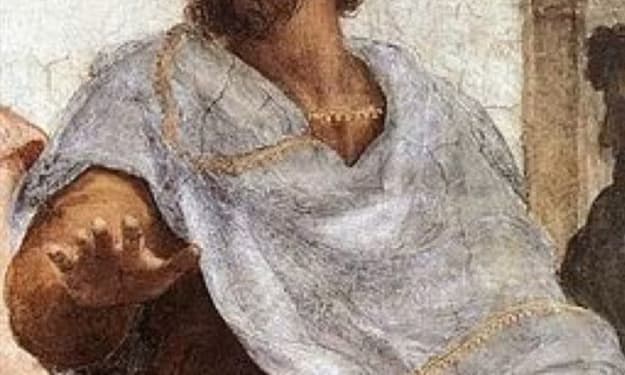
Aristotle was born in 384 BCE in the small Greek town of Stagira, in northern Macedonia. His life unfolded during a time of political change, intellectual awakening, and cultural expansion across the Greek world. Though more than two thousand years have passed since his death, Aristotle’s ideas continue to influence philosophy, science, politics, ethics, education, and even everyday thinking. His story is not a legend built on myths, but the true journey of a curious mind that sought to understand everything—from the smallest living creature to the highest purpose of human life. Aristotle’s father, Nicomachus, was a physician to King Amyntas III of Macedon. Because of this, Aristotle grew up in an environment where observation, biology, and the study of nature were part of daily life. From an early age, he was exposed to the idea that the natural world could be studied systematically, not just explained through myths or religious stories. This early influence played a major role in shaping his later approach to knowledge. At around the age of seventeen, Aristotle traveled to Athens, the intellectual center of the Greek world, to study at Plato’s Academy. Plato was already famous as the student of Socrates and one of the greatest philosophers of his time. Aristotle remained at the Academy for nearly twenty years. Although he deeply respected Plato, he did not agree with all of his ideas. Plato believed that true reality existed in a world of perfect, unchanging “Forms,” while the physical world was only an imperfect reflection. Aristotle, however, believed that knowledge begins with observing the physical world itself. This difference would later define Aristotle’s unique philosophy. Despite their disagreements, Aristotle and Plato shared a strong teacher-student bond. Aristotle learned logic, ethics, metaphysics, and political theory at the Academy. Over time, however, his independent thinking became more noticeable. After Plato’s death in 347 BCE, Aristotle left Athens. Some historians believe this was partly because the Academy was now led by Plato’s nephew and partly because anti-Macedonian feelings were growing in Athens, which made life difficult for someone connected to Macedonia. Aristotle then spent several years traveling and studying. He lived in Asia Minor and later on the island of Lesbos, where he conducted detailed research on marine life. During this period, he carefully observed animals, plants, and natural processes. Unlike many thinkers before him, Aristotle did not rely only on abstract reasoning. He dissected animals, recorded their structures, and classified them based on shared characteristics. This work laid the foundation for biology and zoology as scientific disciplines. In 343 BCE, Aristotle’s life took a dramatic turn when he was invited by King Philip II of Macedon to tutor his young son, Alexander. This boy would later become Alexander the Great. Aristotle taught Alexander philosophy, ethics, politics, literature, and science. He introduced him to the works of Homer and emphasized the importance of reason and self-control. While Alexander would go on to become a military conqueror, Aristotle hoped his student would also rule with wisdom and justice. Though historians debate how much influence Aristotle truly had on Alexander’s actions, there is no doubt that their relationship connected philosophy with world-changing power. After Alexander became king, Aristotle returned to Athens around 335 BCE and founded his own school, the Lyceum. Unlike Plato’s Academy, the Lyceum focused heavily on empirical research and systematic study. Aristotle and his students walked while discussing ideas, which is why his followers were called the “Peripatetics,” meaning “those who walk about.” At the Lyceum, Aristotle organized research across many fields, creating one of the earliest models of a research institution. Aristotle wrote extensively, though most of his popular writings have been lost. What remains are mainly lecture notes and technical works. These texts cover an astonishing range of subjects: logic, physics, metaphysics, ethics, politics, rhetoric, poetry, biology, astronomy, and psychology. In logic, Aristotle developed the system of syllogisms, a method of reasoning that dominated logical thought for centuries. In ethics, his work Nicomachean Ethics explored the idea of virtue as a balance between extremes and argued that the goal of human life is eudaimonia, often translated as “flourishing” or “well-being.” In politics, Aristotle studied different forms of government, analyzing monarchies, aristocracies, and democracies. He believed that the best political system depended on the character and needs of the people, not on a single perfect model. He famously described humans as “political animals,” meaning that living in a community is essential to human nature. Despite his achievements, Aristotle’s later years were marked by difficulty. After Alexander the Great died in 323 BCE, anti-Macedonian sentiment rose sharply in Athens. Aristotle was accused of impiety, a charge similar to the one that had led to Socrates’ execution. Refusing to face trial, Aristotle left Athens, saying he would not allow the city to “sin twice against philosophy.” He retreated to Chalcis, where he died in 322 BCE at the age of sixty-two. Aristotle’s death did not end his influence. In fact, his ideas grew stronger over time. His works were preserved by scholars in the Islamic world during the Middle Ages and later reintroduced to Europe. Thinkers such as Avicenna, Averroes, and Thomas Aquinas studied and expanded upon Aristotle’s philosophy. For centuries, Aristotle was known simply as “The Philosopher,” a title that reflected his unmatched authority in many fields. The true story of Aristotle is not just about a man who lived long ago. It is the story of a thinker who believed that the world could be understood through careful observation, logical reasoning, and thoughtful reflection. He taught humanity to ask not only what things are, but why they are. In doing so, Aristotle shaped the foundations of Western thought and left a legacy that continues to guide minds across the world.
By The best writer a day ago in History
The CEO of Everything
They say "jack of all trades, master of none," but they forgot to mention the part where the jack of all trades is also the camera woman, the makeup artist, and the person currently yelling at a tangled Wii microphone cable in a her own bathroom while recording herself singing and trying to make it look realistic and professional. (As professional as you can make it with nothing but a cell phone camera and a mic that doesn't work)
By Sara Wilson5 days ago in Humans



Comments
There are no comments for this story
Be the first to respond and start the conversation.