
The Journey of a Freedom Fighter
From Apartheid to Equality — The Unbreakable Spirit of a Leader
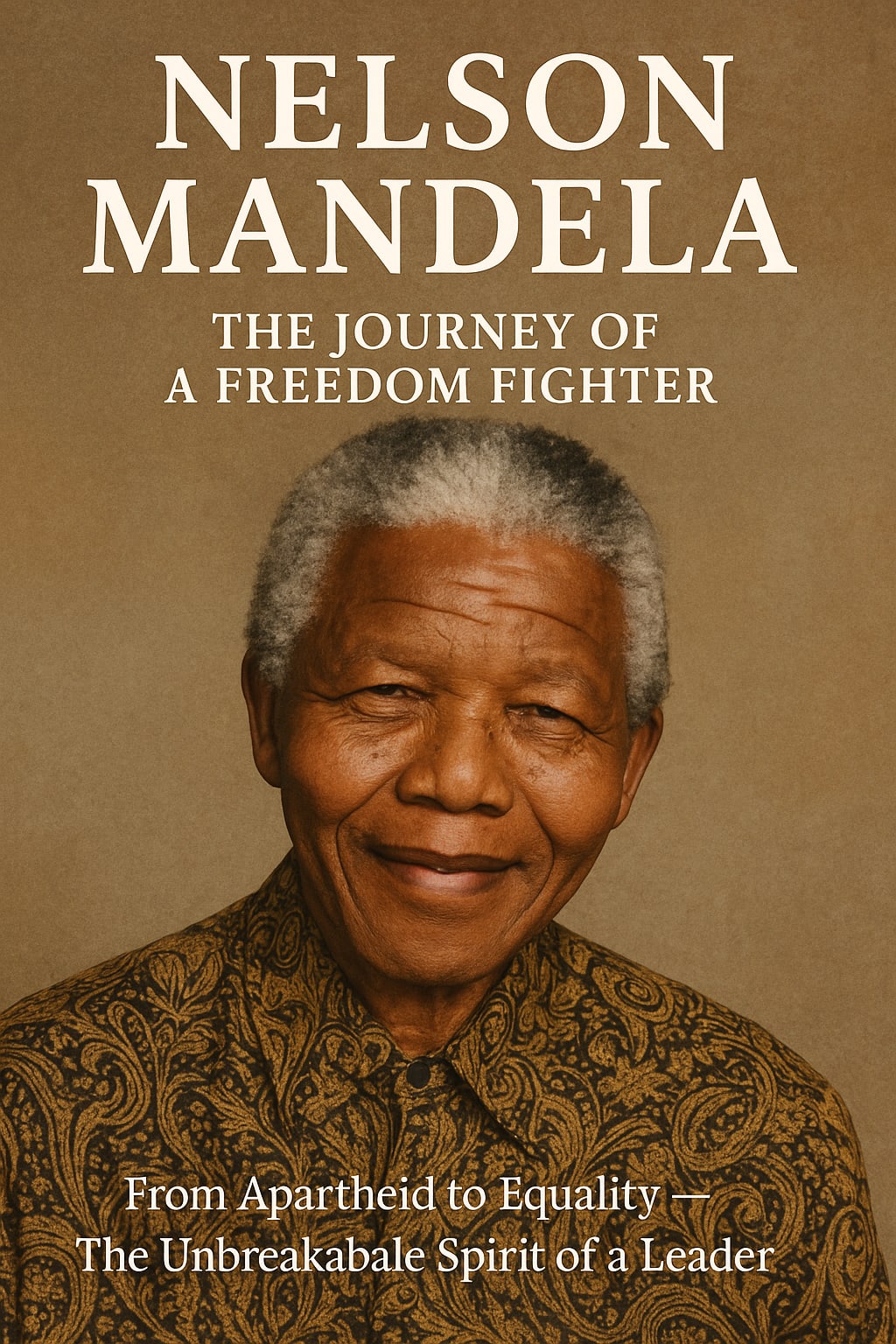
Nelson Rolihlahla Mandela, born on July 18, 1918, in the small village of Mvezo in the Eastern Cape of South Africa, became a towering figure in the global fight for freedom, justice, and human dignity. His journey from a rural herdsboy to the first black president of South Africa is a testament to resilience, sacrifice, and the enduring power of hope. This biography explores Mandela's remarkable life, highlighting the key milestones in his fight against apartheid and his legacy as a unifying force in a divided nation.
### Early Life and Education
Mandela was born into the Thembu royal family, part of the Xhosa nation. His father, Gadla Henry Mphakanyiswa, was a local chief and counselor to the Thembu king. After his father's death, Mandela was adopted by Chief Jongintaba Dalindyebo, the regent of the Thembu people. He grew up in the royal household, absorbing the values of leadership, responsibility, and justice.
Educated in mission schools, Mandela developed a love for learning early on. He attended the University of Fort Hare, the only institution of higher learning for black South Africans at the time, but was expelled for participating in a student protest. Undeterred, he moved to Johannesburg, where he worked as a law clerk and completed his law degree through correspondence at the University of South Africa.
### Political Awakening
Mandela’s time in Johannesburg exposed him to the brutal realities of racial segregation and injustice under the apartheid regime, a system of institutionalized racial discrimination and white minority rule. He joined the African National Congress (ANC) in 1944 and helped establish the ANC Youth League, advocating for more radical and direct forms of protest.
In the 1950s, Mandela rose quickly through the ranks of the ANC. Alongside figures like Oliver Tambo and Walter Sisulu, he organized nonviolent campaigns against apartheid laws. The Defiance Campaign of 1952 and the Congress of the People in 1955, which adopted the Freedom Charter, were defining moments in this period. Mandela also co-founded South Africa’s first black law firm with Tambo, offering legal aid to those affected by apartheid laws.
### Imprisonment and the Rivonia Trial
As the apartheid government grew more repressive, Mandela’s strategies evolved. After the Sharpeville Massacre in 1960, in which police killed 69 unarmed protestors, the ANC was banned, and Mandela went underground. In 1961, he co-founded Umkhonto we Sizwe (“Spear of the Nation”), the armed wing of the ANC, which launched sabotage campaigns against government targets.
In 1962, Mandela was arrested and later sentenced to five years in prison for inciting workers to strike. In 1964, during the infamous Rivonia Trial, he and several others were sentenced to life imprisonment for planning to overthrow the government. It was during this trial that Mandela delivered his iconic speech, declaring, “I have cherished the ideal of a democratic and free society... It is an ideal for which I am prepared to die.”
He spent the next 27 years in prison, mostly on Robben Island, where he endured hard labor, isolation, and harsh conditions. Yet, even in confinement, Mandela remained a symbol of resistance and hope. His leadership continued from behind bars, as he mentored younger activists and negotiated with government officials.
### The Road to Freedom
The 1980s saw mounting domestic unrest and international pressure against apartheid. Global movements demanded Mandela’s release, and economic sanctions crippled the South African economy. In 1990, President F.W. de Klerk released Mandela from prison, marking a turning point in South African history.
Mandela emerged not with vengeance, but with a message of reconciliation. He led negotiations with the apartheid government to dismantle the system peacefully. In 1991, he was elected president of the ANC, and in 1993, he and de Klerk jointly received the Nobel Peace Prize for their efforts to end apartheid.
### Presidency and Nation Building
On April 27, 1994, South Africa held its first multiracial elections. The ANC won by a landslide, and Nelson Mandela was sworn in as the country’s first black president on May 10, 1994.
Mandela’s presidency (1994–1999) focused on national reconciliation, unity, and rebuilding a fractured society. He appointed a Government of National Unity, including members of the former apartheid regime, and established the Truth and Reconciliation Commission (TRC), led by Archbishop Desmond Tutu. The TRC allowed victims and perpetrators of apartheid-era crimes to come forward, creating a platform for healing and restorative justice.
Mandela prioritized education, housing, healthcare, and economic development, though the country continued to grapple with the deep structural inequalities left by apartheid. He stepped down after one term, honoring his commitment to democratic principles and the rule of law.
### Later Years and Legacy
After leaving office, Mandela remained active in global affairs. He established the Nelson Mandela Foundation, focusing on education, HIV/AIDS awareness, and human rights. Despite declining health in his later years, he remained a beloved figure both in South Africa and around the world.
Nelson Mandela passed away on December 5, 2013, at the age of 95. Tributes poured in from every corner of the globe. He was mourned not only as the father of modern South Africa but as a global icon of peace and moral leadership.
Mandela’s legacy lives on in countless ways. Streets, schools, and institutions bear his name. His autobiography, *Long Walk to Freedom*, continues to inspire readers worldwide. His birthday, July 18, is celebrated internationally as Mandela Day, encouraging people to take action and make a difference in their communities.
### Conclusion
Nelson Mandela’s journey from prisoner to president embodies one of the most extraordinary transformations in modern history. He turned personal suffering into collective triumph and rejected bitterness in favor of unity and forgiveness. Through courage, humility, and unwavering commitment to justice, Mandela reshaped South Africa and left an indelible mark on the world.
His life teaches us that freedom is never freely given—it must be fought for with persistence and principle. And perhaps most importantly, Mandela proved that one person, armed with integrity and purpose, can indeed change the course of history.
About the Creator
Irshad Abbasi
Ali ibn Abi Talib (RA) said 📚
“Knowledge is better than wealth, because knowledge protects you, while you have to protect wealth.
Keep reading
More stories from Irshad Abbasi and writers in History and other communities.
The Life and Legacy of Maulana Rumi
## Introduction Jalaluddin Muhammad Rumi, more commonly known simply as Rumi, remains one of the most profound spiritual voices in human history. A 13th-century Persian poet, theologian, and Sufi mystic, Rumi's words transcend religion, culture, and time. His poetry, infused with divine longing, love, and unity, continues to inspire millions across the globe. This biography seeks to illuminate the path of his life—a journey marked by devotion, loss, transformation, and the eternal flame of wisdom that he left behind.
By Irshad Abbasi 10 months ago in History
The Year 1975 in Review: Fun Facts, Trivia, and Historic Highlights
This quick read is a collection of fun facts, trivia, and historical events from the year 1975. Discover the year’s top news stories, most influential people, sports facts, computer history, entertainment trivia, and much more.
By Gregory DeVictor5 days ago in History


Comments
There are no comments for this story
Be the first to respond and start the conversation.