
The Ink That Survived the Fire — How One Quran Saved a Village and a Generation
When the war came, everything burned — except a single Quran hidden in clay. What it inspired would echo across generations.

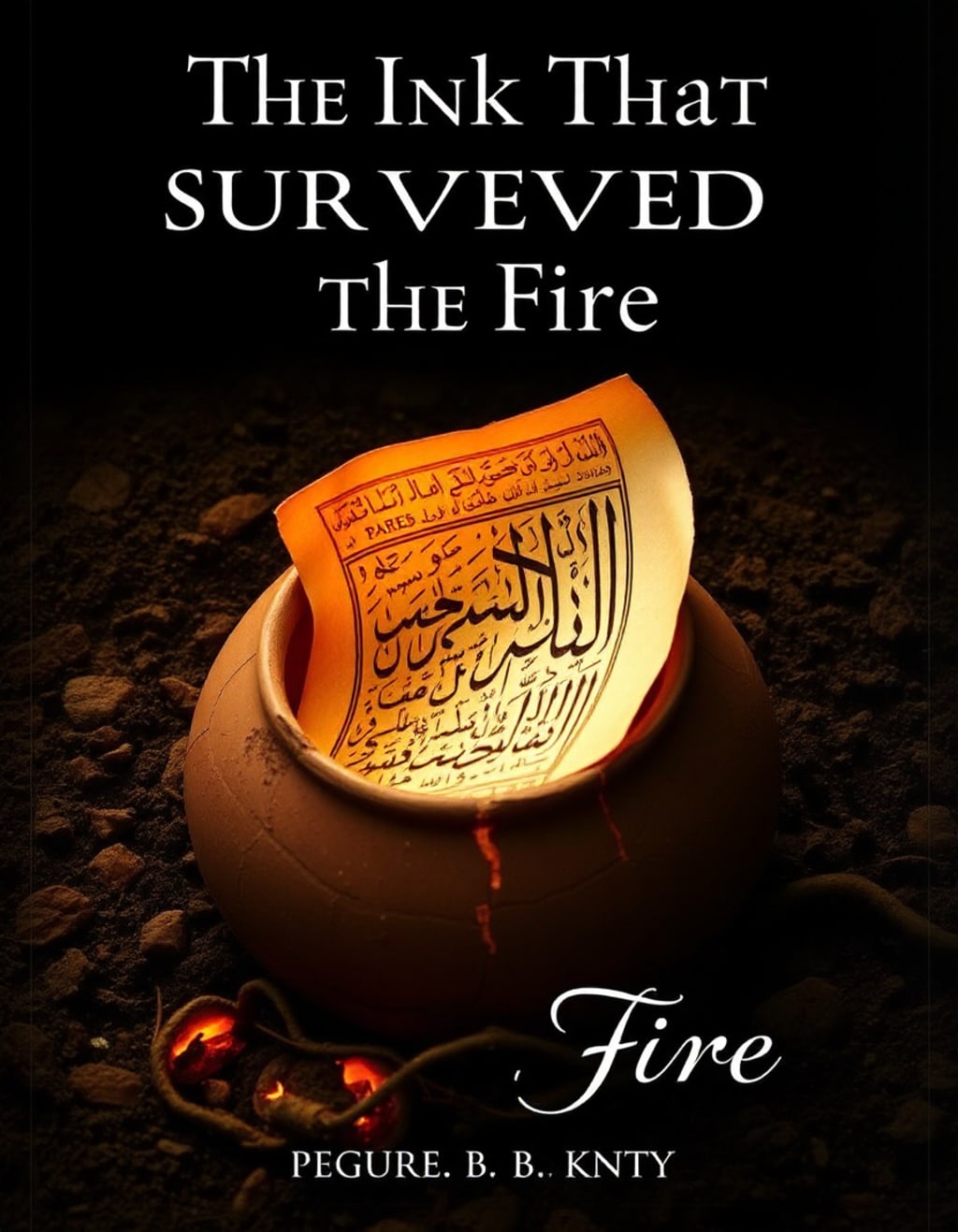
I. The Calligrapher of Noorabad
In the remote mountain village of Noorabad, nestled between two rivers and shaded by the whispering arms of olive trees, lived an old man named Haji Suleiman. His hands trembled from age, but his calligraphy never wavered. Line by line, letter by letter, he copied the Quran by hand, using ink made from soot, rose water, and the dust of saffron.
He had no children of his own, but the village children called him Baba Suleiman — the one who turned words into light.
Every home in Noorabad had something he had written — a verse above the door, a dua beside a cradle, or an ayah painted on kitchen walls. His greatest work, however, was the Quran he had been writing for seven years. Each page a masterpiece. Each verse drawn with tears.
But the world beyond Noorabad had caught fire.
And the smoke was coming.
II. The Night of Ashes
It came without warning.
Helicopters, tanks, and soldiers with no flag — just fire. Noorabad was not a battlefield, but it became one. Houses burned. The mosque crumbled. The school collapsed with the alphabet still painted on its blackboard. Mothers wept. Children screamed.
Haji Suleiman did not run.
He took his unfinished Quran, wrapped it in goat hide, sealed it in a clay jar used for dates, and buried it beneath the fig tree behind his home. Then he stood on the steps of the mosque and recited Surah Ya-Sin aloud.
They shot him in the chest.
The village was erased from maps the next day.
III. The Boy and the Clay
Fifteen years passed.
In the refugee settlements on the edge of the capital, Noorabad was remembered only in whispered stories. Its name never appeared in history books. But one boy, Yusuf, had heard the stories from his grandmother every night.
She would say, “Your great-uncle was a man of ink. And ink never dies.”
Yusuf had never seen Noorabad. But on his 17th birthday, he made a vow — to go back.
The road was still dangerous. The land was mined. But guided by memory, prayer, and a map drawn by his grandmother, Yusuf found what remained of the village — stones, ash, wild thorns.
And the fig tree.
Half-dead, but standing.
He dug.
His hands bled.
And there it was — the clay jar, cracked but intact. Inside, wrapped in hide and time, was the Quran of Haji Suleiman. Dusty. Faded. Unburned.
He opened it.
The ink still sang.
IV. A School Without Walls
Yusuf returned to the city. He showed the Quran to scholars, who wept. One called it, “The last breath of a civilization.” Another said, “It is not just scripture. It is resistance.”
But governments ignored it. Archives refused it.
So Yusuf started small.
He took photos of each page and projected them on the walls of an abandoned building. Children came. Orphans. Runaways. Even gang members. He taught them how to read — not just Arabic, but meaning.
“Noor,” he said, “means light. And every word in this book is a lamp.”
They called it The School of Light — no desks, no uniforms, just hearts and ink.
V. The Spread
Word traveled.
Within two years, similar schools popped up in Jordan, Bosnia, Kashmir, and Mali — all using Yusuf’s scanned pages.
They called it the “Noorabad Curriculum” — education rooted in the Quran but aimed at rebuilding souls, not just passing exams.
Politicians called it a threat.
Yusuf called it healing.
A girl from his class, Amina, went on to become a doctor in Gaza. A boy, Tariq, became a poet in Istanbul. Another, Hadi, became a human rights lawyer in Nairobi.
They all said the same thing when asked why:
“Because one Quran survived.”
VI. The United Nations Speech
In 2041, Yusuf — now in his thirties — was invited to speak at the United Nations during International Education Week. He wore simple clothes. His voice shook, but his eyes did not.
He held up the original Quran, now protected in glass.
“This,” he said, “is more than a book. It is a grave and a garden. A memory and a map. It belonged to a man who was killed because he believed that knowledge should be written, not destroyed.”
He paused.
“In a world where missiles fly faster than prayers, let us not forget: The ink that survives the fire is stronger than the fire itself.”
The hall was silent.
Then thundered with applause.
VII. The Last Page
After the speech, Yusuf returned to Noorabad once more. The fig tree had died, but its roots lived on beneath.
He opened the Quran to the final page.
There, written in trembling calligraphy, was a message never seen before:
“If my words survive, may they build not walls of pride, but doors of mercy.”
– Haji Suleiman
Yusuf wept.
He planted a new fig tree beside the old roots.
And left the Quran — not in a museum, not in a vault — but in a small masjid rebuilt on Noorabad’s soil.
Because he believed what his great-uncle had once whispered through ink:
“What is preserved in the heart cannot be burned.”
About the Creator
rayyan
🌟 Love stories that stir the soul? ✨
Subscribe now for exclusive tales, early access, and hidden gems delivered straight to your inbox! 💌
Join the journey—one click, endless imagination. 🚀📚 #SubscribeNow
The Titanic Mystery: Secrets Beneath the Frozen Sea
On the night of April 14, 1912, the RMS Titanic sailed calmly through the dark waters of the North Atlantic, carrying more than 2,200 souls and the dreams of a modern world that believed it had conquered nature. Labeled “unsinkable,” the Titanic was the pride of human engineering. Yet before dawn broke, the great ship lay shattered beneath miles of icy ocean. More than a century later, the Titanic remains not just a tragedy—but a mystery filled with unanswered questions.
By The best writer 4 days ago in History
How to Succeed at the Benson Directory®
Congratulations and welcome to the Benson Directory® employee #22391! As our newest call handler, you will have the privilege of speaking with dozens of unique and interesting people on a daily basis as well as the opportunity to earn bonuses for high performance. Contained within this handbook you will find a set of ease to follow instructions designed to help you settle in to your new role and begin paving the way to success.
By S. A. Crawfordabout 20 hours ago in Fiction




Comments (1)
This story is heartbreaking. Haji Suleiman's dedication to his Quran was amazing. It's tragic how the village was destroyed. Yusuf's vow to go back shows courage.