
The Indus Valley Civilization (AKA The Harappan Civilization)
Unraveling the Enigmas of an Ancient Society
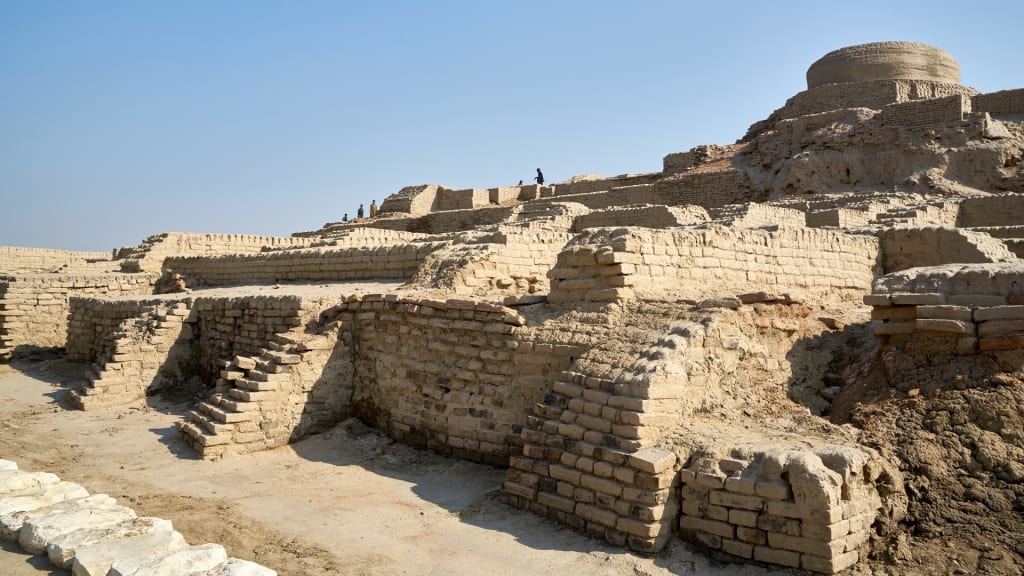
The Indus Valley Civilization, unveiled by James Lewis in 1829, stands as a testament to an extraordinary ancient society that thrived approximately 8,000 years ago. Renowned for its innovative urban planning, this civilization showcased a level of sophistication ahead of its time, featuring standardized brick sizes, intricate drainage systems, and communal facilities that reflected a high degree of civic organization. The enigmatic Indus Script, a complex writing system linked to this civilization, presents a formidable puzzle for present-day researchers striving to unravel its significance and meaning.
Moreover, the enduring enigmas surrounding the Indus Valley Civilization, such as the absence of religious structures and the mysterious decline of the civilization between 1900 BC and 1300 BC, contribute to its mystique. The peaceful nature of the society, the lack of hierarchy, and the sudden collapse raise profound questions about the resilience of ancient societies in the face of environmental challenges and internal disruptions. These enigmas underscore the complexity of the civilization and its lasting impact on the study of ancient history.
One of the most intriguing aspects of the Indus Valley Civilization is the absence of religious edifices in its archaeological remnants, setting it apart from other contemporary societies. This absence of religious structures hints at a distinctive societal framework that diverged from the norm of that era, sparking curiosity about the spiritual beliefs and practices of the Indus people. This unique characteristic challenges conventional notions of ancient civilizations and underscores the enigmatic nature of the Indus Valley Civilization, inviting further exploration and scholarly inquiry into its societal structure and cultural practices.
The decline of the Indus Valley Civilization between 1900 BC and 1300 BC is a subject of great mystery, with multiple theories attempting to elucidate its downfall. Environmental factors have been prominently highlighted as potential causes for this rapid decline observed in the archaeological record. One significant theory proposes that the drying up of a vital river, possibly the Saraswati River, played a pivotal role in disrupting the civilization's sustainability. This environmental change could have led to severe consequences, forcing the inhabitants to migrate eastwards towards regions like the Ganga River for survival.
Another compelling theory suggests that rampant deforestation within the civilization's territory might have contributed significantly to its collapse. The extensive clearing of forests for various purposes such as brick-making and cattle grazing could have led to ecological devastation, rendering the area uninhabitable over time. This environmental degradation could have severely impacted agricultural productivity and overall sustainability, ultimately leading to societal collapse.
Furthermore, the potential outbreak of fatal diseases like malaria or cholera has been proposed as another factor that could have decimated the population of the Indus Valley Civilization. Historical evidence indicates that infectious diseases have had catastrophic effects on ancient societies, capable of wiping out significant portions of populations within a short period. The sudden and widespread outbreak of such diseases could have overwhelmed the civilization's healthcare systems and social structures, contributing to its downfall.
Despite boasting advanced urban infrastructure, peaceful societal norms, and remarkable urban planning, the abrupt collapse of the Indus Valley Civilization raises profound questions about the resilience of ancient societies in coping with environmental challenges and internal disruptions. The civilization's demise serves as a poignant reminder of how even highly developed civilizations can face existential threats from environmental changes and health crises, underscoring the fragility of human societies in the face of unforeseen adversities.
In conclusion, the Indus Valley Civilization's legacy of advanced urbanism, enigmatic script, and enduring mysteries continues to captivate researchers and historians, offering a glimpse into the sophistication and achievements of an ancient society that thrived in the Bronze Age. The civilization's urban planning, script, and societal structure stand as a testament to the remarkable capabilities and innovations of early human civilizations, leaving a rich tapestry of historical intrigue for scholars and enthusiasts to explore and unravel.
About the Creator
Keep reading
More stories from Sanjana Dixit and writers in History and other communities.
The Phoenix
The Phoenix, a mythical bird symbolizing rebirth and renewal, has roots in both Greek and Egyptian mythology. According to historians, the phoenix is associated with the sun and the concept of immortality. Legends describe the phoenix as a long-living bird that, when ready to die, creates a nest and ignites itself, only to be reborn from its ashes. Various cultures have their own versions of mythological birds like the Thunderbird in Indigenous cultures, the Firebird in Russian folklore, and the Milcham in Judaism. The phoenix has also been linked to alchemical symbolism, representing transformation and the idea that the end is just the beginning. This enduring symbol has captivated historians, writers, and artists across different time periods and cultures, evolving to represent themes such as resurrection, consecration, and exceptional humans.
By Sanjana Dixit2 years ago in History


Comments
There are no comments for this story
Be the first to respond and start the conversation.