
The Indian Caste System Explained
The Indian caste system explained in short

The Indian caste system is one of the oldest forms of social stratification still in existence today. With roots tracing back over 3,000 years, it has profoundly influenced Indian society, culture, and politics. The caste system, known as "varna" in Sanskrit, divides society into hierarchical groups based on their karma (work) and dharma (duty). Although the caste system has undergone significant changes over the centuries and faced legal abolition, its legacy and impacts are still evident in contemporary India. This article explores the origins, structure, and implications of the Indian caste system.
Origins and Historical Context
The caste system's origins can be traced back to the early Vedic period (1500-500 BCE) when the Indo-Aryans migrated to the Indian subcontinent. The Rigveda, one of the oldest sacred texts of Hinduism, mentions the division of society into four varnas:
Brahmins: Priests and scholars responsible for religious rituals and preserving sacred knowledge.
Kshatriyas: Warriors and rulers tasked with protecting and governing society.
Vaishyas: Merchants and landowners engaged in commerce and agriculture.
Shudras: Laborers and service providers who performed menial tasks.
These varnas were initially flexible and based on individual merit and occupation. However, over time, the system became rigid and hereditary, with one's caste determined by birth rather than personal achievement.
Structure and Hierarchy
The caste system is not limited to the four primary varnas; it also includes numerous sub-castes, known as "jatis." Jatis are endogamous groups, meaning that individuals typically marry within their own caste. The hierarchical nature of the caste system is reinforced by social norms and practices that dictate interactions between different castes.
At the top of the hierarchy are the Brahmins, who are regarded as the most prestigious and purest caste due to their role in religious and scholarly activities. Below them are the Kshatriyas, who hold political and military power. The Vaishyas occupy the third tier, managing trade and agriculture, while the Shudras are positioned at the bottom, performing manual labor.
Outside the traditional varna system are the "Dalits," formerly known as "Untouchables." Dalits have historically faced severe discrimination and social exclusion, performing tasks considered impure or polluting by higher castes. The caste system's rigidity and the associated practices of untouchability have led to widespread social and economic disparities.
Religious and Philosophical Justifications
The caste system is deeply intertwined with Hindu religious beliefs and philosophies. The concept of "karma" (actions) and "dharma" (duty) plays a central role in justifying the caste hierarchy. According to Hindu teachings, an individual's actions in past lives determine their current caste, and fulfilling one's dharma is essential for spiritual progress and attaining a better caste in future lives.
The Manusmriti, an ancient legal text, codified the caste system and prescribed specific duties and responsibilities for each varna. While these religious texts provided a framework for social order, they also perpetuated caste-based discrimination and inequality.
Impact on Society
The caste system has had far-reaching impacts on various aspects of Indian society, including social interactions, marriage, education, and employment. Caste-based discrimination has led to significant social and economic disparities, with lower castes often facing limited access to resources and opportunities.
In rural areas, the caste system continues to influence social dynamics and power structures. Upper-caste individuals often hold significant economic and political power, while lower-caste individuals face marginalization and exclusion.
Legal Reforms and Modern Challenges
The Indian Constitution, adopted in 1950, abolished untouchability and prohibited caste-based discrimination. Affirmative action policies, known as "reservation," were introduced to promote social and economic equality by reserving seats for Scheduled Castes (SC), Scheduled Tribes (ST), and Other Backward Classes (OBC) in educational institutions and government jobs.
Despite these legal reforms, caste-based discrimination and inequality persist in various forms. Issues such as caste-based violence, honor killings, and discrimination in housing and employment continue to affect lower-caste communities. The intersection of caste with other social factors, such as gender and economic status, further complicates the struggle for equality.
Social Movements and Reformers
Throughout history, various social reformers and movements have challenged the caste system and advocated for social justice and equality. Some notable figures include:
B.R. Ambedkar: A prominent Dalit leader, jurist, and architect of the Indian Constitution, Ambedkar fought tirelessly for the rights of Dalits and marginalized communities. He advocated for education, social reform, and the abolition of untouchability.
Jyotirao Phule: A social reformer from Maharashtra, Phule worked to uplift lower-caste communities through education and social activism. He founded schools for girls and lower-caste children and challenged the dominance of the upper castes.
Periyar E.V. Ramasamy: A Tamil Nadu-based social activist, Periyar championed the rights of lower castes and women. He founded the Self-Respect Movement, which aimed to eradicate caste-based discrimination and promote rationalism and social equality.
Changing Perceptions and Future Prospects
In contemporary India, the caste system is increasingly being questioned and challenged by younger generations and urban populations. Education, economic opportunities, and globalization are contributing to changing perceptions and reducing the influence of caste in some areas.
However, caste remains a significant factor in Indian politics, with various political parties and leaders mobilizing support based on caste identities. The reservation system, while promoting social mobility for some, also faces criticism and demands for reform.
The struggle for caste equality is ongoing, and achieving a truly egalitarian society requires continued efforts to address systemic discrimination and promote social justice.
Conclusion
The Indian caste system, with its deep historical roots and complex social dynamics, has shaped Indian society for millennia. While legal reforms and social movements have made significant strides toward equality, the legacy of the caste system continues to impact contemporary India. Understanding the intricacies of the caste system and its effects is crucial for promoting social justice and building a more inclusive and equitable society.
For those interested in exploring more about the history and culture of South Asia and other fascinating historical topics, the Balkan History & Culture (@BalkanHistoryAndCulture) YouTube channel offers a wealth of informative and engaging content. Engaging with such resources can provide valuable insights into the rich tapestry of human societies and the ongoing quest for equality and justice.
About the Creator
M. R.
Just a random guy with a lot of interests, including writing and experimenting with AI.
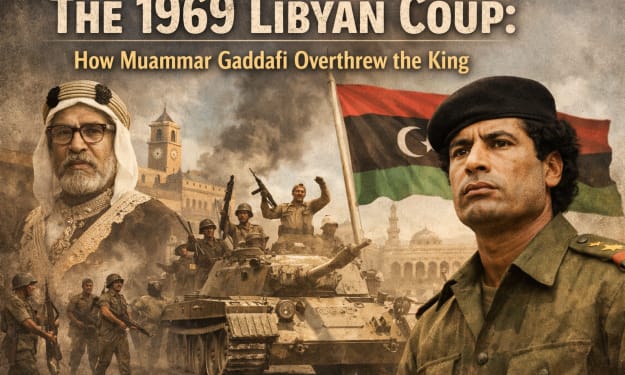
The 1969 Libyan Coup: How Muammar Gaddafi Overthrew the King
On September 1, 1969, Libya experienced a dramatic political transformation when a group of young military officers staged a coup that overthrew the country’s monarchy. The revolution ended the rule of King Idris I of Libya and brought a 27-year-old army officer, Muammar Gaddafi, to power. What made this event remarkable was not only its success but also the fact that it was almost entirely bloodless. Within hours, the monarchy that had ruled Libya since independence collapsed, and a new revolutionary government emerged.
By Irshad Abbasi 6 days ago in History
Guard Your Battery
Why are some people so attractive just by standing there? It’s not because they are "likable," but because they don’t need everyone to like them. I realized later that truly charismatic people allow themselves to be criticized, but they never criticize themselves. They never try to please the world; instead, the world stops to watch them.
By Emily Chan - Life and love sharing7 days ago in Poets



Comments
There are no comments for this story
Be the first to respond and start the conversation.