
The Imposition of Martial law in The Philippines
Reviewing History

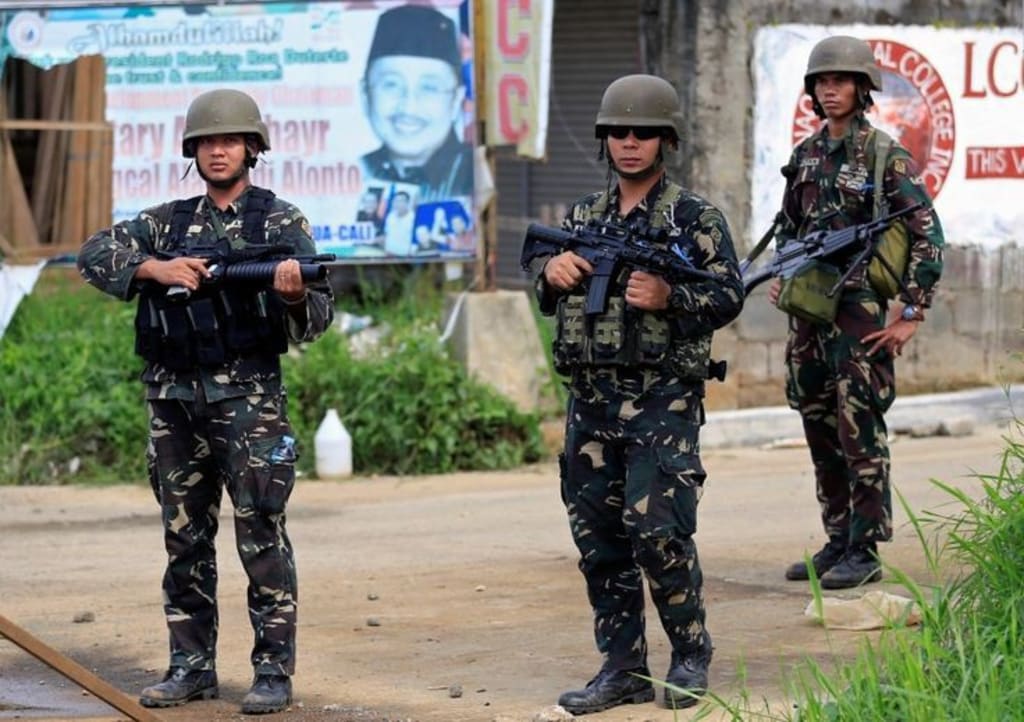
Martial law in the Philippines holds a complex and controversial legacy, deeply etched into the nation's history. From President Ferdinand Marcos' regime in the 1970s to recent declarations in Mindanao, the imposition of martial law has evoked strong emotions and sparked intense debates. While widely known for its abuses, it is essential to delve into lesser-explored perspectives and examine the evidence surrounding this contentious issue.
Historical Context:
To understand the controversy surrounding martial law, we must first examine the historical context. President Ferdinand Marcos declared martial law on September 21, 1972, citing political unrest and communist insurgency as the justification. During this period, civil liberties were curtailed, and the government wielded extensive powers. While the regime claimed to restore peace and order, human rights abuses were rampant, including enforced disappearances, torture, and media censorship.
Development and Infrastructure:
Proponents of martial law argue that it brought about economic development and improved infrastructure in the country. They highlight the construction of significant projects like the San Juanico Bridge, Cultural Center of the Philippines, and the Philippine Heart Center. These infrastructural advancements are presented as evidence of the positive impact martial law had on the nation's progress.
Impact on Security:
Supporters of martial law contend that it played a vital role in ensuring national security during periods of turmoil. They argue that it helped suppress armed conflicts and insurgencies, preserving law and order. The decline in crime rates and the weakening of communist groups are often cited as indicators of the positive effects of martial law on security.
Critical Perspectives:
Critics of martial law emphasize the grave human rights abuses that occurred during the Marcos era. Numerous reports and testimonies document widespread torture, extrajudicial killings, and the silencing of dissenting voices. These violations continue to impact survivors and their families, leaving lasting scars on the nation's collective memory.
Democratic Erosion and Checks on Power:
Another significant concern associated with martial law is the erosion of democratic institutions. Critics argue that its imposition concentrated power in the hands of a single individual, diminishing checks and balances. They contend that such a concentration of power undermines the principles of democracy and allows for potential abuses.
Lessons from History:
The controversies surrounding martial law in the Philippines provide essential lessons for the nation's future. It highlights the importance of safeguarding human rights, upholding the rule of law, and maintaining a robust system of checks and balances. Reflecting on this period of history enables us to appreciate the significance of democratic values and the need for accountability and transparency in governance.
Martial law in the Philippines remains a deeply divisive and controversial topic, evoking strong emotions and heated debates. While some argue that it brought about economic progress and security, others emphasize the human rights abuses and democratic erosion associated with its imposition. Examining the evidence and considering diverse perspectives is essential for a comprehensive understanding of this complex chapter in the nation's history. By doing so, we can draw valuable lessons and work towards building a just and democratic society that upholds the rights and welfare of its citizens.
In the aftermath of martial law, the Philippines embarked on a path of healing and reconciliation. Initiatives such as the creation of the Presidential Commission on Good Government (PCGG) aimed to recover ill-gotten wealth and hold accountable those responsible for human rights abuses. The recognition of victims' rights and reparations, along with the establishment of the Martial Law Memorial Museum, serve as important steps towards acknowledging the past and fostering national unity.
In the aftermath of martial law, the Philippines embarked on a path of healing and reconciliation. Initiatives such as the creation of the Presidential Commission on Good Government (PCGG) aimed to recover ill-gotten wealth and hold accountable those responsible for human rights abuses. The recognition of victims' rights and reparations, along with the establishment of the Martial Law Memorial Museum, serve as important steps towards acknowledging the past and fostering national unity.
About the Creator
Keep reading
More stories from Samuel Stefan Salvatierra and writers in History and other communities.
Never Hiking Again
I remember that day vividly, as if the memories are etched into my very soul. It was a crisp autumn morning when our group of friends, full of youthful exuberance, decided to embark on a hike in the depths of an ancient forest. The towering trees loomed above us, their branches interwoven like gnarled fingers reaching out to the sky. Little did we know that our innocent adventure would soon descend into a nightmare.
By Samuel Stefan Salvatierra3 years ago in Horror
The Seven Wonders of the World: Amazing Human Creations
People have always been fascinated by things that are grand and unusual. From the very beginning of civilization, humans wanted to build structures that were not just useful, but also showed their skill, creativity, and ambition. The Seven Wonders of the World are the most famous examples of this desire. They are impressive not only because of their size or beauty, but also because of the stories they tell about our past, different cultures, and human innovation. The idea of the Seven Wonders comes from ancient travelers and historians who listed the most remarkable human creations. Even though some of these wonders no longer exist, their legacy continues to inspire people around the world. Let’s explore each one, looking at their history, significance, and why they remain unforgettable. 1. The Great Pyramid of Giza (Egypt) The Great Pyramid of Giza is the only surviving wonder of the original Seven Wonders. Built around 2560 BCE as the tomb of Pharaoh Khufu, it is an extraordinary engineering achievement. Made from more than two million limestone blocks, some weighing over 15 tons, the precision of its construction is still astonishing today. The pyramid shows the power and beliefs of ancient Egypt and continues to attract visitors from all over the world. It is a true symbol of human skill and vision. 2. The Hanging Gardens of Babylon (Iraq) The Hanging Gardens of Babylon are famous for their beauty and clever design, though historians still debate whether they really existed. Ancient stories say King Nebuchadnezzar II built these stepped gardens for his wife, Amytis, who missed the green hills of her homeland. The gardens, described as terraces full of trees, flowers, and shrubs, appeared to float above the city. Whether real or partly mythical, they show how ancient people combined nature and architecture in extraordinary ways. 3. The Statue of Zeus at Olympia (Greece) Around 435 BCE, the sculptor Phidias created the Statue of Zeus at Olympia. This huge statue of the Greek god Zeus, seated on a throne, was over 12 meters tall and made of ivory and gold-plated bronze. It represented both artistic skill and religious devotion. Even though it was destroyed long ago, records and artistic depictions keep its memory alive, showing the Greeks’ dedication to beauty, religion, and craftsmanship. 4. The Temple of Artemis at Ephesus (Turkey) The Temple of Artemis, built around 550 BCE, was dedicated to the Greek goddess of the hunt and wilderness. Known for its enormous size, detailed sculptures, and beautiful design, it was rebuilt several times after destruction, reflecting its cultural importance. People traveled from across the Mediterranean to see it, making the temple a center of religion, art, and commerce. Today, its ruins still tell the story of a civilization that valued beauty and spiritual devotion. 5. The Mausoleum at Halicarnassus (Turkey) Built between 353 and 350 BCE, the Mausoleum at Halicarnassus was the tomb of Mausolus and his wife Artemisia. Combining Greek, Egyptian, and Lycian styles, it stood around 45 meters tall and was decorated with intricate sculptures. Its design influenced monumental tombs for centuries. Even after earthquakes destroyed it, the Mausoleum remains a symbol of human creativity and architectural achievement. 6. The Colossus of Rhodes (Greece) The Colossus of Rhodes, built between 292 and 280 BCE, was a massive bronze statue of the sun god Helios, celebrating Rhodes’ victory over an invading army. Over 30 meters tall, it was one of the tallest statues of the ancient world. Although it only stood for 54 years before an earthquake toppled it, the Colossus became a symbol of triumph, resilience, and artistic achievement, inspiring large statues throughout history. 7. The Lighthouse of Alexandria (Egypt) The Lighthouse of Alexandria, or Pharos, was built around 280 BCE on the small island of Pharos. Standing over 100 meters tall, it served as both a landmark and a guide for sailors entering Alexandria’s busy harbor. Its elegant design combined functionality and beauty. Though earthquakes destroyed it long ago, it remains a symbol of human ingenuity and innovation in maritime engineering. The Legacy of the Seven Wonders The Seven Wonders are more than just buildings; they are symbols of human creativity, ambition, and achievement. Each wonder tells a story about the people who built it, the culture it came from, and the new ideas of its time. Even though some no longer exist, their stories continue to live through historical records, art, and the fascination of people worldwide. These wonders still inspire architects, artists, engineers, and travelers today. From the pyramids of Egypt to the Hanging Gardens of Babylon, they remind us that imagination and effort can create something that lasts for thousands of years. They are examples of determination, vision, and the pursuit of excellence. Conclusion The Seven Wonders of the World are timeless creations that celebrate human creativity and determination. They are more than stones, metals, or ruins—they represent entire civilizations and the marks they left on history. Even after centuries, their stories continue to inspire people to dream, create, and achieve greatness. These wonders remind us that with vision, passion, and effort, humans can build creations that
By Binan Mooonabout 3 hours ago in History


Comments
There are no comments for this story
Be the first to respond and start the conversation.