
The Hypocaust System: Ancient Rome’s Ingenious Underfloor Heating Solution
Romans Engineering

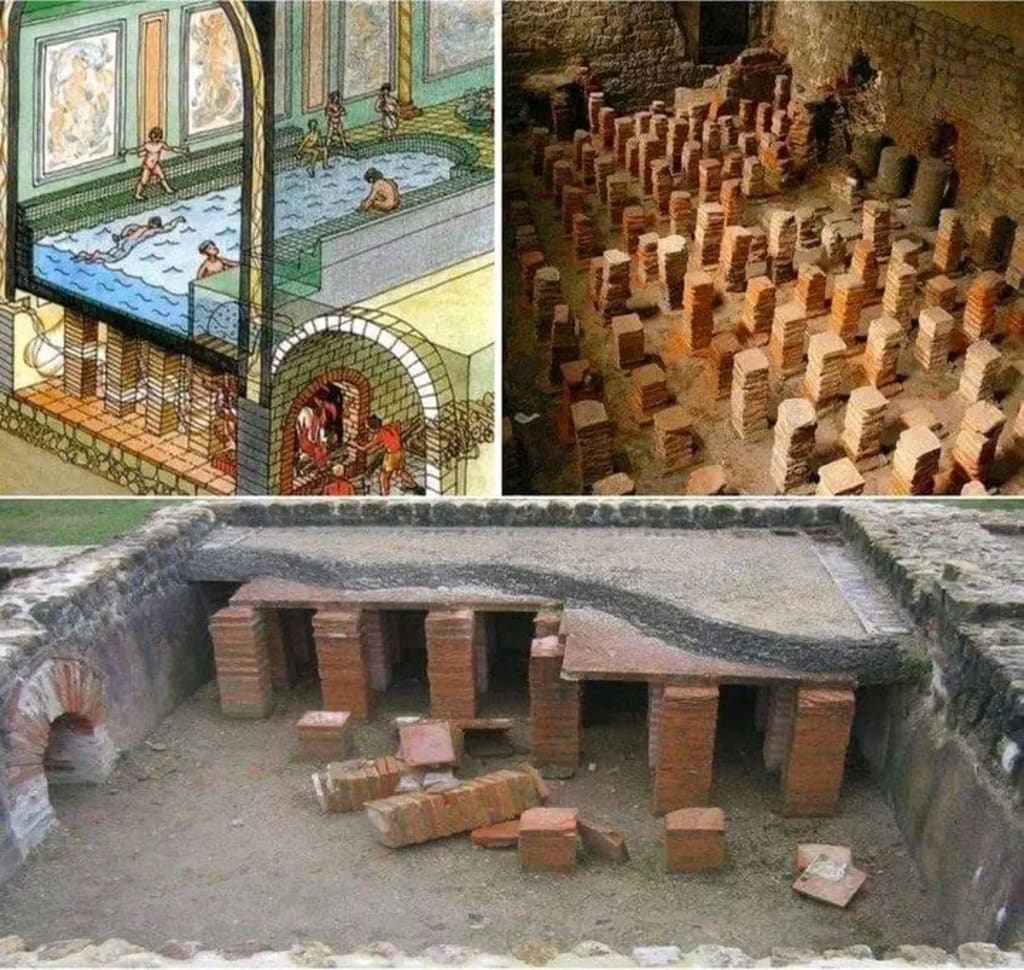
In the world of ancient Rome, comfort and luxury weren’t reserved only for the elite; they were engineered into daily life in remarkable ways. One of the most advanced and fascinating technologies of that era was the hypocaust—a centralized heating system used primarily in public baths and wealthy Roman homes. This early form of underfloor heating offered warmth and comfort, allowing Romans to enjoy heated floors and even heated walls, long before the modern conveniences of radiators and central heating.
The hypocaust system represents one of the earliest instances of central heating, showcasing Roman engineering prowess and ingenuity. Its function was as impressive as its design: hot air would flow underneath the floors and rise up through walls, providing evenly distributed warmth across entire rooms. Not only did it make Roman baths a luxurious experience, but it also kept homes, especially during winter, much more comfortable. Today, the hypocaust is admired as a marvel of ancient technology and a testament to the Romans’ dedication to engineering comfort into their architecture.
What is a Hypocaust?
The term “hypocaust” comes from the Greek words hypo, meaning “under,” and kaustós, meaning “burned.” At its core, the hypocaust system was an early type of central heating that utilized hot air, generated in a central furnace, to warm up rooms. The system was especially popular in Roman baths, called thermae, where it provided a consistent, warm environment for bathers who visited these spaces as part of their social and health routines.
The hypocaust worked by heating an open space beneath the floor, which was supported by small pillars called pilae. These pillars lifted the floor a few feet off the ground, creating a chamber beneath where hot air could circulate freely. Once the air was heated, it would spread under the flooring and then rise through the walls using a network of flues or hollow spaces, providing warmth not only underfoot but throughout the room.
How Did the Hypocaust Work?
The system began with a furnace, usually located outside or in a separate area within the building, known as a praefurnium. A constant source of heat was provided by burning wood, and the hot air generated would be funneled beneath the floors. Because hot air naturally rises, it would fill the space under the floor, heating it and slowly making its way into the walls through a network of specially designed flues or pipes.
The floors in these rooms were typically constructed with tiles, which conducted and retained the heat effectively. This underfloor space was kept open by the pilae, or stone and tile pillars, allowing the hot air to move freely and uniformly warm the floor above. The walls themselves were often fitted with flue tiles—special hollow tiles that enabled hot air to rise through the walls, creating a thermal envelope of warmth. This way, the entire room, not just the floors, would benefit from the heating effect, creating a pleasant, evenly distributed warmth.
The clever design of the hypocaust system meant that different rooms could have varying levels of heat. In bath complexes, for instance, rooms closest to the furnace would be the hottest, allowing the Romans to create distinct temperature zones such as the caldarium (hot room), tepidarium (warm room), and frigidarium (cold room) within one building. This temperature gradient was crucial to the Roman bathing experience, offering users a range of bathing temperatures to choose from.
The Hypocaust in Public Baths and Private Villas
Hypocaust systems were a common feature in the public baths, which were central to Roman social and cultural life. Roman baths were not just places to get clean but were hubs of socializing, relaxation, and exercise. The Romans appreciated the health benefits of hot baths and steam, and the hypocaust system made it possible to create luxurious, spa-like environments where visitors could immerse themselves in hot water, enjoy steam rooms, and then cool down in cold baths. This ritual of moving between different temperatures contributed to the sense of relaxation and wellness associated with the baths.
But hypocaust systems weren’t limited to public baths. They were also found in private villas owned by wealthy Romans who wanted the luxury of heated floors within their homes. Installing a hypocaust was an expensive endeavor, requiring skilled engineers and builders, so this form of heating was typically available only to the wealthier classes. However, in places where the climate was cold or damp, such as in parts of Roman Britain, the hypocaust became a valued feature in private homes, adding a new level of comfort during the chilly winter months.
Benefits and Challenges of the Hypocaust System
The hypocaust was a revolutionary system that offered several benefits. First and foremost, it provided consistent warmth, making interiors comfortable even in colder climates. Unlike open fires, which required fuel within each room, the hypocaust allowed for centralized heating, reducing smoke and improving indoor air quality. Furthermore, the system’s design encouraged uniform heating, avoiding the cold spots that can be common with fireplaces or braziers.
However, the hypocaust was not without its challenges. Its construction was labor-intensive, requiring skilled builders and a substantial amount of material to create the flooring, pillars, and flues. The furnace needed a steady supply of fuel, usually wood, to maintain a consistent temperature, which was both laborious and costly. Additionally, the hypocaust system required regular maintenance, as the furnace, flues, and channels needed to be kept clear of soot and ash buildup to prevent blockages and fire hazards. Despite these challenges, the benefits often outweighed the costs for those who could afford it, making the hypocaust a valued technology in Roman architecture.
The Legacy of the Hypocaust System
The hypocaust was one of the earliest examples of radiant heating and an inspiration for modern underfloor heating systems. While today’s technology relies on electricity and hot water pipes rather than wood-fired furnaces, the principle remains the same: warm air or heat circulates below the floor, providing even, comfortable warmth throughout the room.
As a testament to its effectiveness, remnants of hypocaust systems can still be found in the ruins of ancient Roman buildings across Europe and North Africa. Archaeologists have uncovered well-preserved hypocaust systems in places such as Pompeii, Bath in England, and Trier in Germany, marveling at the sophistication of this ancient technology. These discoveries continue to reveal the ingenuity and practical wisdom of Roman engineers, who mastered the art of comfort and efficiency well before the age of modern engineering.
The hypocaust remains a fascinating piece of Roman heritage, illustrating the civilization’s commitment to improving quality of life through architectural innovation. It’s a reminder of how even thousands of years ago, people sought solutions to make their environments more comfortable, transforming their homes and public spaces into havens of warmth and well-being. The hypocaust wasn’t just an engineering feat—it was an enduring legacy of the Roman pursuit of luxury and comfort.
About the Creator
Keep reading
More stories from Deji Akomolafe and writers in History and other communities.
The Day Niagara Falls Ran Dry: The 1969 De-Watering of the American Falls
Few natural wonders capture the imagination like Niagara Falls. With its immense flow, thunderous roar, and mist that rises like a ghostly shroud, the falls are a symbol of nature’s raw power. But for a brief period in 1969, a remarkable engineering feat turned that power off—at least, on one side of the falls. In June of that year, U.S. engineers successfully diverted the flow of the Niagara River away from the American Falls, leaving them eerily dry for several months. This unique event allowed scientists to study the geology of the falls, confront safety concerns, and preserve the iconic attraction for future generations. Today, it remains a fascinating chapter in Niagara’s history, remembered as the year that one of the world’s most famous waterfalls ran dry.
By Deji Akomolafeabout a year ago in History



Comments
There are no comments for this story
Be the first to respond and start the conversation.