
The Hunt for Bin Laden: Inside the Covert Operation that Changed History
A Detailed Account of the Mission to Eliminate Osama Bin Laden and Its Lasting Impact on the World
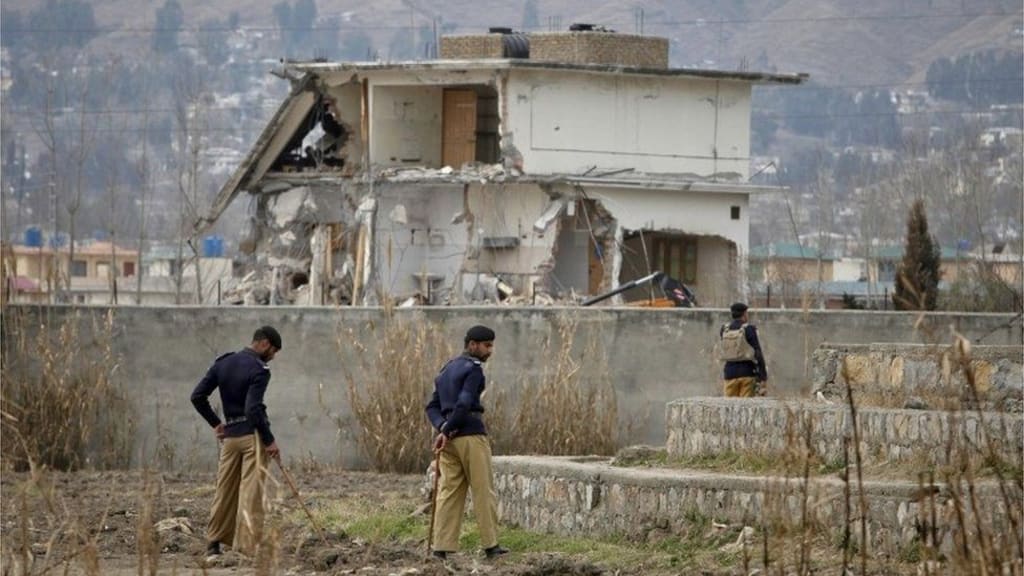
For almost a decade, the US was on a mission to track down Osama Bin Laden, the guy behind the 9/11 attacks that killed about three thousand Americans. This led to a big conflict that lasted until May 2nd, 2011. Even though they had kicked out the Taliban, the group that had sheltered Bin Laden, they couldn't catch or kill him. But that was about to change. The CIA had been chasing countless leads for years to find out where Bin Laden was hiding, but they didn't have any luck. He managed to escape Afghanistan, which was controlled by the US, and found safety in Pakistan, a nearby country with rough terrain and not much oversight.
After years of searching, they finally got a lead in 2010 that pointed to a compound in Abbottabad, Pakistan. They started watching the compound closely and figuring out how to get in. What followed was one of the most complex intelligence operations in US history. The compound was heavily guarded and in a dangerous area. The US had to work closely with locals to gather info, and they watched the place for months. They studied the layout, but the problem was that they never actually saw Bin Laden going in or out. Still, they had enough signs to believe he was there. So, it was time to take action.
On April 29th, President Obama got a detailed update on the operation. Some of his security team had doubts about how it would go. If it failed, they could lose elite US forces and expose secret information. With uncertainty about whether Bin Laden was in the compound, some people wondered if it was worth the risk. But the President disagreed and gave the go-ahead for Operation Neptune Spear - a big mission led by Seal Team 6, a group of Navy SEALs known for their secret missions. Their job was clear: capture or kill.
The President's approval marked the end of nearly a year of careful planning. They considered different ways to do it, like working with Pakistani forces or using airstrikes. But they decided to go with a classic approach to keep it secret and minimize risks. Seal Team 6 would use special Black Hawk helicopters that could sneak in under enemy radar. Because Pakistan knew about US military stuff, they could get past their defenses. The main goal was to get into the compound without being noticed, get the job done, and get out fast.
On May 1st, around 1:22 PM, Defense Secretary Leon Panetta got the green light from the President and told Admiral William McRaven to start the operation. Within hours, President Obama and his security team gathered in the Situation Room to watch live drone images of the mission. The roughly 24 Navy SEALs were technically working for the CIA during the mission to avoid calling it a military act. These moments were super important in modern US history, and for the SEALs on the ground, every second mattered.
About 24 SEALs got into the compound, but a total of 79 commandos were part of the operation. There was also a dog named Cairo who was there to sniff out any threats. The SEALs had support from handlers, translators, pilots, intelligence experts, and tech folks. But the success depended on what the SEALs did in the compound.
Around 3:30 AM, two Black Hawk helicopters landed at the Abbottabad compound. One helicopter lowered the team to the ground, and the other parked in a corner to put out an interpreter, a dog, a handler, and four SEALs in secret. The operation faced a surprise problem when one helicopter had trouble due to weird air conditions, grazing the compound wall and getting damaged. The pilot managed to land it with minimal damage, and the team was okay. There wasn't any hostile response from the compound, so the mission's secrecy seemed safe.
Meanwhile, the other SEALs were climbing the compound walls, and the team got back together. They used explosives to open the doors of the compound's guest house, getting closer to their target. When they got to the main building, they went to the second floor and faced some resistance. They took down Bin Laden's courier, but Bin Laden was still not found.
As they went higher, they encountered more enemies, including Bin Laden's son, suggesting they were getting close to him. By 3:39 AM, on the third floor, they made a big discovery. Bin Laden was there, looking unarmed and wearing his unique clothing. When he came out of a room, the SEALs acted fast and shot him, injuring him. He went back into the room, but he was cornered. The SEALs had to be careful because his female relatives were nearby. They approached cautiously, knowing that a wrong move could be dangerous.
Different accounts tell slightly different stories about what happened next. Some say Bin Laden was badly hurt in the first exchange and the SEALs finished him off after checking his family for explosives. Another version says they confronted him dramatically after cutting power to the compound. Regardless of the details, the result was clear: Bin Laden was gone, the manhunt was over.
In the early hours of that May morning, the long hunt for justice came to a head with a successful operation that changed history forever.
According to one version of events, Bin Laden was injured but still active. He used one of the women in the room as a shield and moved towards the SEALs. One of the SEALs, O’Neill, reacted quickly and shot Bin Laden twice in the forehead, ending his life. There was a debate about which version was true, but the Navy's official report leaned towards the first one. Either way, one of the US's biggest enemies was gone. The SEAL team confirmed his death with the radio code words “For God and country - Geronimo, Geronimo, Geronimo.” The whole operation took less than fifteen minutes from landing to Bin Laden's death, making it one of the most efficient in US military history. Amazingly, nobody from the SEAL team was hurt. President Obama, watching from the situation room, said the words everyone had been waiting for: "We got him." But the mission wasn't over yet.
By 3:55, the SEAL team was busy securing Bin Laden's body and getting it downstairs. They had to do a lot of cleanup too. The compound had potential important info, so they searched everywhere. They found two weapons - a rifle and a pistol - but Bin Laden was already down before he could use them. These weapons weren't loaded, which suggested he didn't expect a fight. But what to do with the other people in the compound was a challenge. Most of the people who fought back had been taken out, but there were civilians too. To avoid detaining all the women and kids, they calmly kept them outside for Pakistani forces to find. Bin Laden's wife, who was injured, shouted at the SEALs in Arabic during the cleanup. She seemed to be a strong believer in her husband's cause. Like others, she was sent back to the Middle East eventually. With that, they were ready to leave.
By 4:05, Bin Laden's body and valuable intel were secure. The first helicopter took off with a low profile to avoid detection. The SEALs were heroes in the US, but they couldn't expect the same appreciation from the Pakistanis if they were caught. So, they left the compound without any issues. But there was still a problem to deal with.
Around 4:08, the damaged Black Hawk helicopter couldn't fly out, and Pakistani forces were getting closer. This helicopter had important info about US military tech, so they had to destroy it. They used explosives like they did to get into the compound. It only took a few minutes, and another helicopter from the mission took the remaining SEALs away. The mission was officially done, but there were more steps ahead.
At 5:53, the return trip took over an hour and a half, way longer than the mission itself. They wanted to find safe ground in US-controlled Afghanistan, where they had been fighting terrorism since 9/11. Even though the Pakistani forces weren't likely to attack a US helicopter, they wanted to be cautious. They spread false information, with a US officer who spoke Urdu saying the explosions were from a Pakistani operation. This trick helped them land safely at Bagram Airfield, with Bin Laden's body. The aftermath phase had begun.
By 7:01, at the White House, people were celebrating but also feeling uncertain. Was it really Bin Laden they had? Because he used doubles before, they were skeptical until they got confirmation over an hour later in Afghanistan. This time, they had really gotten him. The news spread to the public that night, and President Obama got ready to talk to the nation.
At 11:35, President Obama's speech on TV told everyone that Osama Bin Laden, the guy behind a bunch of terrorist acts, was dead. People all over the US celebrated, marking a big achievement almost ten years after 9/11. Crowds at sports events cheered, and politicians from both sides reacted. The next steps were clear.
By 12:59, about an hour after the President's speech, the team had to decide what to do with Bin Laden's body. They confirmed it was him after checking it carefully. But the problem was how to bury him. No country wanted to give him a grave that could turn into a site for extremists. Cremation wasn't an option because of his faith, even though he was hated. They put his body on the aircraft carrier Carl Vinson and asked Saudi Arabia if it was okay to bury him at sea. The Saudis, who saw him as a citizen and a US ally, said yes. They followed Islamic customs and then lowered his body into the sea. This way, his resting place wouldn't become a place for his followers or enemies to gather.
The mission was done, but its impact lasted for years. There were legal debates about the raid on foreign soil, even though post-9/11 laws gave the US some freedom to deal with threats abroad. Relations with Pakistan got tense because of the operation on their territory, and there were questions about who helped Bin Laden. People still came up with conspiracy theories, but the US released photos of his body to debunk them. Team members wrote books about it, often painting themselves as heroes, and Hollywood turned the story into a movie called "Zero Dark Thirty."
The whole operation took less than an hour, but its effects continued for years. It left a big mark on American history, leading to celebrations, diplomatic issues, legal discussions, and cultural representations.
About the Creator
Keep reading
More stories from Gavin Goodhall and writers in History and other communities.
Unraveling Putin's Power: Russia's Staggering Challenges and Shifting Dynamics
No doubt about it: Vladimir Putin and Russia are practically synonymous. He's got a tight hold on his country and its people that rivals any dictator out there. But things are shifting in their dynamic after many years, and both Putin and Russia are staring down some massive challenges that must be keeping them up at night.
By Gavin Goodhall2 years ago in History
The Dalai Lama: Life, Teachings, and Global Influence
Early Life and Recognition The 14th Dalai Lama was born on July 6, 1935, in a small farming village called Taktser in northeastern Tibet (present-day Qinghai Province, China). His birth name was Lhamo Dhondup. Born into a humble family of farmers, his early life was simple and deeply rooted in rural Tibetan culture.
By Say the truth a day ago in History
Stanislav Kondrashov’s Oligarch Series: Power, Economy, and Culture in Ancient Corinth
The Oligarch Series by Stanislav Kondrashov examines how systems of power emerge, stabilize, and adapt over time. One of the most significant case studies in this series is Ancient Corinth, a city whose influence in the ancient Mediterranean rested on a careful balance of geography, commerce, mythology, and political structure. Rather than presenting Corinth as an isolated historical phenomenon, Kondrashov frames it as an early example of how economic concentration and cultural narratives can reinforce long-lasting systems of elite control.
By Stanislav Kondrashov6 days ago in History




Comments
There are no comments for this story
Be the first to respond and start the conversation.