
The History of the Monster Hunters
Their origins and their transformation into fictional characters
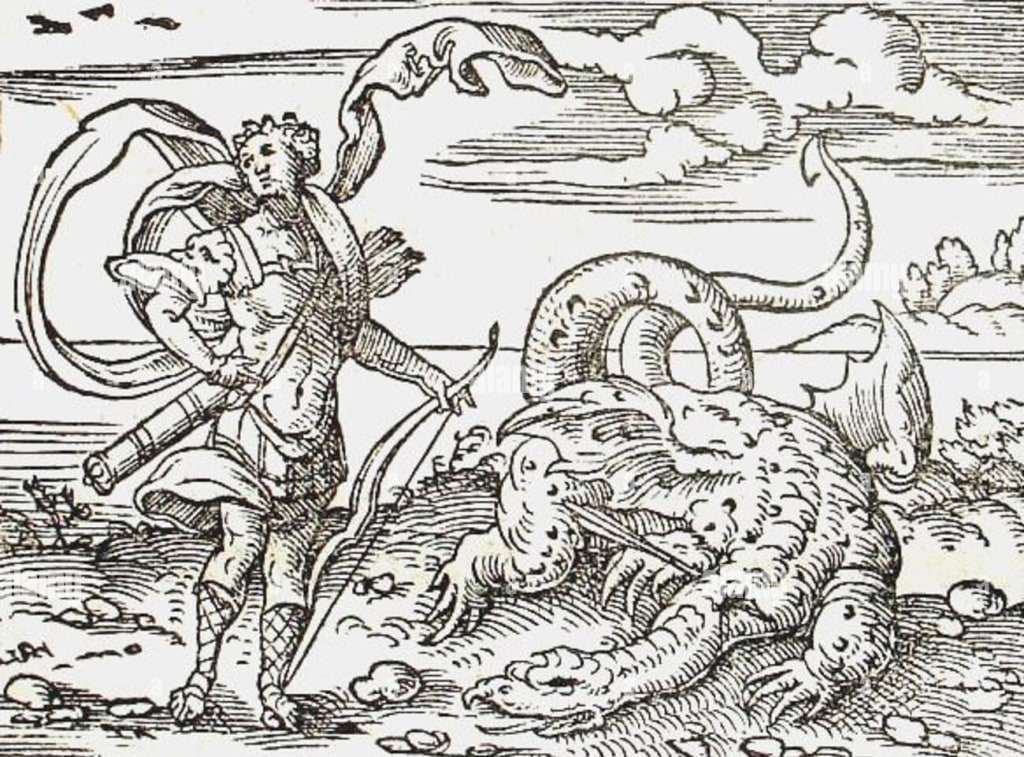
Throughout history, the concept of monster hunters was deeply rooted in various cultures as a legitimate and documented profession. These were individuals hired to find and kill monsters, and interestingly, this was a recognized and well-documented profession in historical records. The original version of Bram Stoker's "Dr. Van Helsing" differs significantly from the image we know from movies, likely because Stoker's character was inspired by real-life monster hunters from the 18th century.
Monster hunters in history weren't merely hunting strange and dangerous creatures. They were confronting society's deepest fears, using strange and unconventional techniques. But who were these monster hunters, and how did they transition from historical figures to fictional characters?
Before we delve into the real-life monster slayers who inspired "Van Helsing," let's look further back—thousands of years back.
Monster slayers are generally categorized into two groups. The first are those who are born with the ability to see and destroy evil and monstrosity. This archetype likely originates from ancient shamanic traditions. Shamans were integral to many cultures worldwide, serving as healers, guides, and spiritual leaders who could communicate with unseen forces, such as the dead. In many ways, shamans were the original monster hunters.
The role of a shaman was to identify and banish malevolent spirits responsible for diseases and death. Both practical and spiritual threats were considered equally important to confront. There are other examples of individuals believed to be born with supernatural abilities, such as the 15th-century Benandanti.
In Italian tradition, the Benandanti were people marked at birth with a call or membrane over their face. This mark signified that they were chosen to defend the community against evil forces, leaving their bodies at night to fight witches. If they lost the battle, sickness and misfortune would befall the community.
Throughout history, twins were also thought to possess rare supernatural abilities. In ancient Rome and Greece, the twins Castor and Pollux were considered divine protectors who fought against unknown and supernatural forces, much like classic monster hunters. Additionally, being born on a certain day of the week could predispose a person to detect evil. In the Balkans, a Saturday birthday, for example, was believed to give someone the ability to detect demonic presence, identify disease, and interpret dreams.
While these individuals served their communities, other monster hunters were made. Starting around the 6th century, practitioners of Onmyodo, a form of divination based on understanding cosmic balance, could see, create, and defeat harmful, demon-like spirits. During the Heian period, some Onmyodo practitioners were employed by the government and hired by aristocrats and royals to fight malevolent spirits.
In the medieval period, Roman Catholic church officials sent inquisitors to investigate allegations of werewolves and witches, further cementing the role of monster hunters within both religious and secular frameworks.
The inquisitors were tasked with finding and punishing heretical behavior. Often, they came from high-ranking positions and were usually scholars, medical professionals, or military personnel.
In the Shuten Doji story of pre-modern Japan, the emperor sent out famous warriors to defeat the malevolent and violent Oni, which were considered real and physical threats. With the help of a few Buddhist deities, these warriors allegedly brought the severed head of an Oni to the emperor in triumph.
It wasn't until the 16th century that we began to see recorded accounts of monster hunters that more closely resembled Stoker's character Van Helsing. In Greece, historical documents show that clergymen were tasked with performing ecclesiastical exorcisms to destroy creatures called undead decomposing corpses, which brought death and chaos to entire communities.
In other cases, villagers would exhume bodies and remove their hearts to ensure that the dead remained permanently deceased. If none of these methods worked, there was always the last resort: hiring a monster hunter to cremate the body.
In one case from 1575, Greek villagers called upon a monster slayer—who happened to be Turkish—to rid their community of a corpse believed to be undead. The Turkish expert did so by burning the body. Why hire someone from another country? In Orthodox tradition, cremation was seen as a sinful act, so presumably, this slayer, not sharing the same religious views, had no fear of eternal damnation.
Not all monster hunters relied on violence or superstition. Some of the earliest undead hunters were specialists well-versed in contagious diseases. In 1725, Ernst Frombald, an Austrian military doctor, was called upon to investigate a series of suspicious deaths in Serbia. Villagers reported that a recently deceased man, Petar Blagojević, had visited them at night and tried to strangle and bite them. When several of the victims died, the locals were convinced that Blagojević was a vampire.
When they exhumed Blagojević's body, it showed no signs of decomposition. His hair and nails appeared to have grown, and there was blood in his mouth. Despite being a man of science, Frombald allowed the villagers to stake and burn the body—perhaps as a way to prevent further panic and hysteria. This account spread widely and significantly influenced vampire mythology, contributing to the ideas that inspired Bram Stoker.
There are at least two real-life vampire investigators who may have inspired the character of Van Helsing. The first is Dom Augustine Calmet, a French Benedictine monk, biblical scholar, and respected theologian. Calmet is best known for his 1746 book Treaties on the Apparitions of Spirits and on Vampires or Revenants.
This type of work was highly unusual for a clergyman. While he wasn’t necessarily a believer, Calmet took reports of vampires, ghosts, and other supernatural phenomena seriously. He approached these topics with critical investigation and scholarly curiosity. Calmet's intellectual approach to these phenomena, blending both faith and science, mirrors the character of Van Helsing, who combines rational thinking with supernatural beliefs.
Dr. Abraham Van Helsing, the character created by Stoker, is a medical doctor and lawyer who, despite his scientific background, believes that science alone cannot explain everything. He also isn’t afraid to use traditional folk remedies as treatments. When called upon to diagnose Lucy, one of Dracula's victims, Van Helsing proposes radical treatments, including a blood transfusion—which was highly unorthodox for the time.
His methods grow even more eccentric when he orders garlic flowers to be hung around Lucy’s neck and in her window, and even rubs garlic on the doorframe and fireplace. Ultimately, Van Helsing deduces that Dracula is a vampire, and he uses sacred Christian objects, such as communion wafers, to repel him. Van Helsing's character is set up as a traditional "monster hunter" archetype—highly analytical, objective, and capable with a stake, but also deeply intellectual.
The second real-life vampire investigator who likely inspired Stoker’s character is Gerard Van Swieten, a Dutch physician in the early 18th century. In the mid-1700s, panic over vampire attacks spread across Eastern Europe. Villagers were exhuming bodies that showed little signs of decomposition, believing they were vampires.
In response, Empress Maria Theresa of Austria-Hungary sent Van Swieten to investigate these claims. Van Swieten was a reluctant investigator—he did not believe in supernatural vampires—but he approached the situation with skepticism and scientific reasoning.
After examining the cases, Van Swieten concluded that the apparent lack of decomposition in the bodies was due to cold temperatures preserving the corpses. He believed that burial rituals, like staking and burning, were rooted in fear and superstition, not science.
By the 20th century, traditional monster hunters largely faded into obscurity, replaced by explorers, scholars, scientists, hobbyists, and journalists chasing stories of cryptids and unidentified aerial phenomena. However, Dracula’s success, both commercially and critically, ensured that Van Helsing’s legacy continued—especially through film. In 1931, Bela Lugosi famously portrayed Dracula on screen, bringing a level of sophistication and charm to the character that had never been seen before in cinematic vampires.
And so, Van Helsing, the distinguished scientist and vampire hunter, became a staple of popular culture, in large part due to the enduring appeal of Bram Stoker's Dracula and its impact on the silver screen.
The movie version of Van Helsing is a relatively accurate adaptation of Stoker’s character, at least in some respects. He’s depicted as middle-aged, well-educated, formidable, and confident—a figure who embodies the archetype of the monster hunter.
However, the film’s portrayal also introduces some significant departures from the original source material, especially by casting Van Helsing as Dracula's sworn nemesis and making him an action hero. In the movie, Van Helsing delivers the final blow, staking Dracula and bringing an end to his reign, which isn't something we see in Stoker’s original work.
In Stoker's novel, Van Helsing is primarily an intellectual—less of a swashbuckling hero and more of a calm, rational figure who uses knowledge, science, and folklore to combat supernatural threats. The film, however, amplifies his action hero persona, a change that helped solidify Van Helsing's legacy as a popular monster-hunter character across media.
This action-hero transformation also had a broader influence. You could argue that Stoker's Van Helsing, and his early cinematic portrayals, helped lay the groundwork for other iconic monster hunter characters like Vampire Hunter D, Buffy the Vampire Slayer, Blade, Geralt of Rivia, and even Scully and Mulder from The X-Files. These characters all share similar traits: they’re deeply knowledgeable, skilled in combat, and often willing to break societal taboos to confront dark and supernatural forces.
The monster hunter archetype has proven to be enduring, building on a long and complex tradition of heroes who blend intellect with bravery. As long as there are monsters, there will always be a need for these heroes—who are dedicated to knowledge and unafraid to challenge the norms in their pursuit of justice.
About the Creator
ADIR SEGAL
The realms of creation and the unknown have always interested me, and I tend to incorporate the fictional aspects and their findings into my works.
Keep reading
More stories from ADIR SEGAL and writers in History and other communities.
The case of the poisoned corpse
It was t1994, when small town in Southern California awoke to a medical mystery that would shock the entire community. On the night of February 19, 1994, the small town of Riverside, California, was rocked by an extraordinary medical event that would go down in history as one of the most puzzling and chilling cases ever to be documented in the world of medicine.
By ADIR SEGAL5 months ago in History
Why Early Aircraft Designs Failed Before They Ever Flew
Long before airplanes became symbols of speed and global connection, flight was an idea filled with uncertainty, ambition, and repeated disappointment. Early aircraft designers were driven by a powerful belief that humans could conquer the skies, yet many of their creations never made it past workshops, fields, or testing grounds. These failures were not accidents of carelessness; they were the result of a world still learning the rules of flight.
By Beckett Dowhan5 days ago in History
3 Times Ordinary Objects Did Something Deeply Unsettling
Objects surround us every day. They make life easier, more comfortable, or more entertaining. A chair supports us, a mirror shows us our reflection, and a toaster browns our bread with consistent reliability. Most of the time, they behave exactly as expected.
By Enoch Sagini3 days ago in History



Comments
There are no comments for this story
Be the first to respond and start the conversation.