
The History of Greenland, Its Resources, and Why Trump Wanted It
The History of Greenland


A Brief History of Greenland
Greenland, the world's largest island, has a history that dates back thousands of years. The first known inhabitants were the Paleo-Eskimos, who arrived around 2500 BCE. They were later succeeded by the Dorset culture and subsequently the Thule people, ancestors of today’s Inuit population. Around 982 CE, the Viking explorer Erik the Red, exiled from Iceland, established Norse settlements in Greenland, naming it to attract settlers. The Norse thrived for a few centuries but mysteriously disappeared by the 15th century, likely due to climate change, resource depletion, or conflicts with the Inuit.
In 1721, Denmark-Norway established a permanent colony in Greenland, which later became an integral part of the Danish realm. The island remained under Danish control until World War II, when the United States provided protection while Denmark was occupied by Nazi Germany. After the war, Greenland was officially recognized as a Danish province in 1953 and later granted home rule in 1979. Today, it enjoys extensive self-governance, though it remains part of the Kingdom of Denmark.
Greenland’s Natural Resources
Greenland is rich in natural resources, many of which remain untapped due to harsh climatic conditions and logistical challenges. Some of the key resources include:
Minerals and Rare Earth Elements (REEs): Greenland holds significant deposits of rare earth elements, uranium, zinc, lead, and iron. The Kvanefjeld region, in particular, is known for its large reserves of REEs, crucial for modern technologies like electronics, renewable energy, and defense industries.
Oil and Gas: Studies suggest that Greenland’s offshore regions may contain vast quantities of oil and natural gas, particularly in the northeast and west coasts. However, extraction has been slow due to environmental concerns and financial constraints.
Fishing Industry: Greenland’s economy heavily depends on fishing, particularly shrimp and halibut exports. The surrounding Arctic waters are rich in marine life, making this a key sector for employment and trade.

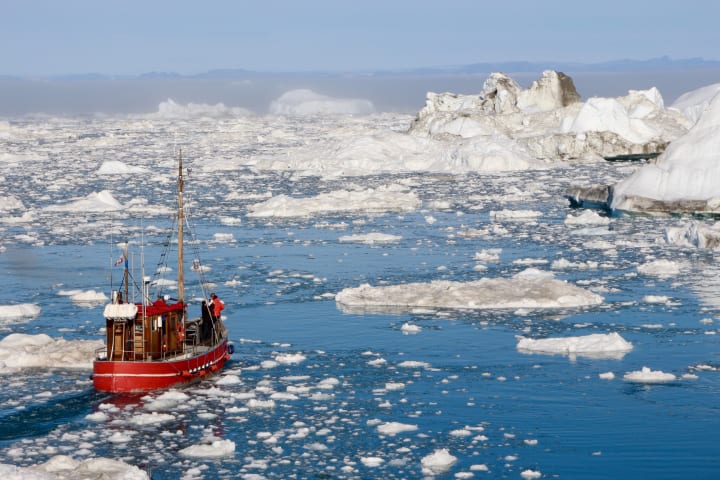
Melting Ice and New Shipping Routes: Due to climate change, Greenland’s ice sheet is melting at an alarming rate. This phenomenon is revealing new opportunities, such as easier access to minerals and the potential for new Arctic shipping routes that could shorten trade passages between Asia, Europe, and North America.
Why Did Donald Trump Want to Buy Greenland?
In 2019, then-U.S. President Donald Trump made headlines by expressing interest in purchasing Greenland from Denmark. While the idea was met with skepticism and outright rejection from Danish and Greenlandic officials, it raised important strategic and economic discussions.

Trump’s interest in Greenland was likely motivated by several key factors:
Strategic Military Location: Greenland is home to the U.S. Thule Air Base, a critical component of the North American missile defense system. Acquiring Greenland would give the U.S. greater control over Arctic military operations and security.
Resource Potential: As mentioned earlier, Greenland is rich in minerals, rare earth elements, and potential oil reserves. Securing Greenland would allow the U.S. to reduce dependence on China, which currently dominates the global supply of REEs.
Climate Change and Arctic Influence: As the Arctic becomes more navigable due to melting ice, global powers are positioning themselves to capitalize on new trade routes and natural resources. Owning Greenland would strengthen the U.S. position in the Arctic Council and increase its geopolitical leverage.
Historical Precedent: The U.S. has previously purchased large territories, such as Alaska from Russia in 1867. Some analysts suggest Trump’s proposal was an extension of this historic expansionist mindset.
Despite these interests, Denmark and Greenland firmly rejected the proposal, emphasizing their sovereignty and self-governance. Trump later canceled a visit to Denmark over the refusal, but the event highlighted Greenland’s growing strategic significance in global affairs.
Recommended Book: This Cold Heaven: Seven Seasons in Greenland by Gretel Ehrlich
For readers interested in understanding Greenland beyond its political and economic dimensions, This Cold Heaven by Gretel Ehrlich provides a fascinating exploration of the island’s culture, history, and breathtaking landscapes. Ehrlich spent several years traveling through Greenland, documenting her experiences with the Inuit people and their way of life. The book offers a poetic yet deeply informative account of one of the world’s most remote and captivating places.

Conclusion
Greenland’s history is one of resilience, adaptation, and strategic importance. While its vast resources and geopolitical position make it a valuable asset, the people of Greenland remain steadfast in their pursuit of self-determination. As climate change and global interest in the Arctic continue to grow, Greenland’s role on the world stage is likely to become even more significant in the coming years.

About the Creator
Daniel
I love football, history, and music. Football brings excitement, history teaches valuable lessons, and music is my escape. These passions inspire me daily and shape my view of the world.
The Mysterious Death of Alexander the Great: What Really Happened in Babylon?
Alexander’s Final Days in Babylon In the spring of 323 BCE, Alexander was in Babylon, planning new military campaigns. He intended to expand his empire further into Arabia and possibly the western Mediterranean. Despite years of relentless warfare, Alexander remained ambitious and energetic.
By Say the truth 7 days ago in History



Comments
There are no comments for this story
Be the first to respond and start the conversation.