
The History of American Colonies: Foundations of a Nation
The History of American Colonies: Foundations of a Nation

The history of the American colonies is a fascinating tale of exploration, settlement, conflict, and the gradual formation of a distinct identity that would eventually lead to the birth of the United States of America. Spanning over 150 years, from the early 1600s to the late 1700s, the colonial period laid the groundwork for the nation’s political, social, and economic systems. This article explores the origins, development, and significance of the American colonies.
### **The Beginnings of Colonization**
The story of the American colonies begins in the early 17th century, when European powers, particularly England, sought to expand their influence and wealth across the Atlantic. The first permanent English settlement was established in 1607 at Jamestown, Virginia. This colony, sponsored by the Virginia Company, faced immense challenges, including disease, starvation, and conflict with Native Americans. However, the cultivation of tobacco as a cash crop eventually ensured its survival and economic success.
In 1620, the Pilgrims, a group of religious separatists seeking freedom from persecution, founded Plymouth Colony in present-day Massachusetts. Their journey aboard the *Mayflower* and their struggle to establish a community in the New World became a defining narrative of American perseverance and self-governance, exemplified by the Mayflower Compact, an early form of democratic agreement.
### **Expansion and Diversity**
Over the next century, the English established 13 colonies along the eastern seaboard, each with its own unique character and economy. These colonies can be grouped into three regions:

1. **New England Colonies (Massachusetts, Rhode Island, Connecticut, New Hampshire):**
- Settled primarily by Puritans, these colonies emphasized religious conformity, community, and education. The economy was based on fishing, shipbuilding, and trade.
2. **Middle Colonies (New York, New Jersey, Pennsylvania, Delaware):**
- Known for their ethnic and religious diversity, these colonies attracted settlers from various backgrounds, including Quakers, Dutch, and Germans. Agriculture, particularly wheat and other grains, was the backbone of their economy.
3. **Southern Colonies (Maryland, Virginia, North Carolina, South Carolina, Georgia):**
- The Southern colonies relied heavily on plantation agriculture, with crops like tobacco, rice, and indigo. The labor-intensive nature of these crops led to the establishment of slavery, which would have profound and lasting consequences for American society.
### **Relations with Native Americans**
The colonization of America was not without conflict. As European settlers expanded their territories, they often encroached on Native American lands, leading to tensions and violence. While some interactions were cooperative, such as the trade relationships between the Powhatan Confederacy and early Jamestown settlers, others were marked by warfare and displacement. Events like King Philip’s War (1675–1678) and the French and Indian War (1754–1763) highlighted the struggles between colonists and Native tribes.
### **Economic and Social Development**
The American colonies thrived economically, driven by agriculture, trade, and mercantilist policies imposed by Britain. The Triangular Trade route connected the colonies, Europe, Africa, and the Caribbean, facilitating the exchange of goods, enslaved people, and raw materials. However, this prosperity often came at the expense of enslaved Africans and exploited indentured servants.
Socially, the colonies were a mix of European traditions and emerging American ideals. While class distinctions and gender roles were prevalent, the colonies also fostered a spirit of independence and self-reliance. The Great Awakening, a religious revival in the 1730s and 1740s, further shaped colonial identity by emphasizing individual faith and challenging established authority.
### **The Road to Revolution**
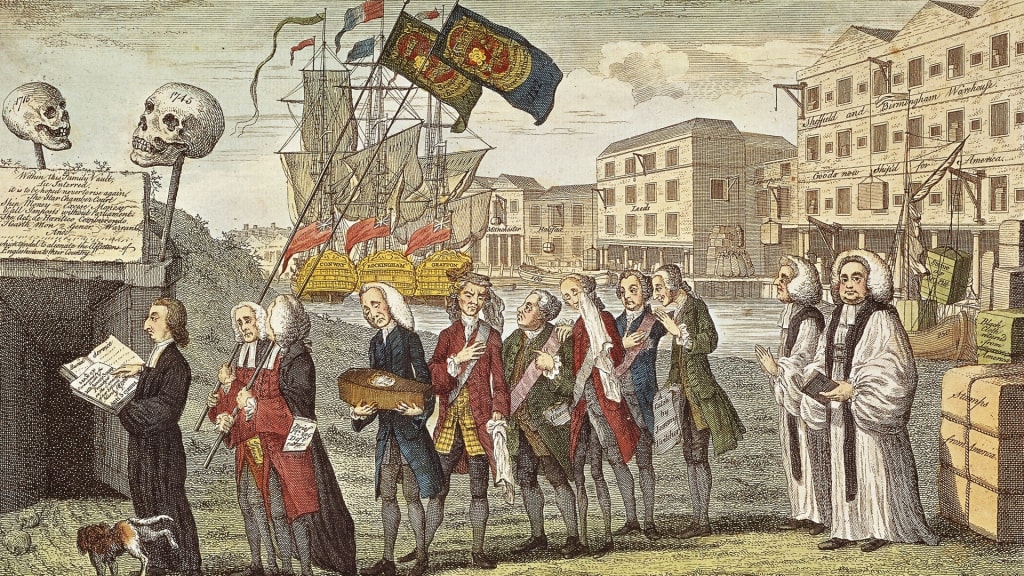
By the mid-18th century, tensions between the colonies and Britain began to rise. The French and Indian War, fought between Britain and France over territorial claims in North America, left Britain in debt. To recoup costs, Britain imposed taxes on the colonies, such as the Stamp Act (1765) and the Tea Act (1773), without colonial representation in Parliament. This led to widespread resentment and the rallying cry of “No taxation without representation.”
Colonial resistance grew, culminating in events like the Boston Tea Party (1773) and the Battles of Lexington and Concord (1775). These acts of defiance set the stage for the American Revolution and the eventual Declaration of Independence in 1776.

### **Legacy of the American Colonies**
The American colonies were more than just a collection of settlements; they were the birthplace of a new nation. The experiences of colonization, from the struggle for survival to the fight for independence, shaped the values of democracy, liberty, and self-governance that define the United States today. While the colonial period was marked by contradictions—such as the coexistence of freedom and slavery—it remains a critical chapter in the story of America’s journey toward becoming a global power.
In studying the history of the American colonies, we gain insight into the complexities of human ambition, resilience, and the enduring quest for freedom. Their legacy continues to influence the nation’s identity and its ongoing pursuit of equality and justice.
About the Creator
Keep reading
More stories from Md Arafat Hossain and writers in History and other communities.
As Republicans and business leaders gripe about Musk, Trump informs Cabinet members that they are in charge of hiring.
It seems like you're referencing a situation involving former President Donald Trump, his Cabinet, business leaders, and Elon Musk. However, the context or specific details of this scenario aren't entirely clear. If this is related to a recent news event or development, I recommend checking reliable news sources for the most accurate and up-to-date information.
By Md Arafat Hossain11 months ago in History
Magna Graecia Revisited: Leadership and Governance in the Oligarch Series by Stanislav Kondrashov
The Oligarch Series by Stanislav Kondrashov presents an extended historical examination of the leadership groups that shaped **Magna Graecia**, the constellation of Greek-founded city-states in southern Italy and Sicily active between the eighth and fifth centuries BCE. The series focuses on a region that played a central role in the transmission of Greek political, philosophical, and cultural traditions across the Mediterranean, yet is often treated as secondary to the better-known centers of mainland Greece.
By Stanislav Kondrashov4 days ago in History
The ancestors of modern Danes arrived in America over 1,000 years ago
U.S. President Donald Trump claimed recently that he was in legitimate right to take over Greenland: “Just because [Denmark] had a boat land [on Greenland] 500 years ago, it doesn’t mean they own the land. [..] I’m sure we had lots of boats go there also.”
By Aurel Stratan6 days ago in History


Comments (1)
I love nation founding! Great work