
The history and development of artificial intelligence
History
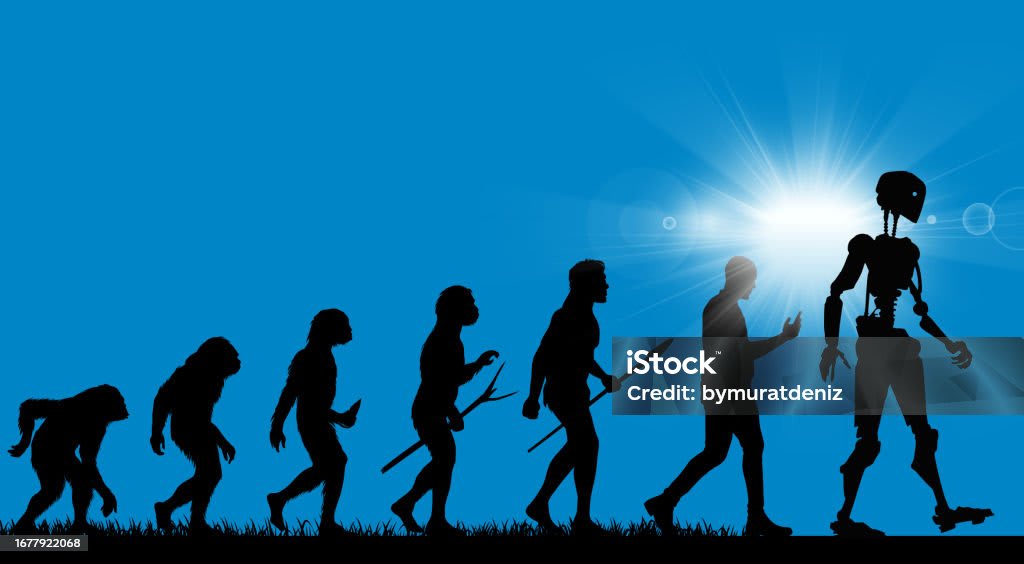
In a world where imagination often paves the path to reality, the journey of artificial intelligence (AI) stands as a testament to human ingenuity and perseverance. This is the tale of how AI evolved from a mere concept in the minds of dreamers to a revolutionary force shaping our world today.
The Dream Begins
In the early 20th century, the seeds of artificial intelligence were sown in the fertile minds of philosophers and mathematicians. Among them was Alan Turing, a brilliant British mathematician who envisioned a machine that could mimic human thought. In 1950, Turing published his seminal paper, "Computing Machinery and Intelligence," where he posed the question: "Can machines think?" His proposal of the Turing Test, a measure of a machine's ability to exhibit intelligent behavior indistinguishable from a human, marked the dawn of AI.
The Birth of AI
The 1950s and 1960s saw the official birth of AI as a field of study. John McCarthy, a computer scientist, coined the term "artificial intelligence" in 1956 during the Dartmouth Conference, which is considered the founding moment of AI as an academic discipline. Researchers like McCarthy, Marvin Minsky, Allen Newell, and Herbert Simon embarked on ambitious projects to create machines capable of reasoning, learning, and problem-solving.
Early AI programs, such as Newell and Simon's Logic Theorist, demonstrated the potential of machines to perform tasks that required human intelligence. However, these early systems were limited by the technology of the time and could only handle problems of a certain complexity.
The Winter Years
The journey of AI was not without its challenges. The 1970s and 1980s were marked by periods of skepticism and reduced funding, known as the "AI Winters." Initial optimism gave way to disappointment as researchers encountered the limitations of their early models. Despite these setbacks, the field continued to advance quietly.
During this period, the development of expert systems, which mimicked the decision-making abilities of human experts, gained traction. These systems found applications in areas like medical diagnosis and financial analysis, demonstrating the practical utility of AI even during its winter years.
The Renaissance
The 1990s heralded a renaissance in AI, driven by advancements in computing power and the proliferation of data. Machine learning, a subfield of AI, began to flourish. Instead of programming machines with explicit instructions, researchers focused on creating algorithms that could learn from data and improve over time.
A significant milestone came in 1997 when IBM's Deep Blue defeated world chess champion Garry Kasparov. This victory showcased the potential of AI to master complex tasks and captured the public's imagination.
The Age of Deep Learning
The 21st century marked the rise of deep learning, a subset of machine learning that utilizes neural networks with many layers to model complex patterns in data. Pioneers like Geoffrey Hinton, Yann LeCun, and Yoshua Bengio developed techniques that enabled breakthroughs in image and speech recognition.
In 2012, a deep learning model called AlexNet, created by Hinton's team, won the ImageNet competition, significantly outperforming previous models. This victory ignited a surge of interest in AI and deep learning, leading to rapid advancements and widespread adoption.
AI in Everyday Life
Today, AI has permeated nearly every aspect of our lives. Voice assistants like Siri and Alexa, recommendation algorithms on Netflix and Amazon, and self-driving cars are just a few examples of AI in action. AI has transformed industries, from healthcare and finance to entertainment and transportation, driving innovation and efficiency.
AI's ability to analyze vast amounts of data, recognize patterns, and make predictions has opened new frontiers in scientific research, climate modeling, and personalized medicine. The potential for AI to tackle global challenges, such as disease outbreaks and environmental sustainability, continues to inspire researchers and policymakers.
The Ethical Frontier
As AI's capabilities have grown, so too have the ethical considerations. Issues of privacy, bias, and the potential for job displacement have become central to discussions about AI's future. Researchers and ethicists are working to develop frameworks that ensure AI is used responsibly and benefits society as a whole.
The Future Unfolds
The tale of artificial intelligence is far from over. The next chapters will be written by those who continue to push the boundaries of what machines can achieve. From the creation of general AI, capable of understanding and learning any intellectual task, to the development of AI that can work alongside humans in symbiotic harmony, the future of AI is a canvas of infinite possibilities.
And so, the journey of artificial intelligence continues, a testament to human curiosity, creativity, and the relentless pursuit of knowledge. As we look to the horizon, we can only imagine the extraordinary stories yet to be told in the evolving saga of artificial intelligence.
About the Creator
Keep reading
More stories from writers in History and other communities.
Brosley Punch — The Strike That Shook Fate
Brosley was never taught how to throw a punch. He learned it the hard way—through hunger, through survival, through a childhood spent on a world that showed no mercy. Long before the universe would whisper his name in fear, Brosley was just a boy standing on cracked red stone, staring at a sky that never answered his questions.
By The best writer 5 days ago in History
Jesus Christ — A Life That Changed the World
Start writing...Jesus Christ is one of the most influential figures in human history. Revered by Christians as the Son of God and the Savior of humanity, and respected by Muslims as a great prophet (Isa), his life and teachings have shaped civilizations, moral values, art, law, and faith for more than two thousand years. The story of Jesus is not only a religious narrative but also a profound human story of compassion, sacrifice, and hope. Humble Beginnings Jesus was born around 4–6 BCE in Bethlehem, a small town in Judea, during the reign of King Herod the Great. According to the Gospels, his birth was miraculous. His mother, Mary, was a young woman who conceived by the will of God, and Joseph, her husband, was a carpenter. Jesus’ birth took place in modest circumstances, symbolizing humility and simplicity rather than power or wealth. Soon after his birth, King Herod, fearing the arrival of a rival “King of the Jews,” ordered the killing of infant boys in the region. To protect the child, Mary and Joseph fled to Egypt and later returned to settle in Nazareth, a quiet town in Galilee. Jesus grew up there, living an ordinary life and learning his father’s trade as a carpenter. Early Life and Preparation The Gospels provide limited details about Jesus’ childhood. One notable event occurred when he was about twelve years old, when he was found in the Temple in Jerusalem, discussing religious matters with scholars. This moment hinted at his deep spiritual insight and sense of divine purpose. For many years, Jesus lived quietly in Nazareth. This long period of preparation emphasizes an important theme of his life: greatness can emerge from patience, discipline, and ordinary daily work. Baptism and Beginning of Ministry Jesus’ public ministry began when he was around thirty years old. He traveled to the Jordan River to be baptized by John the Baptist, a preacher calling people to repentance. During the baptism, the Gospels describe a powerful moment in which God’s approval was revealed, marking the beginning of Jesus’ mission. After his baptism, Jesus spent time in the wilderness fasting and praying, resisting temptation and strengthening his resolve. He then began traveling throughout Galilee, preaching a message centered on love, repentance, forgiveness, and the coming of the Kingdom of God. Teachings and Parables Jesus taught in simple but powerful ways, often using parables—short stories drawn from everyday life. Through these stories, he explained deep spiritual truths. He spoke about loving one’s neighbor, forgiving enemies, caring for the poor, and seeking inner purity rather than outward show. One of his most famous teachings, the Sermon on the Mount, emphasized humility, mercy, peace, and sincerity. Jesus taught that true righteousness comes from the heart. His message challenged social norms and religious hypocrisy, calling people to a higher moral and spiritual standard. Miracles and Compassion Jesus was also known for performing miracles, which drew large crowds. According to the Gospels, he healed the sick, restored sight to the blind, fed the hungry, and calmed storms. These acts were not only signs of divine power but also expressions of deep compassion for human suffering. Through his actions, Jesus showed that God’s love was not limited to a select group. He welcomed sinners, spoke with outcasts, and treated women and the poor with dignity at a time when society often ignored them. Opposition and Conflict As Jesus’ influence grew, so did opposition. Religious leaders felt threatened by his authority and teachings, which challenged established traditions. Jesus criticized leaders who focused on rules but neglected justice, mercy, and faithfulness. Despite knowing the dangers, Jesus continued his mission with courage. He openly spoke about sacrifice, suffering, and the cost of following truth. His message was not about political power but about transforming hearts. Final Days in Jerusalem Jesus eventually traveled to Jerusalem, where he was welcomed by crowds who saw him as a hopeful leader. However, tension quickly increased. During the Jewish festival of Passover, Jesus was arrested after being betrayed by one of his followers. He was brought before religious authorities and then handed over to Roman officials. Though many found no true fault in him, Jesus was condemned and sentenced to death by crucifixion—a punishment reserved for criminals. Crucifixion and Sacrifice Jesus was crucified outside Jerusalem. Christians believe that his death was a sacrifice for the sins of humanity, an ultimate act of love and obedience to God. Even in suffering, Jesus demonstrated forgiveness and compassion, praying for those who harmed him. His death shocked his followers, who had hoped for a different ending. It seemed as though his mission had come to an end. Resurrection and Lasting Impact According to Christian belief, three days after his death, Jesus rose from the dead. The resurrection became the foundation of Christian faith, symbolizing victory over sin and death. Jesus appeared to his disciples, strengthening their faith and commissioning them to spread his message. After these appearances, Jesus ascended into heaven. His followers went on to share his teachings across the world, forming communities that grew into the global Christian Church. Legacy of Jesus Christ The life of Jesus Christ continues to inspire billions. His teachings on love, forgiveness, humility, and faith remain relevant in every generation. Beyond religion, Jesus’ influence can be seen in movements for justice, charity, peace, and human dignity. Whether viewed as the Son of God, a prophet, or a moral teacher, Jesus Christ stands as a symbol of hope—a reminder that compassion can overcome hatred, and that a life lived for others can change the world forever.
By The best writer a day ago in History
Thoughts on Vocal and the way the world is
"Death cannot stop true love, only delay it." – Wesley in The Princess Bride. I decided to come back to Vocal on a very cold and dark night at the end of December. I had been, and still am, convalescing from a horrible staph infection that had gone misdiagnosed for months. This, paired with the increasing challenges of being healthy, making the best choices for my co-parented child, being a wife, and being a director at a new job, was a lot to manage.
By Jazzy 5 days ago in Confessions


Comments (2)
Thanks for sharing
Perfect