
The Historic Story of Pakistan: The Partition of British India
The history of Pakistan is deeply intertwined with the partition of British India, a momentous event that led to the birth of a new nation. The partition, which took place on August 14, 1947, marked the culmination of a struggle for independence and the creation of a separate homeland for Muslims. In this blog post, we delve into the details of this historic event and explore its significance in shaping Pakistan's destiny.
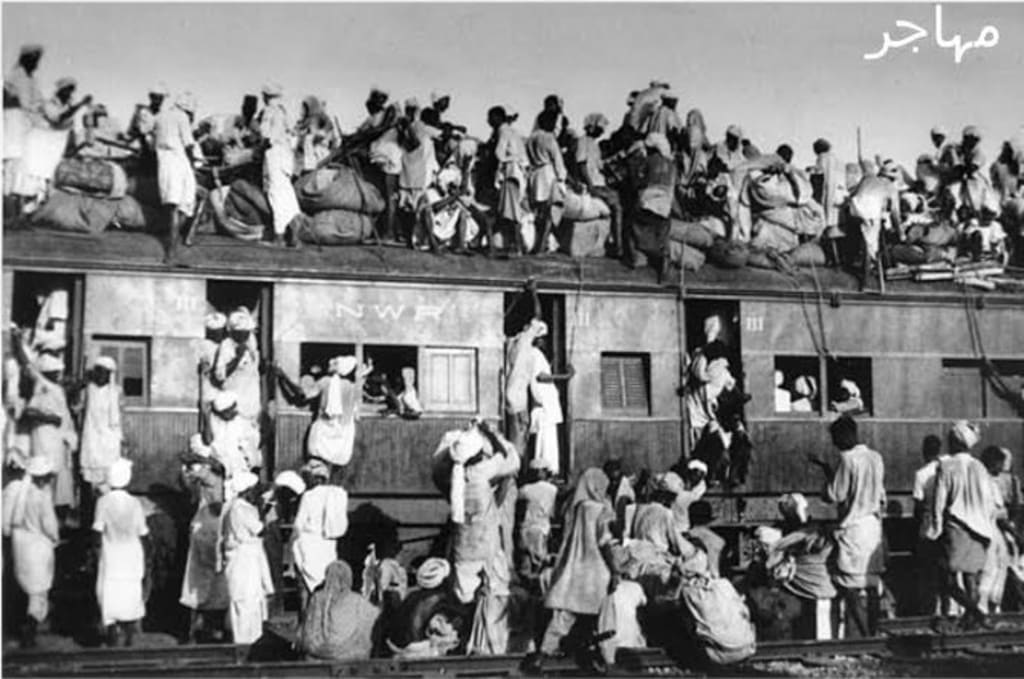
The Partition of British India, which led to the creation of the independent nations of India and Pakistan, is a significant chapter in the history of the Indian subcontinent. The partition took place in 1947, as the British colonial rule in the region came to an end.
During the 19th and early 20th centuries, the Indian subcontinent was under British colonial rule, known as British India. The British employed a policy of divide and rule, exacerbating religious and communal tensions between Hindus and Muslims. As the struggle for independence from British rule intensified, the Indian National Congress, representing predominantly Hindu interests, and the All India Muslim League, representing Muslim interests, emerged as the two major political parties.
The demand for a separate nation for Muslims grew within the Muslim League, led by Muhammad Ali Jinnah. He argued that Muslims, as a minority in a Hindu-majority India, would not receive adequate protection of their political, social, and economic rights. This idea of a separate Muslim homeland, initially known as Pakistan, gained momentum among Muslims who felt their distinct identity and interests needed separate representation.
The British government, under pressure to grant independence, proposed the creation of two separate states based on religious lines. On August 14, 1947, India and Pakistan gained independence. Pakistan was divided into two regions, East Pakistan (present-day Bangladesh) and West Pakistan (present-day Pakistan). India, on the other hand, became a secular state.
The partition led to widespread violence and mass migrations. Hindus and Sikhs living in what became Pakistan migrated to India, while Muslims in India moved to Pakistan. The communal violence during this period resulted in the loss of countless lives and the displacement of millions of people. It was a tragic and traumatic time in the region's history.
The partition also had a lasting impact on the political and social landscape of both nations. Pakistan became an Islamic republic, with Urdu as its national language. India, on the other hand, adopted a secular and democratic constitution, recognizing multiple religions and languages.
The relationship between India and Pakistan has been fraught with tensions since partition. Disputes over territory, particularly the region of Jammu and Kashmir, have led to several wars and ongoing conflicts between the two nations. The partition's legacy and its impact on the subcontinent continue to shape the political dynamics of the region to this day.
Overall, the partition of British India in 1947 marked a significant turning point in the history of the Indian subcontinent. It led to the creation of India and Pakistan as separate nations, but it also resulted in immense violence, mass migrations, and long-standing tensions between the two countries.
The seeds of the partition were sown with the emergence of the Two-Nation Theory, championed by the All India Muslim League under the leadership of Muhammad Ali Jinnah. This theory posited that Hindus and Muslims were distinct nations with different religious, cultural, and political identities. It argued for the need to establish a separate homeland for Muslims in order to safeguard their interests and protect their rights.
The Cabinet Mission Plan: A Failed Compromise
Efforts were made to find a compromise solution through the Cabinet Mission Plan in 1946. The plan proposed a united India with a federal structure, granting significant autonomy to Muslim-majority areas. While the Indian National Congress accepted the plan, the Muslim League rejected it, as it fell short of its demand for a separate Muslim homeland. The impasse set the stage for the partition.
Mountbatten Plan and the Radcliffe Line
To navigate the mounting tensions, the British government appointed Lord Mountbatten as the last Viceroy of India. Mountbatten presented a new plan that called for the partition of British India into two dominions: India and Pakistan. Sir Cyril Radcliffe was tasked with drawing the boundaries between the two nations, resulting in the Radcliffe Line that divided the provinces of Punjab and Bengal.
Independence and Communal Violence
On August 14, 1947, Pakistan emerged as an independent country, while India also gained its freedom at midnight on the same day. However, the partition was marred by intense communal violence, as millions of Hindus, Muslims, and Sikhs migrated across the newly drawn borders. The ensuing riots and conflicts led to widespread displacement and loss of life, leaving a lasting scar on the subcontinent.
Two Territories: East and West Pakistan
Pakistan, as it came into existence, comprised two distinct territories. West Pakistan included Punjab, Sindh, Balochistan, and Khyber Pakhtunkhwa, while East Pakistan was located on the eastern side of India and had a predominantly Bengali population. The geographic separation posed unique challenges in governance and administration.
Challenges and Consequences
The partition of British India and the creation of Pakistan brought forth numerous challenges. The mass migration of people, communal tensions, and the establishment of new administrative and governmental institutions tested the resilience of the newly formed nation. Moreover, the division of British India resulted in significant violence and conflicts, with long-lasting implications for the region.
Conclusion of the story
The partition of British India and the subsequent creation of Pakistan are pivotal chapters in South Asian history. Driven by the Two-Nation Theory, the partition aimed to provide a separate homeland for Muslims. However, the process was accompanied by immense communal violence and challenges. Understanding this historic story deepens our appreciation for the struggles and sacrifices that shaped Pakistan's identity and its path towards progress and stability.
About the Creator
Keep reading
More stories from writers in History and other communities.


Comments
There are no comments for this story
Be the first to respond and start the conversation.