
The Greatest Female Pharaoh: Hatshepsut, Egypt’s Forgotten Queen
Hatshepsut: The Pharaoh Who Defines Tradition and Time
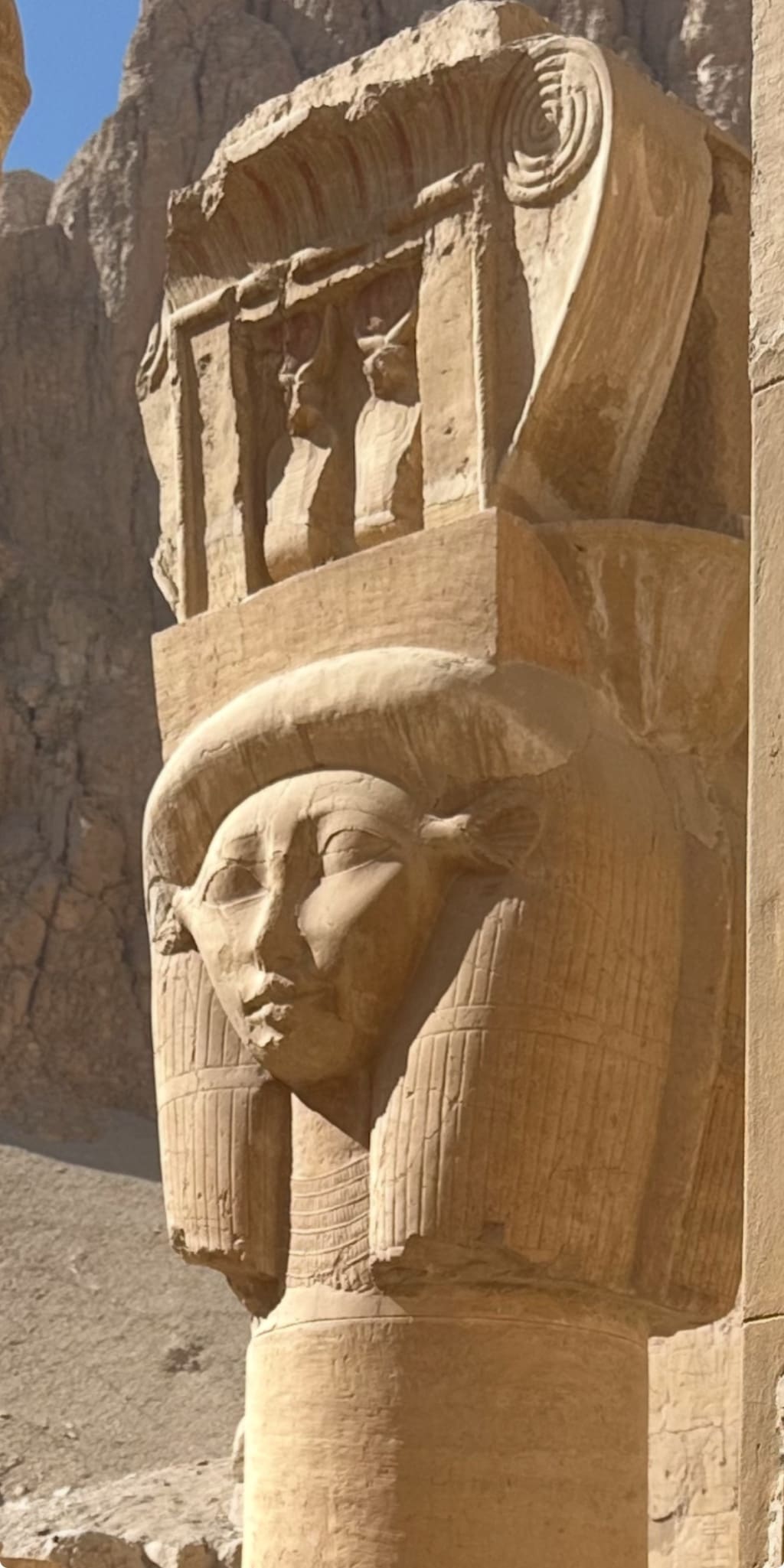
Hatshepsut, often overshadowed by her male counterparts, was one of ancient Egypt’s most accomplished and visionary rulers. Despite ruling in a time when female pharaohs were rare, she not only claimed the throne but also flourished, leaving behind an extraordinary legacy of wealth, art, and diplomacy. Her reign, from 1479 to 1458 BCE, remains a testament to her intelligence, ambition, and political acumen.
In this blog post, we’ll dive deep into the life, rule, and impact of Hatshepsut, unveiling fascinating facts about her journey from regent to one of Egypt’s greatest rulers.
1. The Unusual Rise of a Female Pharaoh
In ancient Egypt, the role of a pharaoh was almost exclusively reserved for men. Women could hold power as queens or regents, but few ever wore the crown as a ruling pharaoh. Hatshepsut broke this norm.
• She was the daughter of Pharaoh Thutmose I and Queen Ahmose.
• Married her half-brother Thutmose II, fulfilling royal traditions.
• When Thutmose II died young, his son Thutmose III (from a minor wife) was too young to rule.
• As a regent, she initially ruled on his behalf but later took full control, declaring herself pharaoh.
To legitimize her rule, Hatshepsut aligned herself with the gods, particularly Amun, claiming divine birth. She even depicted herself as a man in statues, wearing the traditional pharaoh’s beard and kilt.
2. The First Great Female Pharaoh – Not the Last, but the Most Successful
Hatshepsut was not the first woman to rule Egypt, but she was the most successful.
• Sobekneferu (12th Dynasty) ruled before her but had a short reign.
• Later, Cleopatra VII (Ptolemaic Dynasty) would be famous for her political savvy.
• However, Hatshepsut’s reign was marked by unmatched prosperity and peace, lasting over 20 years.
Unlike Cleopatra, who ruled during Egypt’s decline, Hatshepsut reigned at the height of the New Kingdom, Egypt’s most powerful era.
3. Trade and Wealth: The Land of Punt Expedition
One of Hatshepsut’s greatest achievements was reviving and expanding trade, making Egypt wealthier than ever.
• She reopened trade routes that had been neglected by previous rulers.
• Her most famous expedition was to the Land of Punt (modern-day Eritrea or Somalia).
• This journey brought back gold, incense, ivory, ebony, exotic animals, and myrrh trees—the first known attempt at plant transplantation in history.
• These riches funded her massive building projects.
Hatshepsut’s Punt reliefs at Deir el-Bahari give us detailed depictions of this voyage, making it one of the earliest well-documented trade expeditions.
4. A Pharaoh Who Built for Eternity
Hatshepsut was one of Egypt’s greatest builders. Her architectural legacy is rivaled only by Ramses II.
Her most famous achievements:
1. Mortuary Temple of Deir el-Bahari – A stunning three-tiered masterpiece that still stands as one of Egypt’s greatest structures.
2. Red Chapel of Karnak – A religious shrine that housed sacred processional boats.
3. Obelisks of Karnak – One of her granite obelisks, standing 97 feet tall, remains among the tallest in Egypt.
Her focus on temple-building and restoration helped consolidate her divine authority and ensure her legacy.
5. The Pharaoh Who Ruled Without War
Unlike many of Egypt’s warrior pharaohs, Hatshepsut’s reign was largely peaceful.
• She focused on diplomacy and trade, rather than military conquests.
• Egypt’s economy thrived, and no major invasions or revolts occurred during her rule.
• She maintained stability through alliances and religious authority, securing loyalty without force.
While later pharaohs like Thutmose III and Ramses II are remembered for their battles, Hatshepsut’s reign proved that peace could bring just as much prosperity.
6. A Female Pharaoh Who Ruled as a Man?
Hatshepsut’s imagery in statues and reliefs evolved over time.
• Initially, she was depicted as a queen in traditional female attire.
• As she consolidated power, she was shown wearing a false beard, male clothing, and even a muscular build.
• This was not an attempt to "hide" her gender but a strategic move to fit the image of a powerful pharaoh.
Egyptians believed that pharaohs were divine beings, and since most gods were male, Hatshepsut had to align with that expectation.
7. The Attempt to Erase Her from History
After Hatshepsut’s death, her successor Thutmose III systematically erased her name from monuments. But why?
• It wasn’t personal revenge. Thutmose III waited almost 20 years before erasing her legacy, likely doing so to strengthen his own legitimacy.
• He destroyed her statues and inscriptions but did not completely erase her from history.
• Many of her images were hidden or re-carved into other figures, ensuring her name was forgotten for centuries.
Fortunately, archaeologists rediscovered her legacy in the 19th century, bringing her story back to life.
8. Her Mummy: The Mystery Solved
For years, Hatshepsut’s body was missing. But in 2007, Egyptian archaeologists made a breakthrough.
• A tooth found in a jar led to the identification of her mummy in the Cairo Museum.
• CT scans showed she was obese, suffered from diabetes, arthritis, and possibly cancer.
• Despite her powerful reign, her remains suggest she died of natural causes around the age of 50.
9. Hatshepsut’s Lasting Legacy
Although her name was nearly erased, Hatshepsut’s legacy survives in her architectural wonders, trade achievements, and the stability she provided.
• She proved that a woman could rule Egypt successfully, expand its wealth, and leave a lasting impact.
• Her story challenges traditional views on gender roles in ancient civilizations.
• Today, she is recognized as one of the greatest rulers in history, not just as a "female pharaoh," but as a pharaoh in her own right.
Conclusion: The Pharaoh Who Defied Tradition and Won
Hatshepsut was not just a female ruler but a visionary who reshaped Egypt. She took risks, defied norms, and led Egypt through one of its most prosperous periods.
Buried for centuries, her story now stands as a testament to female leadership, innovation, and resilience. Whether through her temples, her trade networks, or her defiance of expectations, Hatshepsut remains one of the most remarkable figures in ancient history.
Her forgotten legacy has finally been restored—right where it belongs, alongside Egypt’s greatest pharaohs.
Would you like to explore more details about her temple, her family, or the rediscovery of her tomb?
About the Creator
Siboli Mukherjee
I decode innovation's human side. From ancient ingenuity to modern tech, I uncover how culture shapes progress. Join me in exploring the stories, ideas, and journeys that connect creativity, logic, and discovery.
Keep reading
More stories from Siboli Mukherjee and writers in History and other communities.
The Original Potential of Mummification: A Deeper Look into Preservation, Science, and Legacy
Mummification is one of the most fascinating preservation techniques in history. While most people associate it with ancient Egypt and religious afterlife beliefs, its original potential extended far beyond mythology. Mummification was an advanced process that showcased early biochemical knowledge, anatomical understanding, and societal structures. This blog explores its origins, methods, global practices, and modern relevance.
By Siboli Mukherjee12 months ago in History
Stanislav Kondrashov Oligarch Series: Echoes of Oligarchy in Ancient History
The concept of oligarchy — a system where a small, often privileged group holds significant influence — is not a modern invention. Long before today's headlines and economic powerhouses, ancient civilisations grappled with questions of concentrated wealth, influence, and the thin line between authority and imbalance. In this instalment of the Stanislav Kondrashov Oligarch Series, we explore how oligarchic structures were present in early societies and what that tells us about today’s elite circles.
By Stanislav Kondrashov 5 days ago in History




Comments
There are no comments for this story
Be the first to respond and start the conversation.