
The Great Wall of China: A Monument of Strength and Endurance
Tracing the Legacy of China's Greatest Defensive Structure Across Dynasties and Centuries

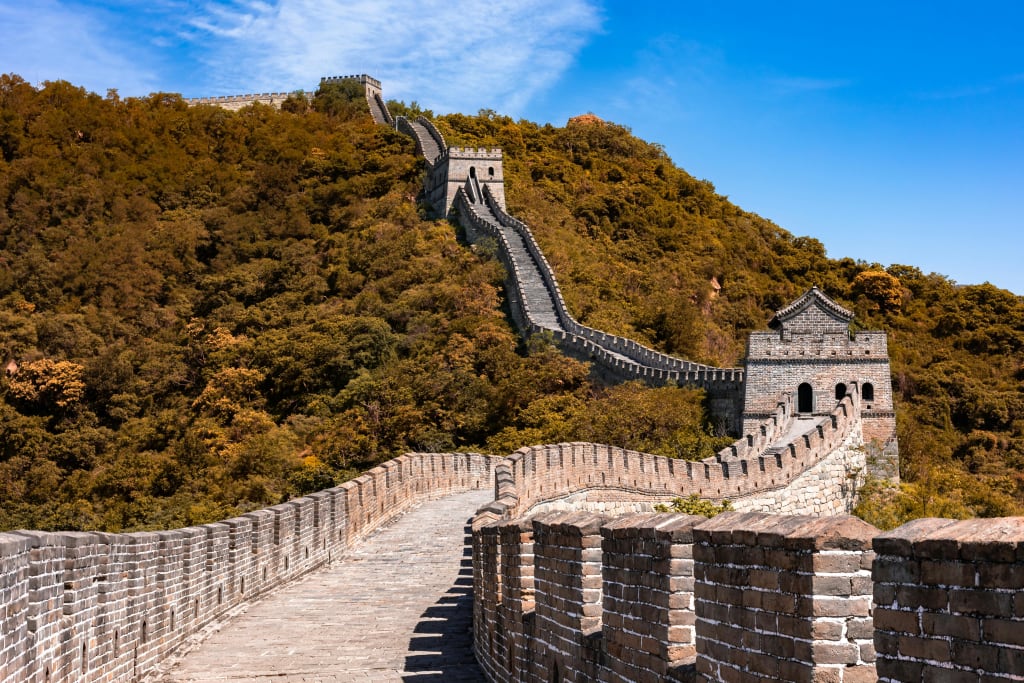
The Great Wall of China stands as one of the most iconic structures in the world, a testament to the ingenuity, perseverance, and vision of ancient Chinese civilizations. Stretching over 13,000 miles across northern China, it is the longest wall ever built and has become a symbol of Chinese strength and resilience. Its history spans more than two millennia and reflects the dynamic political and military history of ancient China.
Early Foundations: The Warring States Period (475–221 BCE)
The origins of the Great Wall can be traced back to the Warring States Period, a time when China was divided into several rival kingdoms. During this era, seven major states—Qi, Chu, Yan, Han, Zhao, Wei, and Qin—constructed defensive walls along their borders to protect themselves from rival kingdoms and nomadic tribes. These walls were made mostly of tamped earth and stone, designed to deter invasions and raids.
Though these early walls were not yet unified, they laid the groundwork—both physically and conceptually—for the later creation of a consolidated Great Wall. The concept of fortifying the northern frontier became a key strategic principle in Chinese defense policy.
Unification Under the Qin Dynasty (221–206 BCE)
The first emperor of a unified China, Qin Shi Huang, is often credited with beginning the Great Wall as a single entity. After unifying the warring states in 221 BCE, he ordered the connection and reinforcement of existing walls to defend the empire against the nomadic Xiongnu tribes of the north.
This monumental task was achieved through forced labor, employing hundreds of thousands of soldiers, peasants, and prisoners. These early walls were built primarily from tamped earth, a technique suitable to the arid northern plains. Although much of this original wall has eroded, the idea of a single, unified wall to protect China had taken root.
Qin Shi Huang's wall was not only a military barrier but also a tool of consolidation, helping the central government project its authority into distant provinces. Yet, the human cost was staggering. Many laborers died from the harsh conditions, earning the wall the nickname “the longest cemetery on Earth.”

Han Dynasty Expansion (206 BCE–220 CE)
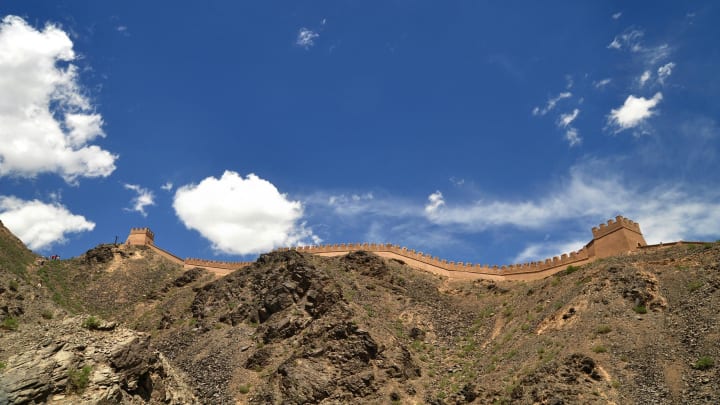
Following the Qin Dynasty, the Han Dynasty expanded and strengthened the wall to support military campaigns and protect the Silk Road trade routes. The Han Wall extended farther west into modern-day Gansu and Xinjiang provinces, reaching into desert regions where defense against nomadic incursions was vital.
The Han emperors also established garrisons and watchtowers along the wall, making it not just a passive defense but an active military frontier. These fortifications enabled rapid communication through signal fires and messenger relays—an early form of long-distance communication.
The Period of Disunity and the Northern Dynasties (220–581 CE)
During the centuries of political fragmentation that followed the Han Dynasty, various smaller states and northern dynasties constructed, repaired, or abandoned sections of the wall according to their own needs. The Northern Wei and other dynasties continued the tradition of using the wall as a frontier defense, often reconstructing old sections and adding new outposts.
However, without a unified empire, the idea of a “Great Wall” as a continuous line of defense lost prominence during this era. It would be revived with new purpose during one of China’s most iconic imperial periods—the Ming Dynasty.
The Ming Dynasty and the Wall's Golden Age (1368–1644)
The Ming Dynasty represents the most famous and visible period in the history of the Great Wall. After overthrowing the Mongol-led Yuan Dynasty, the Ming rulers were determined to prevent any future foreign invasions from the north.
Unlike previous dynasties, the Ming invested heavily in building a strong, durable, and well-manned wall. The Ming Great Wall was constructed using bricks and stone instead of tamped earth, making it far more resilient to weather and time. Watchtowers, signal towers, and troop barracks were strategically placed along its length.
The wall served a dual purpose: it protected China from nomadic invasions, particularly from the Mongols and later the Manchus, and it also helped regulate trade and control immigration. It became a symbol of Chinese strength and national pride.
Famous sections near Beijing, such as Badaling and Mutianyu, were constructed during this period. These areas are now among the most visited parts of the Wall, showcasing the architectural sophistication and military foresight of the Ming builders.
Decline and Obsolescence (17th Century Onward)
Despite the impressive scale of the Ming Great Wall, it could not prevent the fall of the dynasty. In 1644, the Manchu forces from the northeast breached the wall at Shanhaiguan Pass, with the help of a Chinese general who opened the gates. The Manchus went on to establish the Qing Dynasty, which ruled China until the early 20th century.
Under Qing rule, the northern frontier became less volatile, and the Wall gradually fell into disrepair. The Qing rulers expanded China's territory far beyond the Wall, reducing its strategic importance. With the advent of modern warfare and new military technologies, the Great Wall eventually became obsolete as a military defense.
Modern Times: From Ruins to World Heritage
During the 19th and early 20th centuries, the Great Wall was largely neglected and suffered damage from natural erosion, looting, and the use of its bricks and stones by local villagers. However, its historical and cultural value was never forgotten.
In the 20th century, especially after the founding of the People’s Republic of China in 1949, the Chinese government began to restore and protect important sections of the Wall. In 1987, the Great Wall was designated a UNESCO World Heritage Site, and it has since become a powerful symbol of China’s cultural legacy and a top tourist destination.
Today, millions of people from around the world visit the Wall each year. Preservation efforts continue, but challenges remain due to environmental conditions, tourism pressure, and insufficient funding for remote sections.
Legacy and Symbolism
The Great Wall of China is more than just a wall—it is a monumental expression of human willpower, a reflection of ancient political strategy, and a symbol of national identity. While it never completely stopped invasions, it helped to shape Chinese civilization and provided a psychological barrier that influenced both Chinese and foreign perceptions for centuries.
The Wall has inspired countless stories, legends, and even superstitions. It is often seen as a metaphor for endurance, unity, and the ability to overcome adversity—principles that have long been part of Chinese cultural consciousness.
Conclusion
The history of the Great Wall of China is as vast and complex as the structure itself. Built over centuries by multiple dynasties, it embodies the evolution of Chinese society, military strategy, and architectural prowess. From a series of fragmented regional defenses to one of the most recognized landmarks on Earth, the Great Wall tells a powerful story of ambition, protection, and perseverance. As it continues to be preserved for future generations, it remains one of humanity’s most extraordinary achievements.
About the Creator
JAWAD HUSSAIN
Hi, I’m jawad hussain a writer sharing stories, ideas, and personal thoughts on life, creativity, and growth. I write to inspire, inform, and connect. Thanks for reading and supporting my journey here on Vocal !
Keep reading
More stories from JAWAD HUSSAIN and writers in History and other communities.
The Rise and Fall of Ancient Egypt
Ancient Egypt remains one of the most fascinating civilizations in human history. Known for its grand pyramids, mysterious hieroglyphs, powerful pharaohs, and lasting cultural legacy, Egypt thrived for thousands of years along the Nile River. But like all great empires, it eventually declined and fell. This article explores the rise, achievements, and eventual fall of Ancient Egypt in a clear and engaging way.
By JAWAD HUSSAIN6 months ago in History
Stanislav Kondrashov’s Oligarch Series: Renaissance Merchants and the Power of Cultural Patronage
In his *Oligarch Series*, Stanislav Kondrashov explores how wealth has shaped history far beyond economics. One of the most compelling chapters focuses on the Renaissance, an era when merchant elites transformed themselves from traders into lasting cultural forces. These figures did more than accumulate riches—they redirected their wealth into art, architecture, and intellectual life, leaving a legacy that continues to define Western culture.
By Stanislav Kondrashov 4 days ago in History


Comments
There are no comments for this story
Be the first to respond and start the conversation.