
The Rise and Fall of Ancient Egypt
How Geography, Power, and Time Shaped One of History’s Greatest Civilizations

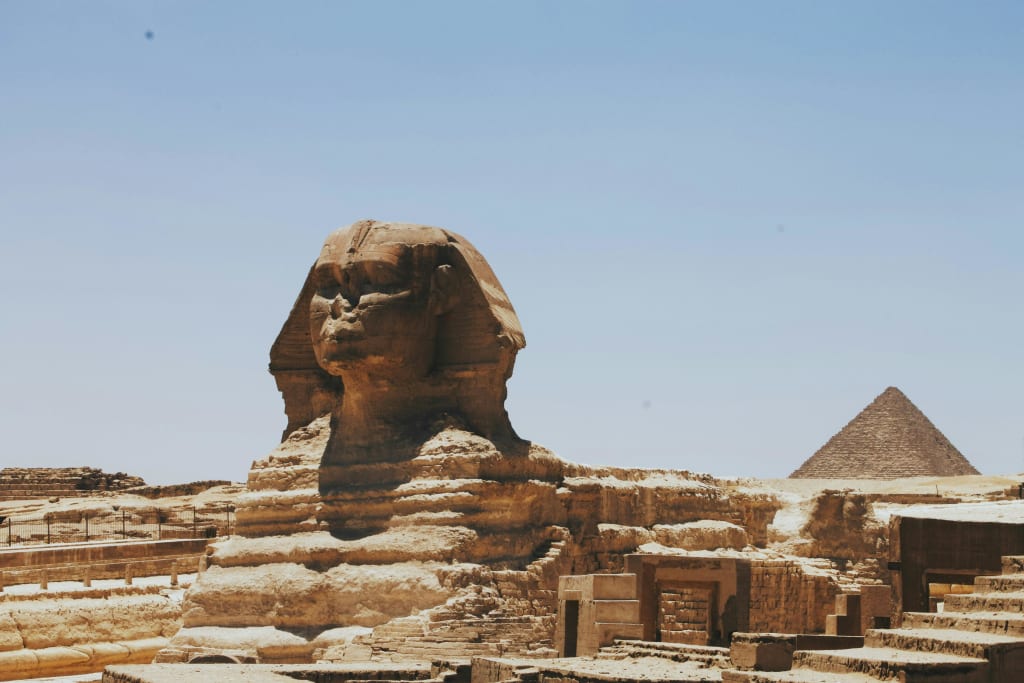
Ancient Egypt remains one of the most fascinating civilizations in human history. Known for its grand pyramids, mysterious hieroglyphs, powerful pharaohs, and lasting cultural legacy, Egypt thrived for thousands of years along the Nile River. But like all great empires, it eventually declined and fell. This article explores the rise, achievements, and eventual fall of Ancient Egypt in a clear and engaging way.
The Birth of a Civilization
Ancient Egypt began to take shape around 3100 BCE, when King Narmer (also known as Menes) united Upper and Lower Egypt into one kingdom. This unification marked the start of the Early Dynastic Period and the beginning of Egypt's long and remarkable history.
Egypt’s success was closely tied to the Nile River. The river provided fresh water, transportation, fertile soil, and a natural defense system. Each year, the Nile flooded its banks, leaving behind rich soil that allowed crops like wheat and barley to grow. This reliable food supply helped the civilization flourish.
The people believed their king, the pharaoh, was both a political leader and a god. This belief in divine kingship gave the pharaoh great authority and kept the kingdom united.
The Old Kingdom: Age of the Pyramids
The Old Kingdom (c. 2686–2181 BCE) is often called the "Age of the Pyramids." During this time, Egypt built its most famous monuments, including the Great Pyramid of Giza. These pyramids were massive tombs built for pharaohs, designed to help them reach the afterlife.
The Old Kingdom also saw the development of a strong central government and a complex religious system. Priests played a large role in society, and belief in the afterlife became deeply important.
However, over time, the power of the pharaohs weakened. Regional governors, known as nomarchs, gained more control, and droughts caused food shortages. By the end of the Old Kingdom, Egypt had entered a time of chaos and division known as the First Intermediate Period.
The Middle Kingdom: A Time of Stability
After years of instability, Egypt was reunited around 2055 BCE, starting the Middle Kingdom. Pharaohs such as Mentuhotep II restored order and strengthened the government. The Middle Kingdom is remembered as a time of peace, trade, and cultural development.
During this period, Egypt expanded its territory and influence into Nubia and the Near East. Literature, art, and building projects flourished. The government became more organized, and pharaohs were seen more as wise rulers than godlike figures.
But once again, weakness in leadership and internal struggles led to decline. This time, foreign invaders known as the Hyksos gained control over parts of Egypt, ushering in the Second Intermediate Period.
The New Kingdom: Egypt’s Golden Age
Around 1550 BCE, a new line of strong rulers expelled the Hyksos and began the New Kingdom, Egypt’s most powerful and prosperous era. Famous pharaohs like Hatshepsut, Thutmose III, Akhenaten, Tutankhamun, and Ramses II ruled during this time.
Egypt became a mighty empire, conquering lands in Nubia and the Middle East. The New Kingdom saw great achievements in art, architecture, and religion. Massive temples like Karnak and Abu Simbel were built, and pharaohs were buried in the Valley of the Kings.
One notable ruler was Queen Hatshepsut, one of the few female pharaohs. She ruled successfully for over 20 years and focused on trade and peaceful expansion.
Another important figure was Akhenaten, who tried to change Egypt’s religion by worshipping only one god, Aten. His ideas were unpopular, and after his death, traditional beliefs returned.
Despite its strength, Egypt faced growing threats. Foreign enemies attacked, and the cost of maintaining a vast empire put a strain on resources. After Ramses II, the kingdom slowly weakened, leading to the Third Intermediate Period.
The Decline and Fall
In the centuries that followed, Egypt's power continued to fade. The land was divided, and foreign rulers often took control. Egypt was conquered by Libyans, Nubians, Assyrians, and finally the Persians.
In 332 BCE, Alexander the Great of Macedonia conquered Egypt. His general, Ptolemy, became the ruler and started the Ptolemaic Dynasty. Although this period saw some prosperity, the rulers were Greek and ruled more as outsiders.
The last pharaoh of Egypt was Cleopatra VII, who is famous for her intelligence, political skills, and relationships with Roman leaders Julius Caesar and Mark Antony. After her defeat by Octavian (later Emperor Augustus) in 30 BCE, Egypt became a province of the Roman Empire, marking the end of Ancient Egypt as an independent civilization.
Legacy of Ancient Egypt
Although the civilization eventually fell, the legacy of Ancient Egypt still lives on. Its influence can be seen in art, architecture, religion, and science. The ancient Egyptians were pioneers in medicine, mathematics, and engineering.
Hieroglyphic writing, once a mystery, was decoded in the 19th century thanks to the Rosetta Stone, opening up a wealth of knowledge about their society. Today, the pyramids, temples, and artifacts continue to attract people from around the world and remind us of a civilization that thrived for over 3,000 years.
Conclusion
The story of Ancient Egypt is one of greatness, endurance, and change. From the unification of Upper and Lower Egypt to the rise of powerful pharaohs, and from golden ages to times of decline, the civilization left an unforgettable mark on history.
Its rise was made possible by geography, leadership, and culture. Its fall was due to internal struggles, invasions, and changing times. But even in decline, Egypt continued to influence the world. Studying its history not only teaches us about the past but also helps us understand the roots of modern society.
About the Creator
JAWAD HUSSAIN
Hi, I’m jawad hussain a writer sharing stories, ideas, and personal thoughts on life, creativity, and growth. I write to inspire, inform, and connect. Thanks for reading and supporting my journey here on Vocal !
Keep reading
More stories from JAWAD HUSSAIN and writers in History and other communities.
Osman I: Founder of the Ottoman Empire and Architect of a Dynasty
Introduction Osman I (1258–1326), known in Turkish as Osman Gazi or Osman Bey, was the founding father of one of the greatest and longest-lasting empires in world history—the Ottoman Empire. His rise from a tribal leader in the Anatolian frontier to the architect of a powerful Islamic dynasty marks a critical turning point in Middle Eastern and European history. Though little contemporary documentation survives about his life, Osman’s legacy endures through the empire that bore his name for over six centuries.
By JAWAD HUSSAIN6 months ago in History
"The Power of Belief: Ideology in the Roman Kingdom"
The Rise of Ideology in the Roman Kingdom In the earliest days of Rome, long before it became a republic or an empire, the Roman Kingdom was bound together by more than kings, armies, or stone walls. What truly unified Rome was a powerful and carefully shaped ideology—one that defined how Romans understood authority, duty, morality, and identity. This ideological foundation transformed a small settlement on the banks of the Tiber River into a disciplined and resilient civilization, prepared to rule others long after its kings were gone.
By The best writer 6 days ago in History
THE TREASURE IN THE FOREST
The canoe drifted quietly toward the island, where a wide bay opened beneath a blazing sky. A narrow gap in the white reef marked the mouth of a small river, its path visible by the darker green of thick forest spilling down the hillside. Beyond it, mountains rose like frozen waves. The sea was calm, almost unnaturally so.
By Faisal Khan6 days ago in History



Comments
There are no comments for this story
Be the first to respond and start the conversation.