
The Great Pyramids of Giza
The Pyramids of Khufu Egypt

The Great Pyramid of Giza, also known as the Pyramid of Khufu or the Pyramid of Cheops, is the largest of the three pyramids on the Giza Plateau in Egypt and one of the most iconic structures in human history. Built during the Fourth Dynasty of the Old Kingdom, around 2580-2560 BCE, it is the oldest of the Seven Wonders of the Ancient World and the only one still largely intact.
Purpose and Construction
The pyramid was constructed as a tomb for Pharaoh Khufu (also known as Cheops in Greek), who reigned during the Fourth Dynasty. The Great Pyramid was part of a larger complex that included a mortuary temple, smaller pyramids for Khufu’s queens, and several mastabas (flat-roofed tombs) for nobles.
Constructing the pyramid was an incredible feat of engineering, especially considering the tools available at the time. It is estimated that around 2.3 million limestone blocks, each weighing between 2.5 to 15 tons, were used. The total weight of the pyramid is estimated to be about 6 million tons, and it originally stood at 146.6 meters (481 feet), though it has since lost some height due to the removal of its outer casing stones.
The exact methods used to build the pyramid are still debated, but it likely involved a large workforce of skilled laborers, not slaves as often depicted in popular culture. The workers may have used ramps made of mudbrick and limestone chippings to move the massive stones into place. The precision of the construction is remarkable, with the sides of the pyramid aligned closely to the cardinal points of the compass.
Interior and Function
The interior of the Great Pyramid is complex, with a series of passageways and chambers. The most famous of these is the King’s Chamber, which houses a granite sarcophagus believed to have held Khufu’s remains. Above the King’s Chamber are several relieving chambers designed to distribute the weight of the stone above and prevent the chamber from collapsing.
There is also the Grand Gallery, a long, ascending passageway that leads to the King’s Chamber, and the Queen’s Chamber, whose purpose remains unclear. Some scholars believe it was intended for Khufu’s ka (spirit), while others think it was a symbolic chamber.
Historical Significance
For centuries, the Great Pyramid of Giza was the tallest man-made structure in the world until the completion of the Lincoln Cathedral in England in the 14th century. The pyramid has inspired countless studies, theories, and speculations, ranging from its construction techniques to its alignment with celestial bodies.
The pyramid is also surrounded by a rich historical and cultural context, as it represents the zenith of ancient Egyptian architectural achievement. The Giza Plateau, where the pyramid stands, also includes the pyramids of Khafre and Menkaure, as well as the Great Sphinx, creating one of the most famous archaeological sites in the world.
Today, the Great Pyramid of Giza is not only a testament to ancient Egyptian civilization but also a symbol of the enduring human desire to leave a legacy that transcends time. It remains one of the most visited and studied monuments on Earth, attracting millions of tourists and scholars alike.
About the Creator
Otto von Bismarck: The Real-World Strategic Genius
History remembers many great thinkers of power, but few figures mastered it as completely in practice as Otto von Bismarck. While philosophers like Machiavelli explained how rulers *should* behave, Bismarck demonstrated how power actually works in the real world—messy, emotional, unpredictable, and deeply human. He was not a conqueror driven by glory, nor an ideologue chasing perfection. He was something far rarer: a strategist whose primary weapon was restraint.
By Fred Bradford3 days ago in History
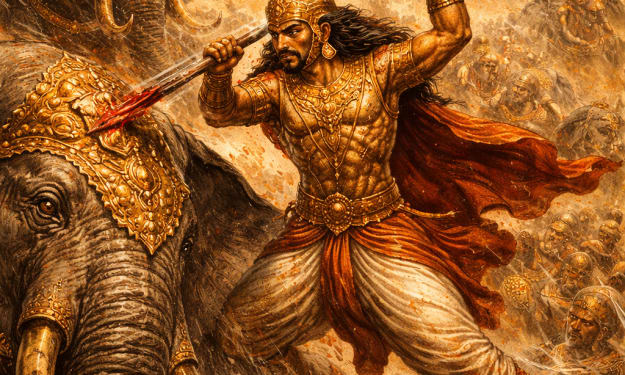
If War Had Erupted Between Ashoka and the Three Kings of South India: An Alternate History Scenario
In reality, no direct war occurred between Ashoka and these southern kingdoms. But if circumstances had been different—if diplomacy had failed and war had erupted—the consequences would have been profound, reshaping Indian history in dramatic ways.
By Say the truth 3 days ago in History



Comments
There are no comments for this story
Be the first to respond and start the conversation.